

Why Settle For Ordinary LGP When Fire-Rated Photoluminescent Guidance Plates Exist?
Aug 13, 2026
What Is a Photoluminescent Light Guide Plate and How Does It Outperform Standard LGP?

What is standard LGP?
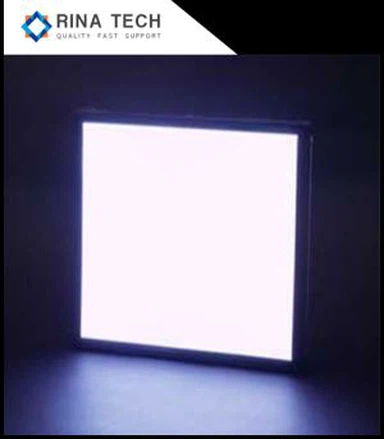
A standard Light Guide Panel (LGP) is an optical acrylic or polycarbonate sheet designed to transmit light from edge-mounted LEDs across its surface via total internal reflection. Micro-patterns etched or printed on the surface extract light forward, creating smooth, flat illumination for commercial lighting, backlights, and electronic displays.
What is a photoluminescent LGP?
A photoluminescent guidance plate combines traditional edge-lit optical guidance with advanced long-afterglow photoluminescent pigments. It functions as a dual-mode optical device: during normal operation, powered edge LEDs drive bright active illumination; when external power fails, embedded photoluminescent compounds instantly emit stored glow to maintain continuous visual guidance.
Why is ordinary LGP risky in power outages?
Ordinary LGPs rely entirely on an active electric current to produce light. During a building power outage, blackout, or electrical fire short-circuit, conventional panels go dark instantly. Unless supported by costly backup batteries or auxiliary generators, ordinary LGPs leave stairwells, corridors, and exit routes in complete darkness within seconds.
How does photoluminescence bridge the safety gap?
Photoluminescent materials absorb and store ambient light or LED energy at a atomic level during routine building operation. When ambient light drops completely, these rare-earth aluminate pigments slowly discharge photon energy over many hours, delivering high-visibility glow without requiring batteries, wiring, or auxiliary electrical power.

How Does Fire-Rated Technology Guarantee Both Safety Compliance and Structural Integrity?
What makes an optical plate fire-rated?
An optical plate is fire-rated when it is engineered from self-extinguishing polymer resins-such as flame-retardant polycarbonate (PC)-that actively inhibit flame propagation. Rather than feeding combustion, fire-rated substrates resist ignition, cease flaming quickly upon source removal, and restrict flame spread under extreme thermal stress.
What is the UL 94 V-0 safety standard?
The UL 94 V-0 standard is the internationally recognized benchmark for plastic material flammability. A UL 94 V-0 rating requires vertical test samples to self-extinguish within 10 seconds of direct flame exposure, without producing flaming liquid drips that could ignite surrounding structural materials or floor coverings.
Why do standard acrylic panels fail fire codes?
Conventional LGPs made from standard polymethyl methacrylate (PMMA) burn rapidly once ignited, generating heavy smoke and toxic combustion products. Furthermore, burning acrylic produces molten dripping plastic that spreads fires down wall cavities and along floor paths, violating modern life-safety codes for commercial and transit infrastructure.
How Do Dual-Mode Optical Systems Combine Active LED Efficiency with Passive Afterglow?
How does active LED illumination work?
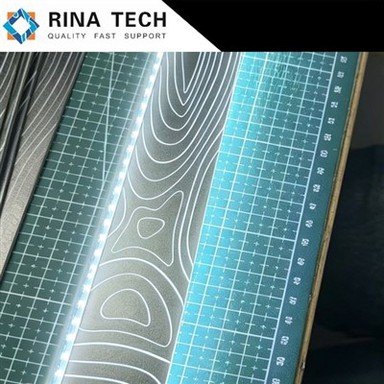
Under normal operating conditions, low-voltage LED strips mounted along the panel edges channel light directly into the substrate. Micro-patterned dot matrix grids scatter this light outward, producing uniform, high-luminance surface illumination ideal for clear architectural signage, emergency exit markers, and wayfinding panels.
How is ambient light energy stored passively?
While edge LEDs illuminate the panel, embedded strontium aluminate photoluminescent pigments absorb short-wavelength photons from the LED light stream. This energy excites electron orbitals within the crystal lattice, charging the panel continuously without requiring additional power draw or separate charging cycles.
What happens when main power fails instantly?
The moment electrical power cuts off, the photoluminescent matrix immediately begins emitting stored energy as visible green or blue-green light. This smooth transition ensures there is zero lag time or blackout window, keeping safety legends, directional arrows, and exit markers immediately legible to occupants.
How long does photoluminescent afterglow last?
High-grade rare-earth photoluminescent pigments deliver bright initial luminance that gradually decays over 8 to 12 hours. The initial high-luminance glow pierces dark ambient conditions, while persistent low-level afterglow remains fully visible to human eyes adjusted to dark environments throughout overnight evacuations.
What Key Advantages Drive the Transition to Fire-Rated Photoluminescent Guidance Plates?

How do photoluminescent LGPs reduce maintenance costs?
Traditional electrical emergency sign systems depend on battery backup packs that require periodic testing, maintenance, and regular battery replacement. Photoluminescent guidance plates require no internal batteries or electrical charging circuits, operating reliably for decades with zero recurring battery maintenance costs.

How do photoluminescent panels lower facility energy usage?
Because photoluminescent materials store energy directly from existing ambient or edge-lit illumination, they provide passive emergency lighting readiness without drawing extra electrical grid power. Facility operators achieve 24/7 life-safety compliance while maintaining minimal operational energy consumption.

How do fire-rated LGPs perform under high heat?
Polycarbonate-based fire-rated plates feature high heat deflection temperatures exceeding 130°C, significantly outperforming standard acrylics. In high-temperature environment situations or smoke-filled corridors, fire-rated LGPs maintain structural integrity without warping, softening, or releasing dense toxic smoke.

Why is physical impact resistance essential for safety plates?
Polycarbonate photoluminescent plates offer impact resistance up to 30 times greater than standard acrylic, making them practically shatterproof. In high-traffic transit hubs, industrial plants, and vandal-prone public environments, impact-resistant plates withstand heavy physical shocks without cracking or failing.