

How Much Faster Could Evacuation Be If Every Exit Sign Used High-Temperature LGP?
Aug 12, 2026
What Makes Traditional Exit Signs Fail When They Are Needed Most?

Can standard exit signs really be seen through thick smoke?
Research from the National Institute of Standards and Technology confirms that overall sign luminance is a primary determinant of visibility, with higher luminance directly associated with greater visibility under both clear and smoky conditions.
Why do bulb-based signs struggle in real fire conditions?
Fluorescent bulbs and basic LED strips create uneven illumination with hotspots near the light source and dim areas at the edges. This unevenness makes it harder for occupants to recognize the exit symbol, especially when smoke scatters and absorbs light.


What happens when heat reaches standard exit signs?
Traditional materials used in conventional exit signs can warp, yellow, or deform when exposed to elevated temperatures. The plastic housings soften, diffusers become cloudy, and the sign may lose its structural integrity before occupants have had time to evacuate.
Do occupants actually notice the difference in visibility?
Studies on emergency evacuation consistently show that clear, visible signage can reduce wayfinding time by 20-40% in smoke-filled conditions. When occupants can quickly locate and interpret exit signs, they spend less time hesitating and more time moving toward safety.

How Does High-Temperature LGP Technology Improve Exit Sign Visibility?
What makes LGP illumination superior to direct LEDs?
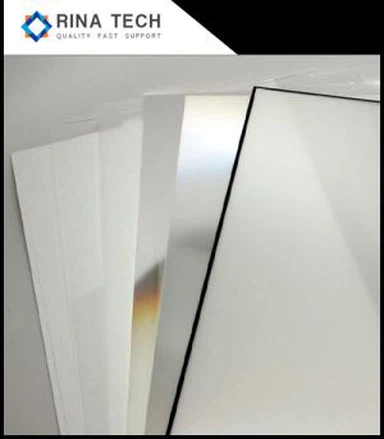
Light Guide Plate (LGP) technology uses a precision-engineered micro-pattern on the back of the panel to distribute light from edge-mounted LEDs evenly across the entire display surface. This approach eliminates the hotspots and dark streaks that plague direct-LED signs, achieving uniformity ratings of 85% or higher.
Does higher brightness actually help in smoky conditions?
Yes. The same research measured average luminance of 400.5 cd/m² for LED emergency exit lighting prototypes using LGP technology. This level of brightness, combined with uniform distribution, helps the exit symbol remain legible even when smoke begins to fill the room.
Can LGP signs maintain visibility from different viewing angles?
The uniform illumination provided by LGP technology ensures that the exit symbol remains sharply defined from almost any angle. Whether occupants are approaching the sign straight on, from the side, or from below, the brightness and contrast remain consistent across a wide viewing angle.
What about reliability when the power goes out?
High-temperature LGP exit signs are compatible with standard battery backup systems, ensuring continued operation during power outages.The low power consumption of LGP technology extends battery life, providing 90+ minutes of illumination as required by regulations. This means that even when the main power fails, the exit sign remains lit and visible.
How Much Time Can High-Temperature LGP Exit Signs Actually Save?

What is the real-world time saving per occupant?
Research indicates that clear, visible exit signage can reduce wayfinding time by 20-40% in smoke-filled conditions. In a building with 500 occupants, a 30% reduction in wayfinding time could mean that everyone reaches the exit 60-90 seconds faster. In a rapidly developing fire, those extra seconds can save lives.
How does the cumulative effect work in high-rise buildings?
In high-rise buildings, the time saved on each floor compounds. High-temperature LGP exit signs on every floor provide consistent, reliable guidance that reduces confusion and hesitation at each decision point. Occupants spend less time trying to locate exits and more time moving downward.
Does reducing confusion actually speed up evacuation?
Confusion is one of the biggest obstacles to fast evacuation. When occupants are unsure where to go, they hesitate, look around, or follow others without knowing the correct route. This hesitation creates bottlenecks and slows the entire evacuation process.
Can better signage reduce panic and improve order?
Clear, visible exit signs help maintain a sense of order during evacuation. When occupants can see where they are going and follow a clear path, they are less likely to panic. This calm, orderly movement reduces the risk of stampedes or other dangerous behaviors that can slow evacuation and cause injuries.
How Do High-Temperature LGP Exit Signs Stack Up Against Traditional Options?
Are bulb-based exit signs really more expensive in the long run?
While bulb-based exit signs may have lower upfront costs, they are significantly more expensive over their lifetime. Fluorescent bulbs burn out every 1-2 years, requiring replacement and maintenance. Over a decade, a bulb-based sign may require 5-10 replacements-costing $500-1,000 in maintenance alone.
Do LGP signs really last longer than traditional signs?
High-temperature LGP exit signs are designed for 50,000+ hours of continuous operation-typically 10-15 years under normal conditions. The LGP panel does not degrade, yellow, or lose optical efficiency over time, maintaining consistent illumination throughout its service life.


What about maintenance requirements?
LGP exit signs have no bulbs to replace, no ballasts to fail, and no lenses to yellow. The durable, scratch-resistant surface minimizes maintenance needs-simply cleaning the surface as needed with a soft cloth and mild detergent is sufficient to maintain optical clarity.
Are LGP signs suitable for all building types?
High-temperature LGP exit signs are suitable for a wide range of building types, including high-rise office buildings, public venues, healthcare facilities, educational institutions, industrial plants, and transport hubs.
What Are the Key Features That Make High-Temperature LGP Exit Signs Effective?
What does "uniform illumination" actually mean in practice?
This eliminates the bright spots and dark patches that make traditional signs harder to read, especially through smoke. LGP technology achieves uniformity ratings of 85% or higher, ensuring that the entire sign remains legible from any angle and distance.
01
What is the role of high luminance in emergency visibility?
High luminance-the intensity of light emitted from the surface-is critical for penetrating smoke and maintaining visibility at a distance. Research shows that overall sign luminance is a primary determinant of visibility, with higher luminance being associated with greater visibility
02
How do the materials handle high heat?
High-temperature LGP exit signs use heat-stabilized polymers-typically special grades of polycarbonate-that maintain dimensional stability and optical clarity at elevated temperatures. These materials are formulated to resist softening, warping, and degradation that would cause standard plastics to fail.
03
What standards do these signs meet?
High-temperature LGP exit signs meet multiple international safety standards.These certifications ensure that the signs are suitable for use in vehicles, buildings, and public spaces worldwide, providing documented performance that building owners can trust in an emergency.
04