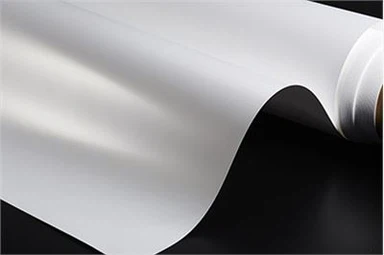


Need A Laptop Polarizer Film Which Fits Repair And Replacement Needs?
Nov 06, 2026
What Causes Laptop Polarizer Degradation and Demands Display Refurbishment?
Why do aging laptop screens develop severe vinegar syndrome and severe odor?
Over years of continuous operational heating and exposure to environmental humidity, the Tri-Acetyl Cellulose (TAC) protective layers encasing the optical core undergo chemical hydrolysis. This chemical breakdown releases acetic acid molecules inside the optical stack, producing a pungent vinegar-like odor and degrading the Polyvinyl Alcohol (PVA) polarizing layer. As the acid spreads, the screen loses contrast, forming dark localized burn spots and distorted visual zones that make reading impossible.
How does physical keyboard contact scratch protective topcoat layers?
Ultrabook designs compress display lids tightly against the keyboard deck when closed for transport. Over time, keycap edges and trapped dust particles rub against the outer polarizer surface, creating deep micro-scratches and scuff marks. These surface abrasions scatter backlight output prematurely, reducing visual clarity and creating distracting light glares that ruin graphics editing and everyday office tasks.


What causes optical bubbling and edge delamination over time?
Laptops endure constant thermal cycling from internal CPU and GPU heat loads alongside mechanical stress from opening the display lid. Low-grade pressure-sensitive adhesives (PSA) bonding the polarizer film to the LCD glass degrade under continuous thermal expansion. This bond failure causes corner delamination, edge lifting, and unsightly air bubbles that disrupt uniform light transmission across the active display area.
Can replacing a polarizer save expensive display assemblies?
Yes. Replacing a degraded or scratched polarizer film refurbishes an original high-resolution LCD panel at a fraction of the cost of sourcing a complete display assembly. Retaining the factory liquid crystal cell preserves native color gamuts, backlight uniformity, and original driver compatibility while eliminating cosmetic defects.
What Key Technical Specifications Ensure a Polarizer Fits Your Repair Requirements?
Why is matching the polarization transmission axis angle critical?
Laptop LCD panels utilize specific optical alignment angles-typically 0°, 45°, 90°, or 135°-relative to the display glass geometry. Installing a replacement polarizer film cut at the incorrect angle results in total optical inversion: the screen displays either a solid black, washed-out white, or inverted color output. Technicians must verify the exact polarization degree before lamination.
01
How do custom pre-cut film dimensions accelerate workshop throughput?
Sourcing pre-cut replacement polarizer sheets matched to standard laptop panel sizes (such as 13.3-inch, 14.0-inch, 15.6-inch, or 16.0-inch) eliminates manual trimming errors. Factory-cut sheets feature pre-registered perimeter dimensions and corner chamfers that align perfectly with screen bezels, speeding up lamination throughput and reducing scrap rates during high-volume refurbishing.
02
What role does Optically Clear Adhesive (OCA) play in bubble-free repairs?
High-grade replacement polarizers feature pre-applied Optically Clear Adhesive (OCA) protected by a release liner. Premium OCA offers controlled initial tack, allowing technicians to align the film before applying lamination pressure. The adhesive flows evenly over display glass, filling micro-imperfections without yellowing, hazing, or trapping stubborn air bubbles.
03
Should you select a matte anti-glare or glossy surface finish?
The outer finish choice depends on the laptop's operating environment and original panel specifications. A Matte Anti-Glare (AG) hard-coat scatters reflections from ambient room lighting, reducing eye strain during office work. A Glossy Anti-Reflective (AR) finish maximizes color depth and perceived contrast, making it ideal for color-critical media production and high-nit displays.
04
What Benchmarks Define High-Performance Polarizer Materials?

How does a high polarization efficiency core restore contrast ratios?
At the center of a repair polarizer lies an iodine-doped, stretched Polyvinyl Alcohol (PVA) molecular core. Premium replacement films achieve polarization efficiency exceeding 99.9%, effectively blocking scattered light waves while allowing aligned light rays to pass. This high polarization extinction ratio restores deep, ink-like blacks and bright whites, returning degraded screens to factory contrast specs.
How do multi-layer TAC sleeves protect the optical core from humidity?
Delicate PVA polarizing core films are susceptible to moisture absorption and thermal degradation. High-durability repair polarizers encapsulate the PVA core between twin Tri-Acetyl Cellulose (TAC) or Cyclic Olefin Polymer (COP) outer sleeves. These hydrophobic barrier layers shield the internal matrix from atmospheric moisture, preventing chemical yellowing and edge degradation.
What surface hardness ratings guard against daily keyboard abrasion?
Professional-grade replacement polarizers incorporate hard-coated top layers rated at 3H to 5H pencil hardness. This protective hard-coat withstands thousands of repeated cleaning swipes, stylus contact, and keyboard pressure without scratching. High surface hardness preserves pristine optical clarity long after the refurbishing process.
What Lamination Process and Quality Protocols Guarantee Flawless Screen Replacement?
Why is a Class 100 cleanroom environment mandatory for polarizer replacement?
Laminating a replacement polarizer onto bare display glass requires an environment free of airborne dust particles. A single trapped dust speck creates a permanent air bubble or bright optical artifact once the backlight is powered on. Professional refurbishment must occur inside Class 100 cleanroom workstations equipped with HEPA filtration and air ionizers.
What tools are essential for stripping old adhesive cleanly from panel glass?
Removing a degraded polarizer leaves behind hardened adhesive residue on the display glass. Technicians utilize specialized optical solvent removers alongside plastic scrapers or heated wire stripping tools to soften and lift residual glue. Clean, residue-free glass is essential for achieving flat, optical bonding with the new replacement sheet.
How do roller lamination machines prevent air trap defects?
Manual hand lamination often introduces uneven pressure, leading to trapped air pockets and wave distortion. Utilizing automated or semi-automated roller lamination equipment applies uniform pressure across the leading edge of the film as the protective release liner is peeled away. Controlled roller pressure eliminates air pockets, producing a smooth bond across the glass.