

How Can A Notebook Prism Film Improve Backlight Efficiency in Laptop Displays?
Oct 30, 2026
Why Do Standard Laptop LCD Backlights Suffer From Massive Light Loss?
What fundamental optical bottlenecks limit backlight transmission?
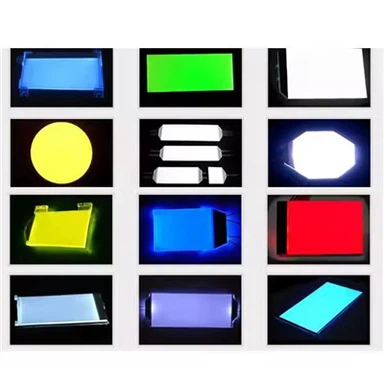
Liquid crystal display (LCD) panels do not generate their own light; instead, they rely on a perimeter LED backlight module to illuminate the liquid crystal matrix. However, as light travels from the light guide plate (LGP) through various diffusers, liquid crystals, color filters, and polarizing layers, more than 80% to 90% of the original lumens are absorbed or scattered away before reaching the user's eyes. This intrinsic physical boundary creates a massive optical efficiency challenge for laptop displays.
How does wide-angle light emission waste battery power?
Perimeter LEDs emit photons in a wide hemispherical pattern across all directions. When unrefined light exits an optical light guide plate, a large percentage of light rays escape at steep, off-axis lateral angles. Light projecting toward extreme far-left or far-right angles contributes nothing to a laptop user sitting directly in front of the screen. Running backlight LEDs at high currents to overcome off-axis light waste drains battery reserves and generates unwanted internal heat.
Why do standard polarizers convert backlight energy into excess heat?
To control liquid crystal alignment, an LCD panel requires linearly polarized light. Standard rear polarizers act as absorptive filters: they permit light aligned with one specific polarization axis to pass through while absorbing all perpendicular light waves. This filtering step instantly discards roughly 50% of incoming backlight energy as waste heat, severely restricting overall display luminance and system efficiency.
What Optical Mechanisms Allow Prism Films to Compress Light Angles?
How do microscopic triangular prisms manage light refraction?
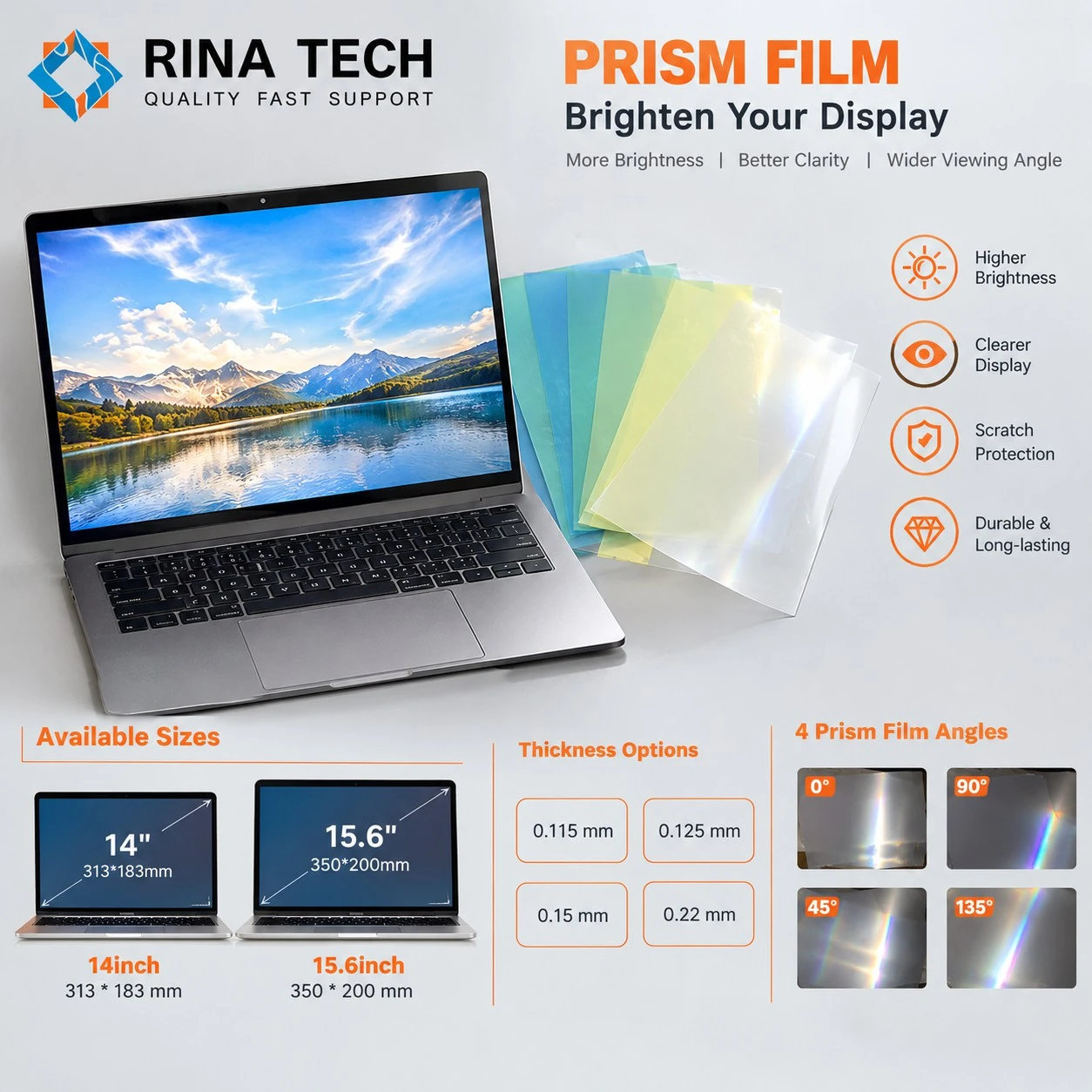
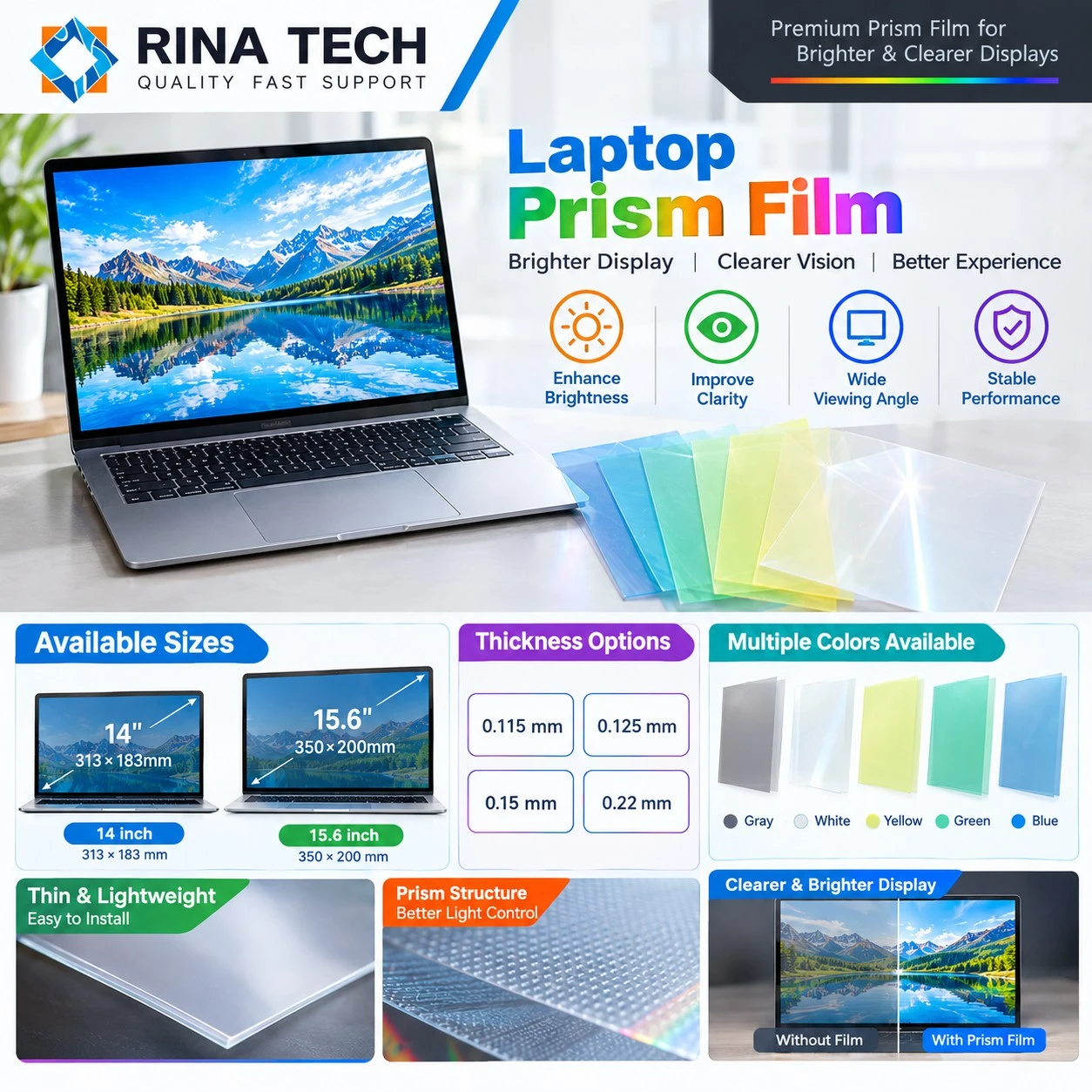
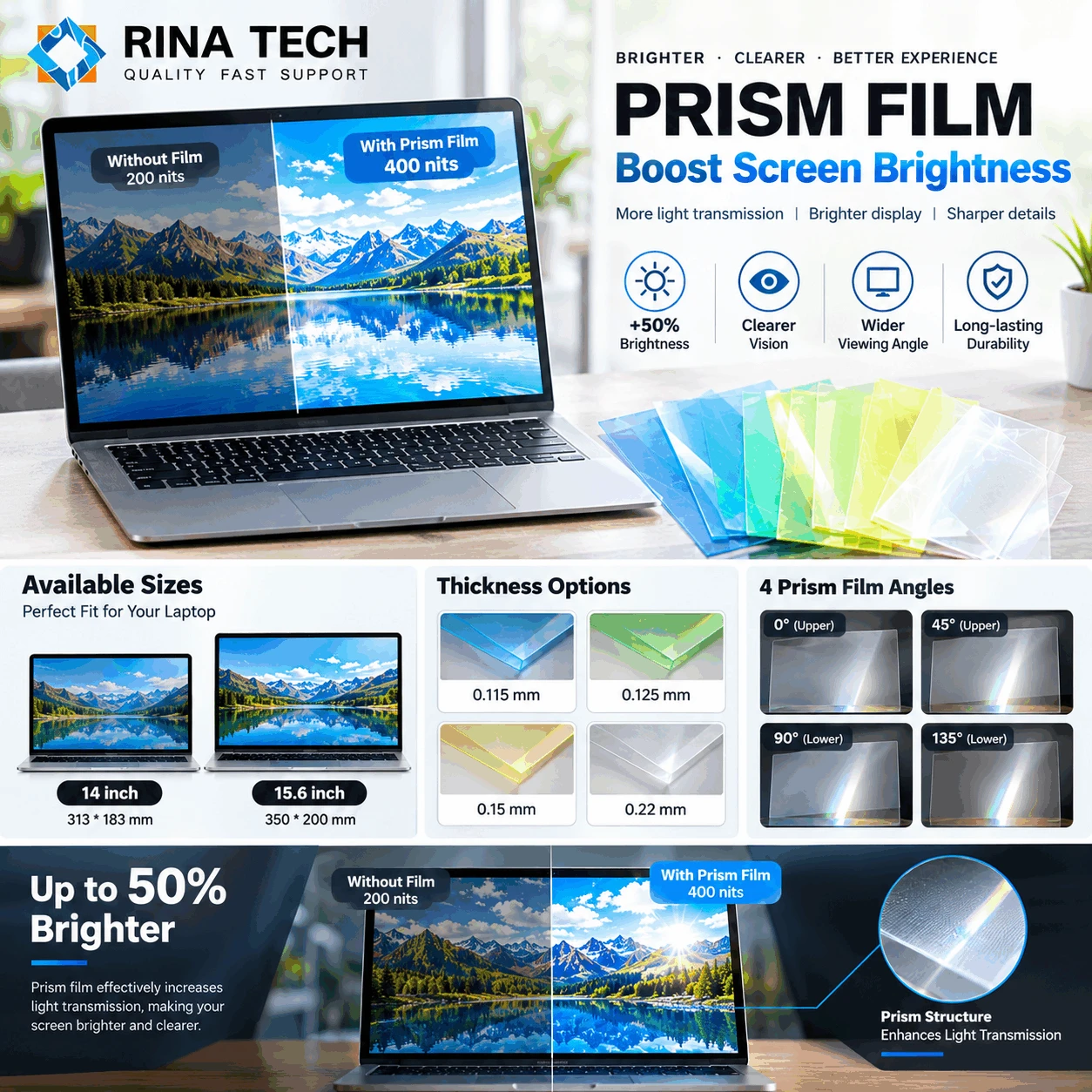
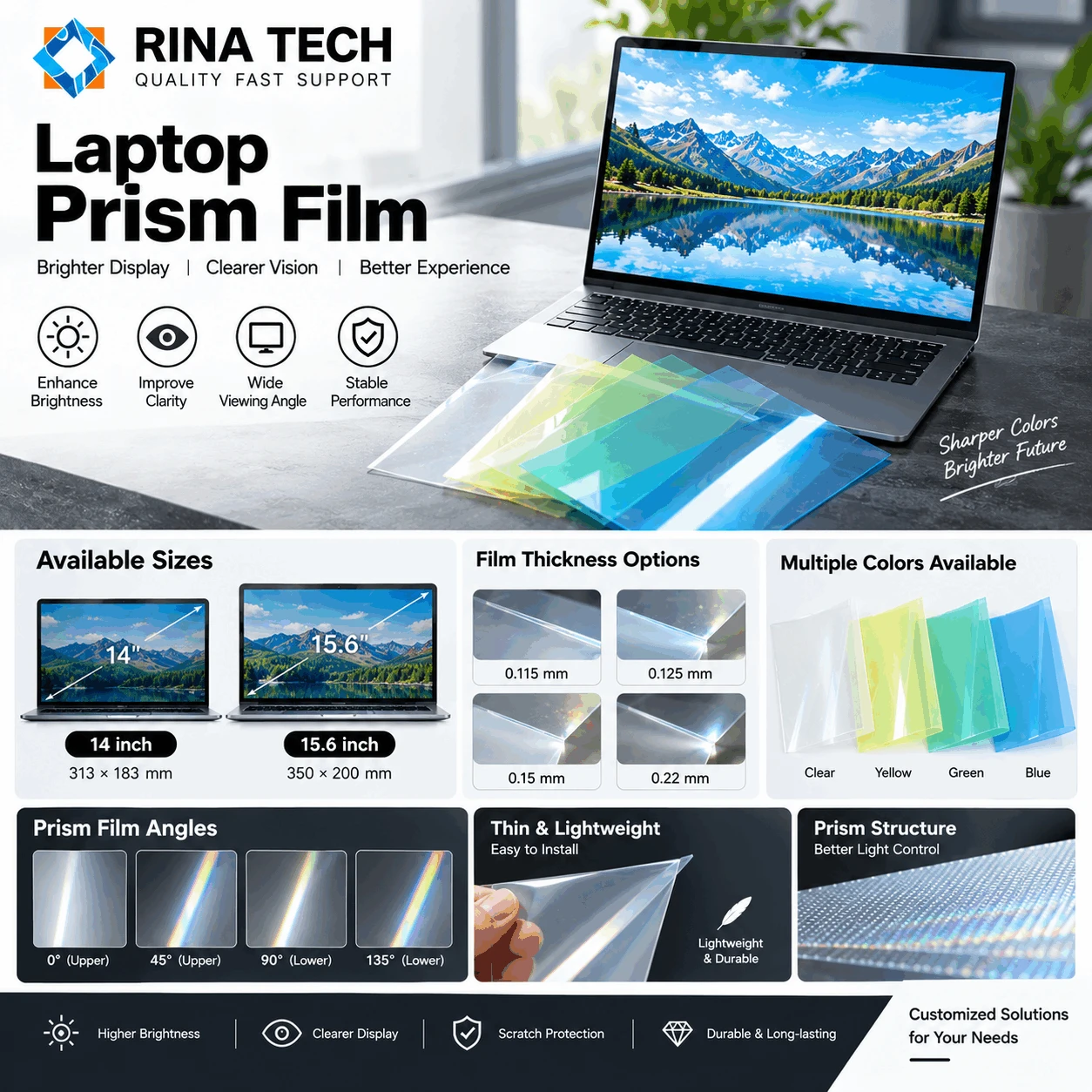
A notebook prism film-often referred to as a Brightness Enhancement Film (BEF)-features an optical micro-structure layer comprising thousands of parallel triangular micro-prisms precision-molded onto an optical-grade PET substrate. Using the fundamental laws of refraction, these microscopic prisms capture wide-angle, scattered light rays exiting the lower diffuser sheet. The linear prism faces bend and redirect these divergent light rays into a tight forward cone centered directly toward the viewer.
What is the optical recycling mechanism behind Total Internal Reflection (TIR)?
Light rays that strike the micro-prisms at extreme, shallow angles cannot exit forward through refraction. Instead, these steep light rays undergo Total Internal Reflection (TIR) inside the prism geometry, reflecting backward down into the backlight module. Once inside the backlight cavity, the reflected rays bounce off the bottom reflective sheet, depolarize, and bounce back up to the prism film at new angles. This continuous optical recycling loop ensures previously wasted photons are redirected until they exit forward toward the user.
Why are dual crossed prism configurations standard in notebook displays?
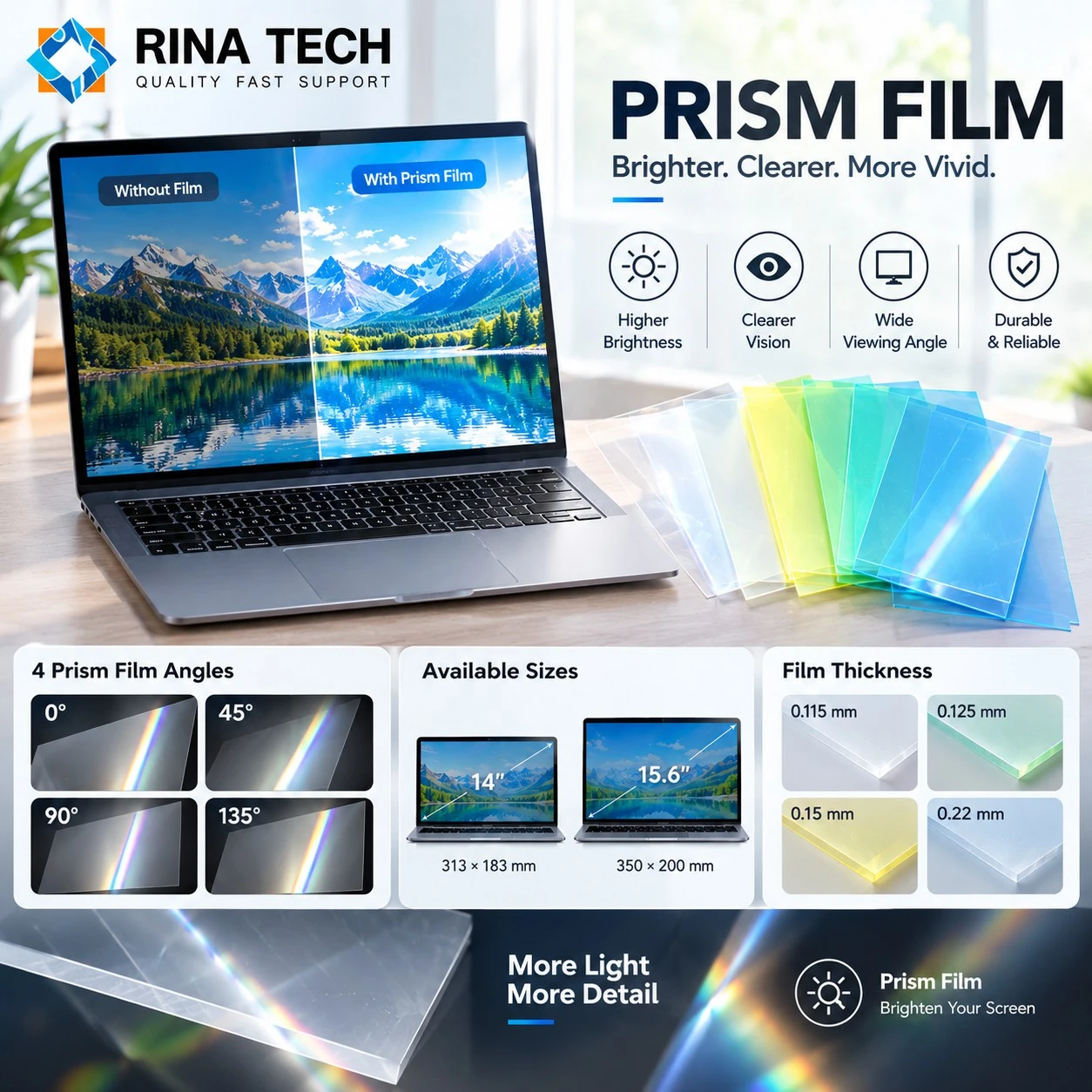
A single prism sheet redirect light along only one axis (either horizontally or vertically). To compress light along both axes simultaneously, laptop display engineers stack two prism films orthogonally at a 90-degree angle relative to one another. This crossed-prism configuration concentrates scattered photons from all directions into a tight central viewing cone, delivering total on-axis brightness gains of 100% to 120% without increasing battery draw.
How Does Upgrading to Precision Prism Films Improve Total Laptop Performance?
How does higher optical efficiency directly extend portable battery life?
Because a crossed-prism film stack doubles on-axis screen brightness through light recycling, display engineers can choose between two key advantages: increasing screen luminance at current power levels, or maintaining target brightness while cutting LED drive current by up to 30% to 40%. Reducing backlight power draw extends laptop battery runtime during mobile work.
How does lower LED power consumption improve display thermal management?
Perimeter LED lightbars are a primary source of internal heat build-up inside modern laptop lids. Running LEDs at full drive currents creates thermal stress that radiates directly into sensitive liquid crystal cells and polarizers. By achieving target nit levels at lower drive currents through optical recycling, the display assembly operates significantly cooler, protecting optical adhesives from thermal degradation and preventing screen yellowing over time.
Can integrating prism sheets lower total display Bill-of-Materials (BOM)?
Yes. Achieving high screen brightness without optical light recycling requires installing dense LED lightbars and larger copper thermal heat sinks. Integrating high-gain prism sheets allows display manufacturers to hit target brightness metrics using fewer LED diodes and smaller, less expensive power driver circuits. The cost savings from reduced LED counts and simplified cooling hardware offset the cost of the optical film stack.
How do advanced prism films eliminate visual moiré and optical artifacts?
In high-resolution notebook screens (2.5K, 4K, and beyond), the geometric line pitch of a prism film can visually interact with the LCD pixel grid, creating distracting wave patterns known as moiré. Advanced notebook prism films utilize randomized prism heights, anti-glare matte topcoats, or micro-replicated pitch variations (such as 24-micron or 50-micron pitch options) to break up geometric alignment. This design eliminates moiré interference while keeping text and graphics crisp.
What Key Manufacturing and Quality Control Standards Ensure Mass-Production Success?
Why is Class 100 cleanroom production mandatory for prism films?
Because optical prism films feature micron-scale geometric pitches, even microscopic dust particles or static debris trapped on the prism peaks can cause amplified light-scattering defects. High-volume manufacturing of notebook prism sheets must occur inside certified Class 100 or Class 1000 cleanroom environments equipped with anti-static air ionizers to guarantee spotless, defect-free optical surfaces.
01
How does Automated Optical Inspection (AOI) verify micro-prism pitch accuracy?
Manual visual inspection cannot detect micron-level prism tip damage, pitch variations, or scratch defects across thousands of production units per day. Automated Optical Inspection (AOI) systems utilize high-resolution camera arrays and machine vision algorithms to scan 100% of manufactured prism rolls in real time, instantly filtering out sheets that exhibit pattern distortion or optical flaws.
02
What environmental chamber qualifications confirm long-term film durability?
Before approving a notebook prism film for mass production, sample batches undergo severe environmental stress testing. Standard protocols require film samples to endure high-temperature baking , damp-heat humidity testing at 95% relative humidity for 1,000 hours, and rapid thermal shock cycling . Passing these tests confirms the micro-prisms won't warp, yellow, or lose pitch geometry over years of mobile use.
03
How does precision laser cutting prevent border light leakage in slim bezels?
Modern ultrabooks feature extremely narrow screen bezels, leaving minimal clearance around the display frame. High-precision automated laser cutting or CNC die-cutting processes prism sheets with tight dimensional tolerances . Clean, burr-free edge cuts prevent mechanical pinching, eliminate light leakage around screen borders, and accelerate automated robotic lamination during high-speed laptop assembly.
04