


Is Your Laptop Backlight Supply Ready For A High Performance Brightness Enhancement Film?
Oct 30, 2026
Why Do Uncalibrated Backlight Supplies Fail High-Performance Optical Films?
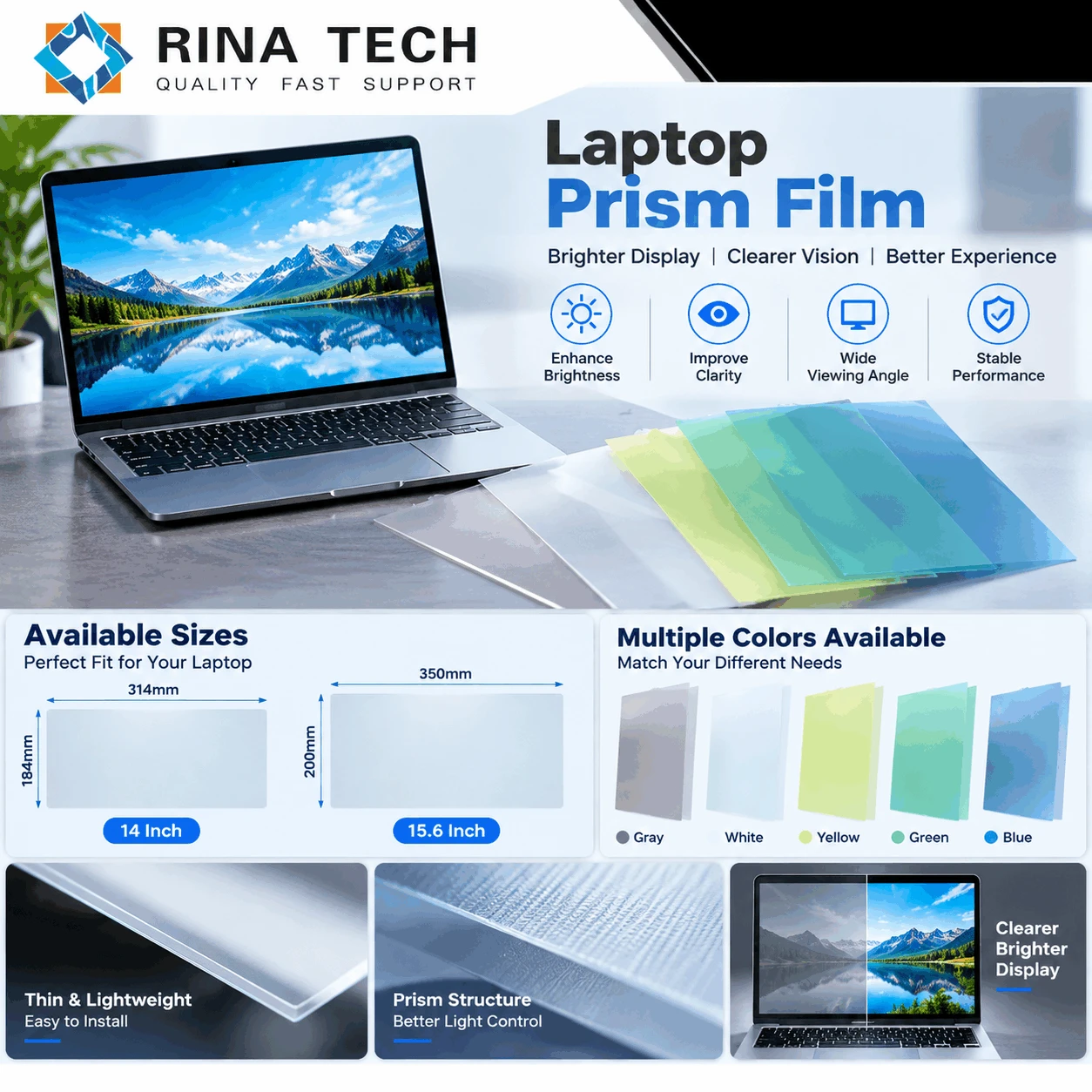
How does supply current ripple degrade micro-prism output?
High-performance Brightness Enhancement Films (BEF) utilize micro-prismatic structures to refract light into tight, high-intensity viewing cones. When a laptop backlight supply unit delivers unstable current with high ripple or switching noise, perimeter LEDs fluctuate in output intensity. Micro-prism arrays amplify these subtle electrical oscillations, transforming minor current ripples into visible screen flicker and micro-luminance banding across the active LCD panel.
Why do mismatched thermal budgets cause severe optical warping?
Integrating a high-gain BEF stack allows display engineers to drive screen brightness higher, but placing high-performance films into a thermally uncalibrated backlight cavity creates severe mechanical stress. If the LED driver and backlight assembly lack effective thermal dissipation pathways, localized heat builds up directly beneath the optical stack. Sustained thermal exposure causes thin PET optical substrates to expand unevenly, leading to film buckling, wave distortion, and edge light leakage.
How does unstable drive voltage trigger rapid LED degradation?
High-brightness optical films rely on consistent, narrow-spectrum light injection from perimeter LED strips. Backlight power supplies with poor voltage regulation suffer from transient voltage spikes during dynamic load changes, such as switching from dark to bright display content. These voltage spikes over-drive LED junctions, accelerating phosphor degradation, altering color temperature, and reducing the operational lifespan of the entire backlight unit.
What Key Electrical Specifications Must Your Backlight Driver Meet?
Why is high-frequency pulse-width modulation essential for display stability?
Modern laptop backlights utilize Pulse-Width Modulation (PWM) or direct current (DC) dimming to adjust screen brightness. When paired with high-performance optical films, low-frequency PWM drivers create visible stroboscopic effects and moiré interaction patterns. Specifying high-frequency PWM controllers operating above 20 kHz ensures smooth dimming curves, eliminates audible driver whine, and provides a stable light input that high-gain films can focus evenly.
How does multi-channel current matching prevent edge hot-spotting?
Edge-lit laptop backlights utilize long, narrow LED bars driven across multiple parallel channels. If the backlight driver exhibits current imbalance across these channels, individual LED groups output varying lumen levels. High-performance BEF sheets amplify these localized emission differences, turning minor current variations into noticeable light cones and dark gaps along the bottom border of the screen. Precise multi-channel current matching within ±1% guarantees uniform light injection.
What role do fast transient response circuits play in HDR displays?
High-Dynamic-Range (HDR) laptop displays require rapid backlighting adjustments to match fast-changing on-screen content. When displaying high-contrast scenes, the backlight power supply must ramp current up or down within milliseconds. Drivers with fast transient response prevent brightness lagging, visible haloing, and optical overshoot, allowing the brightness enhancement film to render crisp, high-contrast highlights seamlessly.
What Mechanical and Thermal Upgrades Are Required Inside the Backlight Cavity?

How do thermal-stabilized reflective substrates increase optical recycling?
High-performance BEFs operate by reflecting wide-angle light back down into the backlight cavity for depolarization and re-emission. The efficiency of this recycling loop depends heavily on the bottom reflector sheet. Upgrading to a high-reflectivity (>98%) specular or diffuse reflective substrate that resists thermal shrinkage ensures that recycled photons bounce back up to the BEF stack with minimal absorption loss.
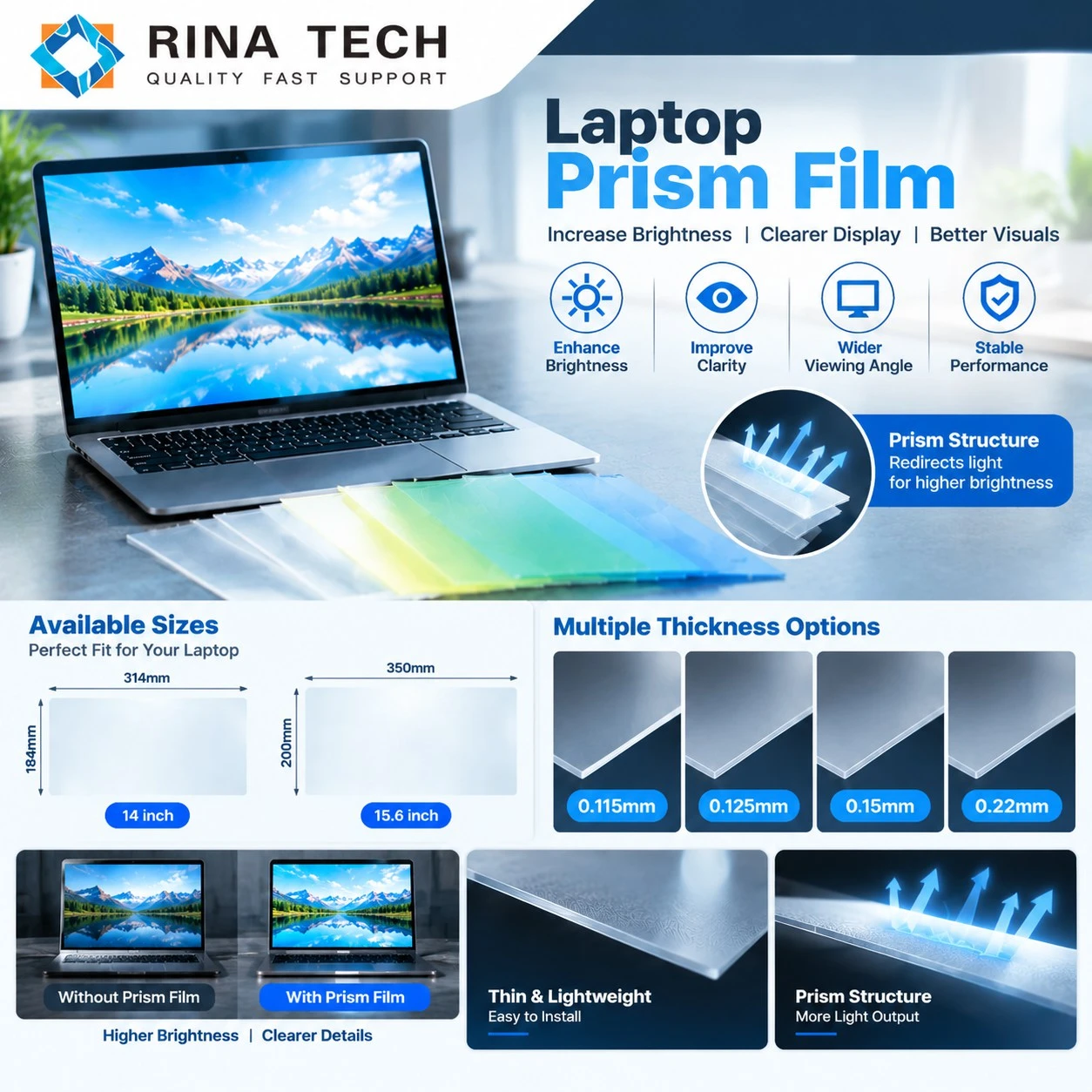
Why is precision gap spacing critical between optical layers?
Compressing optical films inside ultra-thin laptop lids brings adjacent layers into tight physical contact. If the mechanical housing does not maintain controlled spacing gaps, physical pressure creates optical "wet-out" and Newton's rings-distracting rainbow-like interference patterns. Engineering precision frame tolerances and incorporating micro-textured anti-blocking coatings on film surfaces maintains necessary air gaps, preserving uniform light distribution.
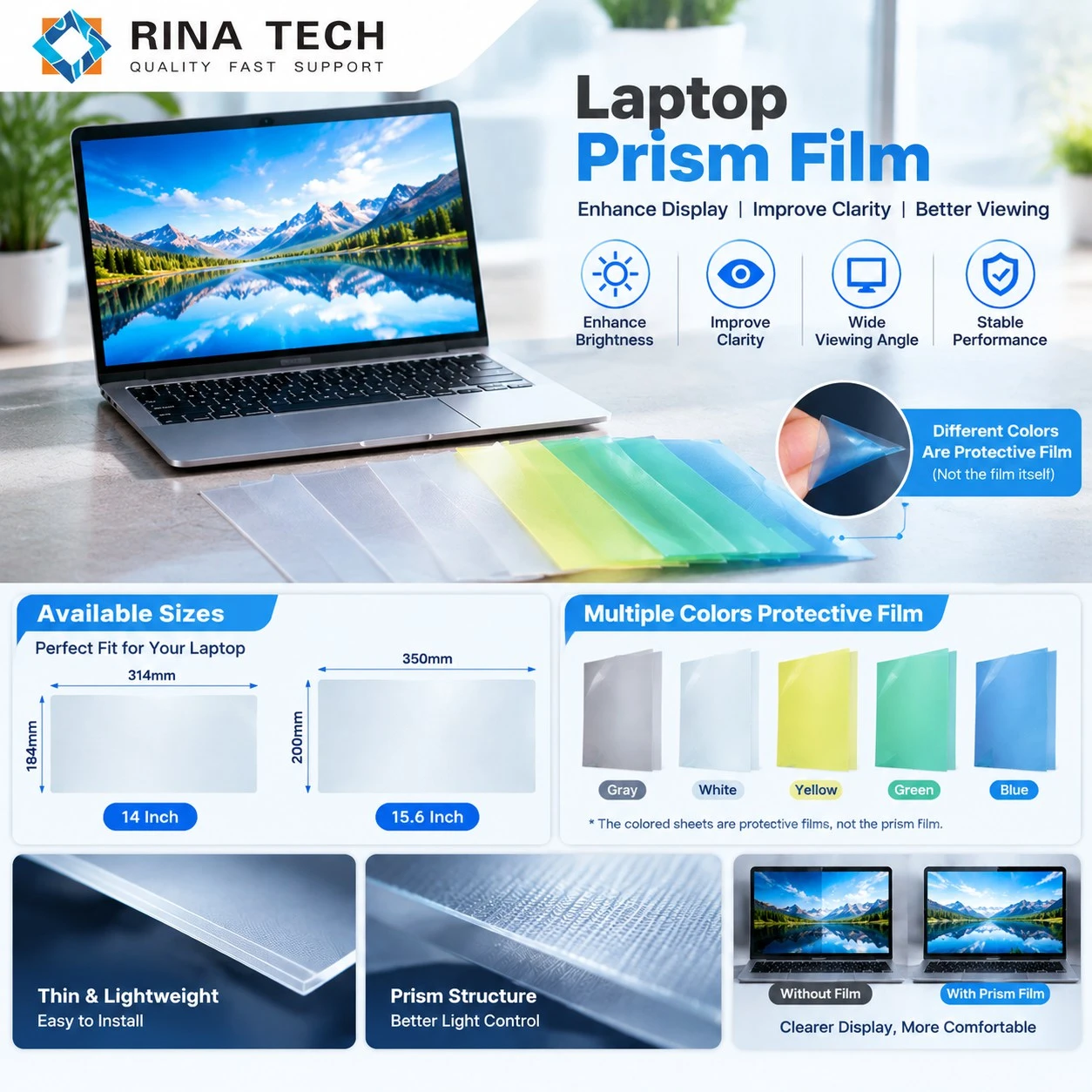
How do copper-core LED circuit boards improve thermal dissipation?
To prevent thermal accumulation at the light entry edge, backlight assemblies should upgrade from standard FR4 printed circuit boards to metal-core PCBs (MCPCB) or copper-clad substrates. Efficient heat conduction draws thermal energy away from perimeter LEDs rapidly, lowering junction temperatures, preserving LED lumen output, and protecting adjacent optical films from thermal expansion warping.

Can automated pick-and-place assembly reduce structural alignment defects?
Yes. High-gain optical films feature sub-millimeter prism pitch patterns that must align precisely with the display housing and LCD cell. Manual assembly introduces tilt, shifting, and finger-pressure defects. Utilizing automated robotic pick-and-place equipment equipped with optical vision alignment ensures consistent, stress-free film placement, maximizing factory yield rates on high-speed production lines.
How Do You Audit Your Backlight Supply Supply Chain Before Mass Production?
How does Automated Optical Inspection (AOI) verify display uniformity?
Manual visual inspection cannot catch minor luminance gradient shifts or micro-pitch distortions across thousands of manufactured units per day. Automated Optical Inspection (AOI) systems deploy multi-point colorimeters and high-resolution camera arrays to evaluate 100% of finished backlight modules. Machine vision algorithms measure 9-point and 13-point luminance uniformity, instantly rejecting modules that fail strict optical brightness standards.
Why is vendor co-engineering vital during early display architecture design?
Integrating a high-performance brightness enhancement film is not a simple drop-in replacement; it requires holistic optimization across the LED lightbar, power supply driver, reflective cavity, and optical film stack. Partnering with optical film suppliers and driver manufacturers during the early architectural design phase ensures all electrical, mechanical, and optical parameters are matched before cutting production tooling.
How does optimizing backlight supply efficiency lower long-term warranty costs?
An uncalibrated backlight supply driving high-brightness displays accelerates component wear, leading to early LED failures, screen yellowing, and thermal warping in the field. By investing in precise driver control, efficient thermal management, and quality-tested optical films, laptop manufacturers reduce field failure rates, protect brand reputation, and lower long-term warranty and field service expenses.


