

Do You Know What Is A Brightening Prism Film?
May 10, 2023
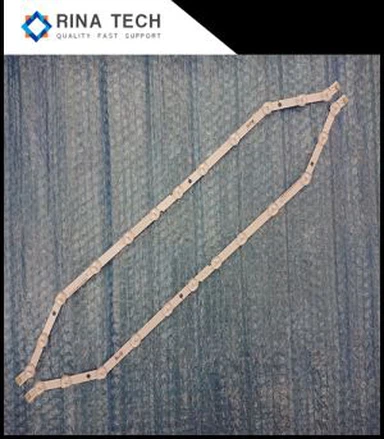
Since the TFT-LCD liquid crystal display is a non-self-illuminating display, a backlight must be used to generate a light source to display images. Therefore, the backlight module is an indispensable key component in the TFT-LCD display; the backlight module is generally integrated with a backlight source, a multi-layer backlight material, and a supporting frame. The quality of the backlight determines important parameters such as the brightness of the liquid crystal display, the uniformity of the emitted light, and the color scale, and determines the luminous effect of the liquid crystal display. The light emitted from the traditional backlight light source, after passing through the optical film such as reflective film, diffusion film, etc., only about 60% of the light enters the polarizing film through the backlight module, and finally passes through the liquid crystal panel, and only less than 60% of the light is transmitted. 6% of light, so backlight design and material selection are very important.
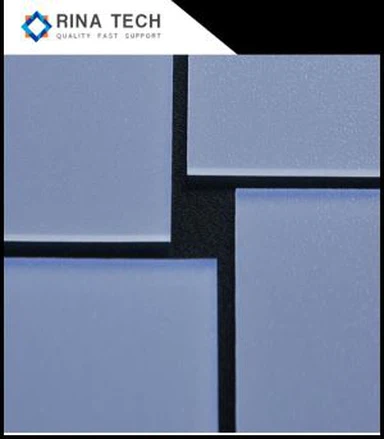
The optical film in the backlight module determines the performance of the entire module. Among them, the brightness-enhancing film (also known as prism film, or condenser film) with prismatic microstructure can effectively improve the brightness, uniformity, and image contrast of the lighting, and indirectly Improve the power consumption performance of the backlight module. Generally, one or two brightness enhancement films are required in TFT-LCD displays. The mechanism of action is to concentrate the scattered light on the front to achieve the purpose of improving the brightness of the front. Recycling can reduce the loss of light, and indirectly achieve the benefits of energy saving, low carbon, and environmental protection.
In the TFT-LCD backlight module, the thin film or thin film that can improve the luminous efficiency of the entire backlight system, using the special prism structure of the brightness enhancement film, through optical principles such as refraction, total reflection, and light accumulation, can make the light in all directions concentrate to the central viewing angle, thereby improving the brightness of the LCD panel and controlling the viewing angle.
The different types of optical films in the composite brightness enhancement film can be divided into diffusion-prism composite film (DOP), prism-prism composite film (POP), microlens-prism composite film (MOP), prism-microlens composite film (POM), etc.
Product Features:
The backlight module in a traditional liquid crystal display is mainly composed of a light source, a light guide plate, and optical films such as a lower diffusion film, a lower enhancement film, an upper enhancement film, and an upper diffusion film on the light guide plate. However, the backlight module with the above structure has many optical films, the cost is high, the assembly process is complicated, and the assembled module has a large thickness. In order to solve the above problems, Jizhi Technology uses advanced composite technology and resin formulation technology to assemble a variety of different optical films (2 or 3 types) into a single multifunctional composite brightness enhancement film.
product advantages:
Compared with the traditional structure of the backlight module, the advantages of the composite brightness enhancement film are:
1. Avoid multiple uses of the module base material, reducing the total thickness of the module and the total cost of the product;
2. Reduce assembly time and improve assembly efficiency:
3. Avoid the loss of light source energy and improve the display brightness
4. By compounding, the sharp prism top is wrapped inside to avoid scratches on the prism
5. The composite film has better stiffness and warpage resistance.