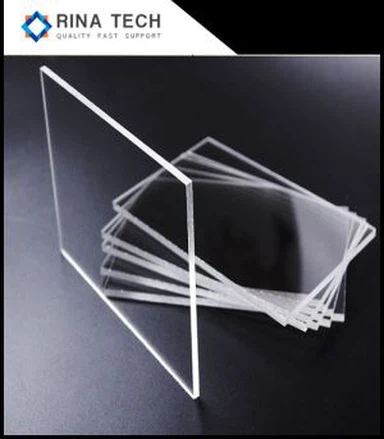

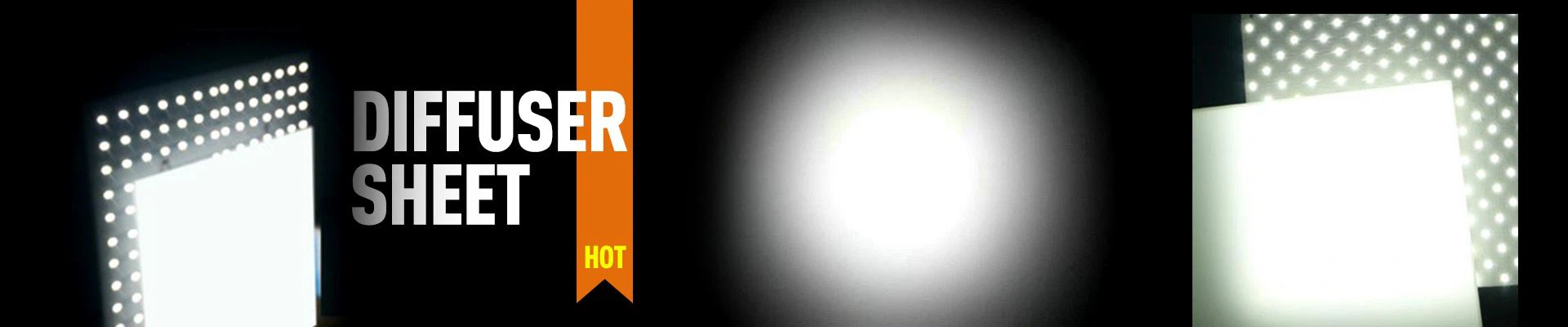


Factory Price Diffuser Sheet For Led Light
An optical diffuser is an optical component that makes light more uniform and softer through surface microstructure or internal scattering materials. It is widely used in various occasions where light distribution needs to be controlled and optimized.
- Fast Delievery
- Quality Assurance
- 24/7 Customer Service
Product Introduction
Rina Technology Co., Ltd. is one of the leading manufacturers and suppliers of factory price diffuser sheet for led light in China. Welcome to wholesale durable products in stock here and get quotation from our factory. All customized products are with high quality and low price.
Products Description

How Diffuser Panels Work
The working principle of a diffuser panel is a sophisticated "light reshaping" process. Its core lies in the synergy between its surface microstructure and internal scattering system, transforming originally concentrated, directional light into uniform, soft, diffused light. When light (whether from a point source like an LED, a linear source like a projector, or other surface sources) strikes the diffuser panel at a specific angle, it undergoes two key stages: surface interaction and internal conduction, ultimately achieving "de-directionalization" and "uniformization" of the light.
During the surface interaction stage, the light first encounters the diffuser panel's surface structure-which may include micron-scale concave and convex textures (such as frosted or orange peel), a regularly arranged prism array, or a special optical coating. When light strikes these non-smooth surfaces, some of the light is diffusely reflected by the surface's undulations: the varying angles of the texture at different locations cause the light to reflect in multiple directions, disrupting its original directional propagation. Another portion of the light penetrates the surface and enters the interior, where the surface microstructures refract the light, altering its angle of incidence and laying the foundation for subsequent internal scattering. For example, a surface with a prism array can "split" vertically incident light into multiple refracted beams, creating a preliminary diffusion process before it enters the interior.
After entering the internal transmission stage, the light encounters scattering particles evenly distributed within the diffuser substrate. These particles can be organic microspheres (such as PMMA beads), inorganic particles (such as titanium dioxide or barium sulfate), or cavity structures such as bubbles. Due to the difference in refractive index between the scattering particles and the substrate (for example, the PMMA substrate has a refractive index of approximately 1.49, while the titanium dioxide particles have a refractive index of 2.7), light undergoes dramatic refraction, reflection, and even diffraction at the interface between the particles and the substrate. As light passes through the particles, its propagation direction deviates due to the sudden change in refractive index. If the particle density is high, light can be scattered multiple times between multiple particles, like constantly changing its path in a "particle forest," ultimately exiting through the other side of the diffuser. This multipath propagation "breaks up" the originally concentrated light, reducing any bright spots that might otherwise exist (such as those caused by direct illumination from an LED light source), resulting in a wider, more evenly distributed glow.
The degree and angle of light diffusion can be precisely controlled by adjusting the parameters of the scattering particles. Specifically:
Particle size directly influences the scattering angle: Small particles (e.g., 1-5 microns) scatter light more evenly and are suitable for producing narrow-angle, highly concentrated diffuse light (such as in display backlight modules, which require uniform light without excessive divergence). Large particles (e.g., 10-50 microns) induce more intense scattering, increasing the angle of light diffusion and making them suitable for scenarios requiring wide-angle illumination (such as indoor ceiling lights, which require wider coverage). Particle density determines scattering intensity: the higher the density, the more frequent light collisions with particles, resulting in more complete scattering and improved light uniformity. However, excessive density can reduce light transmittance (some light is over-scattered and prevented from radiating). Conversely, low-density particles are suitable for applications requiring high transmittance but minimal diffusion (such as anti-glare treatment for transparent displays).
Particle distribution influences lighting uniformity: Evenly distributed particles ensure uniform light scattering across the diffuser, avoiding bright or dark spots. A gradient distribution (e.g., dense particles on the surface and sparse particles in the inner layer) can achieve specific lighting gradient effects (such as ambient lighting with gradually dimming edges).
Furthermore, the coordinated design of the surface structure and internal particles can further optimize the effect. For example, a matte surface texture combined with medium-sized particles can simultaneously enhance surface diffuse reflection and internal scattering, creating a "double diffusion" effect that is particularly suitable for medical lighting or precision testing equipment requiring extreme uniformity. This multi-dimensional control mechanism allows the diffuser to customize the ideal lighting effect based on different light source characteristics (such as the high directionality of LEDs and the high concentration of projection light sources) and application requirements (such as the softness of lighting and the clarity of display)
Application Scenarios of Diffuser Panels
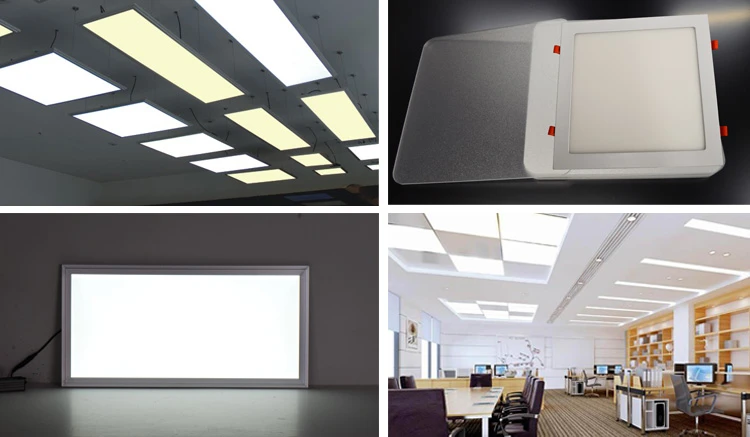
In the lighting industry, diffusers play a key role in achieving a comfortable lighting environment. LED lamps, whose point-source nature can easily produce glare and uneven light spots, are easily affected by diffusers. However, diffusers, through the synergistic effect of surface microstructures and internal scattering particles, can "soften" the intense LED light into a uniform, diffused glow. For example, in home LED ceiling lights, diffusers transform the direct light from the lamp beads into a soft, room-wide glow, eliminating bright spots on the ceiling. In commercial panel lights, diffusers evenly distribute light throughout the office area, reducing visual fatigue caused by uneven lighting on the desk. Backlighting also relies on diffusers. For example, in advertising light boxes, diffusers eliminate light and dark streaks created by the arrangement of tubes or LEDs, ensuring uniform color and brightness.
Fluorescent lamps, when paired with diffusers, reduce the directional nature of the light, making them suitable for classrooms and libraries where seamless illumination is required, avoiding the visual discomfort caused by the direct light of traditional tubes. Projection equipment places extremely stringent demands on light uniformity, and diffusers play a crucial role in this regard. In projection screens, the diffuser's surface texture and internal scattering structure disperse the projector's concentrated beam into multi-angle diffuse reflections, ensuring consistent brightness across all areas of the screen. This prevents image dimming due to light falloff, even at the edges of large screens, while also reducing ambient light interference and enhancing contrast. Within the projection optical system, micro-diffusers pre-process the light emitted by the light source, eliminating stray light and bright spots caused by lens reflection and prism refraction along the optical path. This ensures even light distribution before entering the imaging lens, resulting in more accurate color reproduction and sharper details. Especially in high-definition projection equipment, the diffuser's precision directly impacts pixel-level light uniformity.
In the display industry, diffuser panels are the unsung heroes that enhance display quality. Liquid crystal displays (LCDs) do not emit their own light and rely on a backlight module for illumination. A diffuser converts the point light from the LEDs in the backlight module into a surface light source, ensuring that every pixel on the LCD panel receives even light. This prevents dark spots or bright lines that appear unevenly on the screen, while also reducing reflections and improving viewing angles. For example, a diffuser on a TV screen ensures consistent brightness and color at different viewing angles. In organic light-emitting diode (OLED) displays, while not directly contributing to light emission, diffusers can optimize light extraction efficiency. The self-luminous nature of OLEDs can produce subtle brightness variations due to pixel arrangement. A diffuser gently diffuses the light, masking these variations and reducing specular reflections on the screen surface, ensuring clear viewing even in bright sunlight.
In photography, diffusers are a valuable tool for creating "professional" lighting effects. In portrait or product photography, strong direct light can create harsh shadows on the subject's surface. A diffuser transforms flash or natural light into soft, diffused light. For example, when shooting a portrait, placing a diffuser between the light source and the model diffuses the light evenly across the face, softening shadows on details like nasolabial folds and wrinkles, and revealing a more delicate skin texture. When photographing small items like jewelry and cosmetics, a diffuser eliminates surface highlights and shadows, highlighting the product's texture and color gradations, creating a more refined image. Furthermore, incorporating diffusers into the backdrops of large studios can ensure a smooth transition in background light, avoiding distinct light and dark boundaries and enhancing the overall harmony of the image.
In optical testing and research, diffusers serve as a "standard scattering element," providing a stable reference for experiments. Their predictable scattering properties (such as fixed scattering angles and transmittance parameters) make them ideal tools for calibrating optical instruments. For example, in spectrometer testing, diffusers can scatter incident light into a uniform reference beam, helping the instrument calibrate the scattering efficiency of light of different wavelengths. In imaging system resolution testing, diffusers can simulate specific scattering scenarios to verify the camera or sensor's ability to capture scattered light. Furthermore, when studying the interaction between light and materials, the diffuser's controllable scattering parameters (such as particle density and size) provide scientists with adjustable experimental models to explore the physical mechanisms of light scattering.
Date Sheet


Package


Certification

Shipping And Payment

FAQ:
Q1: How can I get a quotation from your company?
Contact us. In order to quote you as soon as possible, we need the following information:
1).Detailed drawings (CAD/PDF/DWG/IGES/STEP)
2).Material
3).Quantity
4).Surface treatment
5).Any special packaging or another requirement
Q2: Whether the small/big order is allowed in your company?
Yes, whatever small or big order is welcome.
Q3: Can I get a sample for the check?
Yes, but the single sample will charge the fee. For batch production, we will provide a sample for a check before
mass-production or we will charge sample fee first, then refund after payment.
Q4: What if I am in urgent demand?
We always make the delivery on time. You can count on us.
Q5: I want to keep our design in secret, can we sign NDA?
Sure, we can sign NDA
Hot Tags: factory price diffuser sheet for led light suppliers, factory, customized, price, in stock, Led Light Diffuser, PC Diffuser Plate, Acrylic Diffuser Panel Replacement, TV Diffuser Plate, LED Light Diffuser Plate For LCD, LED Panel Diffuser Material