

What Is A Polarizing Film?
May 17, 2023
Polarizing Film: Definition, Principles, Materials, Functions, and Applications.
The polarizing film, also known as a polarizing filter or polarizer, is a type of material that selectively blocks certain light waves based on their polarization. It is commonly used in photography, sunglasses, display screens, and other optical devices to reduce glare, enhance contrast, and improve visibility.

The principle behind polarizing film is based on the fact that light waves can be polarized by passing through certain materials or by reflection. When a beam of light passes through a polarizer, it becomes polarized, meaning that its oscillations are restricted to a single plane. This is achieved by aligning the polarizing molecules in the film in a specific direction, which allows only the light waves that are vibrating in the same plane to pass through while blocking the ones that are perpendicular to it.
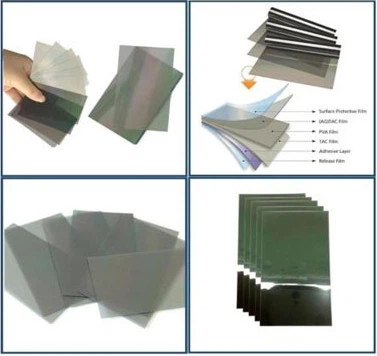
There are several materials that can be used to make polarizing films, including dichroic crystals, stretched polymers, and thin metal coatings. Dichroic crystals are natural or synthetic materials that have different refractive indices for different polarizations of light and can be used to split a beam of light into two polarized components. Stretched polymers, such as polyvinyl alcohol (PVA), are transparent films that have been stretched in one direction to align their molecules and create a polarizing effect. Thin metal coatings, such as aluminum or gold, can be deposited on glass or plastic substrates to create a reflective polarizer that reflects one polarization of light while transmitting the other.
The function of polarizing film depends on its orientation and the angle of incidence of the light. When the film is aligned horizontally or vertically, it blocks the light that is polarized in the perpendicular direction, which results in a darker image and reduced glare. When the film is rotated at an angle, it blocks the light that is polarized at that angle, which enhances the contrast and color saturation of the image.
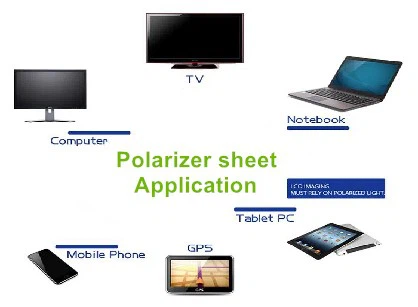
Polarizing film has numerous applications in various fields, such as photography, cinematography, navigation, aviation, and medicine. In photography, polarizing filters are used to darken skies, eliminate reflections from water and glass surfaces, and enhance the colors of foliage and flowers. In cinematography, polarizers are used to control the direction and intensity of the light, and to create special effects such as rainbow patterns. In navigation and aviation, polarizers are used to eliminate glare from the sun and to improve the visibility of instruments and screens. In medicine, polarized light microscopy is used to study the structural and functional properties of biological tissues and cells.
In conclusion, polarizing film is a versatile and essential material in modern optics and imaging. Its ability to selectively block and transmit polarized light waves makes it a powerful tool for reducing glare, enhancing contrast, and improving visibility. Its applications range from entertainment and fashion to science and technology. As our understanding and mastery of polarizing principles and materials continue to advance, we can expect to see more innovative and exciting uses of polarizer film in the future.