


Backlight Technology Innovation: From Mini-LED To Micro-LED, A New Era Of Display Is Ushered in
Mar 03, 2025
1. Backlight Overview
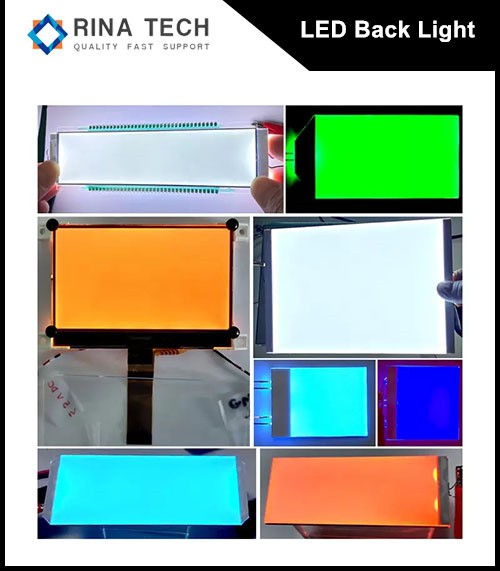
Definition: Backlight is a lighting system located behind the display screen, used to provide uniform light source for non-self-luminous display devices such as liquid crystal (LCD).
Core function: Improve screen brightness, contrast and visibility, especially in dark environments.
Core requirements: High brightness, high uniformity, low power consumption, and long life.
2. Classification of backlight technology
(1) By light source type
LED backlight:
Advantages: Energy saving, long life (more than 50,000 hours), high color gamut, mercury-free and environmentally friendly.
Classification: White light LED (WLED), RGB-LED (wide color gamut), Mini-LED/Micro-LED (high-division light control).
CCFL backlight (cold cathode fluorescent lamp):
Features: Used in early LCDs, contains mercury, has high power consumption, and has a short life (about 20,000 hours), and has been gradually phased out.
EL backlight (electroluminescence):
Features: Good uniformity, but low brightness, used in small devices (such as watches and dashboards).
(2) By structure type
Direct-lit backlight:
- The light source is evenly distributed behind the panel, which can achieve high brightness and dynamic zone dimming (such as HDR).
Disadvantages: large thickness and high cost.
Edge-lit backlight:
The light source is located at the edge of the screen and diffuses the light through the light guide plate (LGP).
Advantages: light and thin, low cost; Disadvantages: poor uniformity, difficult to achieve fine dimming.

3. Backlight system composition
1. Light source: LED/CCFL and other light-emitting devices.
2. Light guide plate (LGP): converts point/line light source into surface light source, commonly using PMMA material.
3. Optical film group:
Diffusion film: uniformizes light.
Brightness enhancement film (BEF): increases front brightness (such as 3M's prism film).
Reflective film: reduces light loss.
4. Driving circuit: controls brightness (PWM dimming/DC dimming) and dynamic zone.

4. Core technology
Dynamic dimming:
Global dimming: overall brightness adjustment, low cost but limited contrast.
Local dimming: independent light control in each partition to improve HDR effect (such as Mini-LED thousand-level partition).
Quantum dot technology: expand the color gamut through photoluminescent nanoparticles, used for high-end display screens (QLED).
Flexible backlight: Adapt to the needs of foldable/curled screens, using flexible light guide materials and OLED hybrid solutions.

5. Application areas
Consumer electronics: mobile phones, tablets, TVs (Mini-LED popularization), laptops.
In-vehicle display: high brightness (1000nit+), high temperature resistance (-40℃~85℃).
Medical equipment: high uniformity, low blue light eye protection.
Industrial control: wide temperature operation, long life.
Outdoor advertising: ultra-high brightness (>2000nit) to combat ambient light.

6. Design challenges
Heat management: LED heat affects life, requiring heat sink/graphene materials.
Uniformity optimization: light guide plate dot design, film layer combination simulation.
Power consumption and cost: The increase in the number of Mini-LED partitions leads to an increase in the cost of driver ICs.
Thickness control: side-entry backlights need to balance thinness and optical efficiency.

7. Future trends
Micro-LED: self-luminous + backlight integration, ultra-high brightness and contrast.
Polarizer-less technology (POL-less): Reduce light loss and improve energy efficiency.
Environmental protection: Mercury-free in the entire industry chain (LED replaces CCFL).
Human factors engineering: Adaptive ambient light adjustment, low blue light certification (such as TÜV Rheinland).


