

What Types Of PMMA Sheets Are There?
Mar 19, 2022
Types of Plexiglass (Acrylic) Sheets
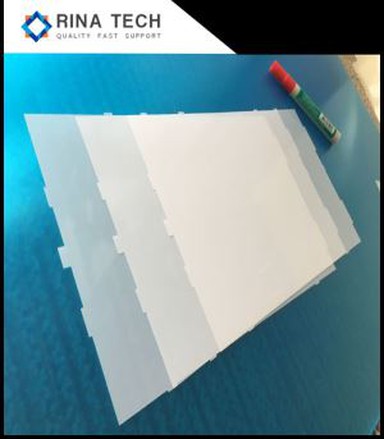
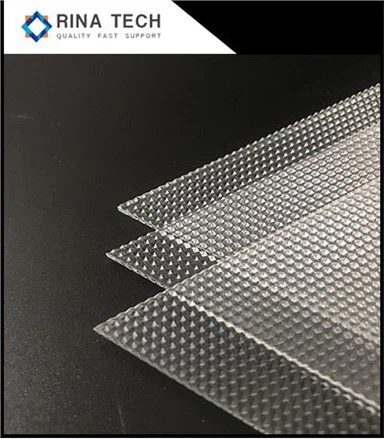
Acrylic diffuser
There are many types of acrylic sheets. Common boards include: transparent board, dyed transparent board, milky white board, color board; special boards include: sanitary board, cloud board, mirror board, plywood board, hollow board, impact board, flame retardant board, super wear-resistant board, Surface checkered board, frosted board, pearlescent board, metal effect board, etc. Different performance, different colors and visual effects to meet the ever-changing requirements.
1. Acrylic sheets are divided into cast sheets and extruded sheets according to the production process. According to the transmittance, they can be divided into transparent sheets, translucent sheets (including dyed sheets and transparent sheets), and color sheets (including black and white and color sheets); Impact board, anti-ultraviolet board, ordinary board and special board such as high impact board, flame retardant board, frosted board, metal effect board, high wear-resistant board, light guide board, etc.
A: Cast plate: high molecular weight, excellent stiffness, strength and excellent chemical resistance. Therefore, it is more suitable for processing large-sized logo plaques, and the time is slightly longer than that in the softening process. This kind of board is characterized by small batch processing, unparalleled flexibility in color system and surface texture effect, and complete product specifications, suitable for various special purposes.
B: Extruded sheet: Compared with cast sheet, extruded sheet has lower molecular weight, slightly weaker mechanical properties and higher flexibility. However, this feature facilitates bending and thermoforming processes with a shorter softening time. When dealing with large-sized sheets, it is beneficial to various rapid vacuum forming. At the same time, the thickness tolerance of the extruded sheet is smaller than that of the cast sheet. Due to the large-scale automatic production of extruded sheets, the color and specifications are inconvenient to adjust, so the variety of product specifications is limited to a certain extent.
2. There is also a kind of acrylic recycled board called recycled acrylic scrap, which is obtained by thermal degradation to obtain recycled MMA (methyl methacrylate) monomer, and then obtained by chemical polymerization. After strict technological process, pure MMA monomer can be obtained again, and there is no difference in quality from newly synthesized monomer. However, the produced degradable monomers are not of high purity, and their quality and performance are poor after the sheet is formed.
Summary: The extruded sheet uses granular raw materials, which are extruded after being dissolved at high temperature, while the casting sheet is directly cast with MMA monomer (liquid state). to complete the aggregation. When processed into a plate, its structure and performance are weak, and it is not suitable as a material for outdoor marking products, but is only suitable for indoor products such as crystal characters or product brackets. In addition, since most of the extruded boards do not have UV protection, their outdoor service life is not comparable to that of cast boards. The color will gradually fade and it will easily become brittle until it cracks. Casting plate is to complete structural polymerization in the process of plate processing, during which ultraviolet absorber is added, which has extremely high strength and UV function, outdoor service life is more than 5 years or even 10 years, and the color has been bright and new during use.
Process characteristics
1. Polymethyl methacrylate contains polar side methyl groups and has obvious hygroscopicity. The water absorption rate is generally 0.3%-0.4%. It must be dried before molding. The drying conditions are 80℃-85℃ for 4-5h .
2. Polymethyl methacrylate has effective and obvious non-Newtonian fluid characteristics in the temperature range of molding processing. The melt viscosity will decrease significantly with the increase of shear rate, and the melt viscosity is also very sensitive to the change of temperature. Therefore, for the molding of polymethyl methacrylate, increasing the molding pressure and temperature can significantly reduce the melt viscosity and achieve better fluidity.
3. The temperature at which polymethyl methacrylate begins to flow is about 160 °C, and the temperature at which it begins to decompose is higher than 270 °C, which has a wide processing temperature range.
4. The melt viscosity of polymethyl methacrylate is high, the cooling rate is fast, and the product is prone to internal stress. Therefore, the process conditions are strictly controlled during molding, and post-processing is also required after the product is formed.
5. Polymethyl methacrylate is an amorphous polymer, the shrinkage rate and its variation range are small, generally about 0.5%-0.8%, which is conducive to molding plastic parts with high dimensional accuracy.
6. Polymethyl methacrylate has very good cutting performance, and its profiles can be easily machined into various required sizes.
Processing technology
Polymethyl methacrylate can be produced by casting, injection molding, extrusion, thermoforming and other processes.
Casting
Casting is used to form plexiglass sheets, bars and other profiles, that is, the profiles are formed by mass polymerization. The products after casting need to be post-treated. The post-treatment conditions are 2 hours at 60°C and 2 hours at 120°C.
injection molding
Injection molding uses the pellets obtained by suspension polymerization, and the molding is carried out on a common plunger or screw injection molding machine. Table 1 shows typical process conditions for injection molding of polymethyl methacrylate.
Acrylic rod
Acrylic stick picture book
Injection molding products also need post-treatment to eliminate internal stress. The treatment is carried out in a hot air circulation drying oven at 70-80 °C. The treatment time depends on the thickness of the product, and generally takes about 4 hours.
Extrusion
Polymethyl methacrylate can also be extruded to prepare plexiglass sheets, rods, pipes, sheets, etc. with particles produced by suspension polymerization. The mechanical properties, heat resistance and solvent resistance are not as good as those of casting profiles, and their advantages are high production efficiency, especially for pipes and other casting molds. Difficult to manufacture profiles. Extrusion molding can use a single-stage or two-stage vented extruder, and the screw length-diameter ratio is generally 20-25. Table 2 shows typical process conditions for extrusion molding.
Thermoforming
Acrylic crafts
Acrylic Crafts Atlas
Thermoforming is the process of making plexiglass sheets or sheets into products of various sizes and shapes. The blanks cut to the required size are clamped on the mold frame, heated to soften them, and then pressurized to make them close to the mold surface. , to obtain the same shape as the profile, and after cooling and shaping, the edge is trimmed to obtain the product. Pressurization can be done by means of vacuum drawing or direct pressurization of a punch with a profile. The thermoforming temperature can refer to the recommended temperature range in Table 3. When using rapid vacuum low-draft forming products, the temperature close to the lower limit should be used, and the temperature close to the upper limit should be used when forming deep-drawn products with complex shapes, and normal temperature should be used in general.
engraving and cutting
It is mainly for hollowing and engraving of already formed acrylic or colored acrylic materials. Ordinary laser engraving and cutting machines can meet the engraving and hollowing needs of most acrylic products.