

About The Light Bar, How Much Do You Know About It?
Feb 09, 2023
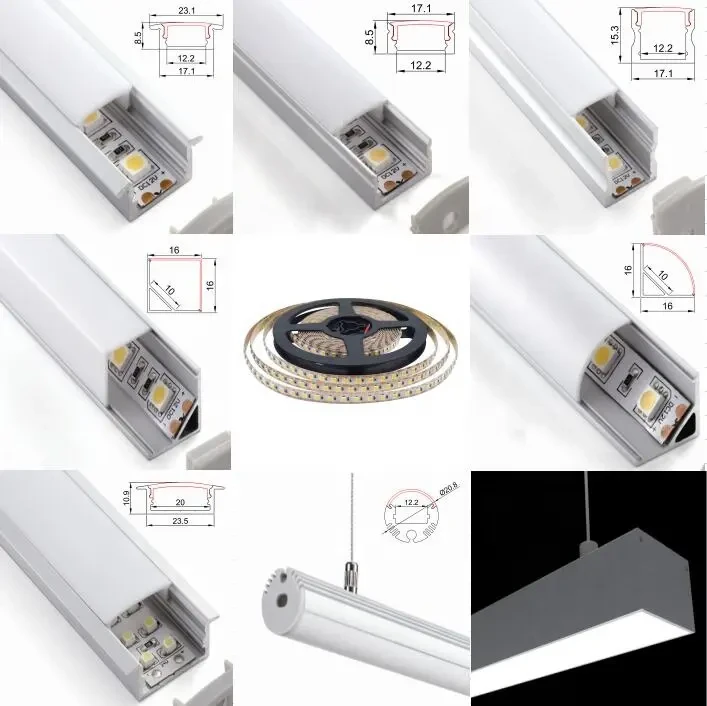
Light strips are another name for light strips, also named because of their shape. Just like the Chinese pictographs, it is obtained by taking its shape and then adding the associated material. Common appellations include Great Wall Light Bar, LED Light Bar, LED Soft Light Bar, Light Bar, FPC Light Bar, etc.
The flexible LED strip is the use of FPC to the assembly circuit board, with an SMD package (SMD) of high-brightness LED as the light source, every 3 lights for a unit, every 50 cm for a large length unit, the thickness of this product is only the thickness of a coin, does not occupy space flexible LED strip is free to cut, can also be arbitrarily extended and light is not affected.
Because of the use of soft FPC material, flexible LED strips can be arbitrarily bent, folded, winded, can be arbitrarily moved in three-dimensional space, and stretched and broken; suitable for irregular places and space is small, but also because can be arbitrarily bending and winding, suitable for advertising and other decorative arbitrary combination of various patterns.
The flexible LED strip is a DC 12V power supply, with low power consumption, silicone potting, bright luminous colors, uniform color mixing, is not easy to damage, beautiful appearance, is safe and reliable, and is a simple installation, can be said to be another innovation of LED series strip!
1. Light bar features
1. cold light source, low heat generation, will not produce heat radiation on the display of goods;
2. green lighting source, does not produce harmful ultraviolet light, especially suitable for use as cultural relics, or pharmaceutical display lighting.
3. efficient power saving, more than 65% less than fluorescent lamps.
4. long service life, an installation available for 10-20 years.
5 used to irradiate gold and silver jewelry, watches, etc. more crystal bright.
6. low voltage work, safe and reliable use.
7. waterproof, shockproof.
8. low loss, long life.
2. Technical parameters
1. Voltage
This refers to the input voltage of the LED strip, the commonly used specification is DC 12V, but also 24V; the power is 14.3 watts per meter / 18.2 watts per meter both can be selected.
2. Color temperature
Color temperature refers to a standard black body heated, the temperature rises to a certain level when the color begins to change from deep red - light red - orange - white - blue, gradually, a light source and the color of the black body is the same, we will be the absolute temperature of the black body at the time called the color temperature of the light source.
Generally speaking, the color temperature is not used as an indicator to assess the LED strip, but because of the use of environmental relations, sometimes there are special requirements for color temperature.

Light source color temperature is different, the light color is also different. Color temperature below 3300K, the light color is red to give people a warm feeling, and there is a stable atmosphere, commonly known as warm color temperature. Color temperature in the middle of 5000K-6000K, people in this hue no special obvious visual psychological effect, there is a crisp feeling; so-called "neutral" color temperature. The color temperature of more than 6000K, the light color blue, gives people a cool feeling, commonly known as cold color temperature; in general, 7500K (cold white blue) / 6500K (white) / 3500K (warm white yellow).
3. Brightness
The basic unit of luminous intensity, candela is one of the basic units of the international system of units.
General LED strips of different colors will have different luminous intensities, the common unit is mcd, that is, milli-candela. The higher the value, the greater the luminous intensity, that is, the brighter. This is an important indicator to assess the brightness of the LED strip, the higher the brightness requirements the more expensive the strip, this is because the price of a high-brightness LED chip is expensive, and the higher the brightness, the more difficult packaging.
4. luminous angle
This refers to the LED strip on the LED components of the luminous angle, the general SMD LED (i.e. SMD components) luminous angle is 120 degrees. The larger the luminous angle, the better the effect of light dispersion, but relatively, its luminous brightness will be reduced accordingly, the luminous angle is small, the intensity of light is up, but the irradiation range will be reduced.
Therefore, another important indicator to assess the LED strip is the luminous angle. There are some bad manufacturers on the market, in order to improve the luminous brightness to earn higher profits, deliberately reduce the luminous angle, a little carelessness, you will buy such substandard components.
5. Quality Assurance
Flexible LED strip is using FPC to the assembly circuit board, with SMD LED for assembly, so that the thickness of the product is only the thickness of a coin, and does not take up space; universal specifications are 30cm long 18 LEDs, 24 LEDs, and 50cm long 15 LEDs, 24 LEDs, 30 LEDs, etc., and 60cm, 80cm, etc., different users have different specifications.
Flexible LED strip can be cut at will, and can also be arbitrarily extended without affecting the light, FPC material is soft, can be arbitrarily bent, folded, and rolled, can be moved and expanded in three dimensions at will without breaking, and suitable for irregular places and space is small, also because it can be arbitrarily bent and rolled, suitable for advertising decoration in any combination of various patterns.
LED hard light bar is used to assemble circuit board with PCB hard board, LED with SMD LED for assembly, but also with straight LED for assembly, depending on the demand and use of different components. The advantage of the hard light bar is relatively easy to fix, and processing and installation are more convenient; the disadvantage is not arbitrary bending and is not suitable for irregular places.
Hard light bar with SMD LEDs have 18 LEDs, 24 LEDs, 30 LEDs, 36 LEDs, 40 LEDs, and many other specifications; with straight LEDs have 18, 24, 36, 48, and other different specifications, there are front and side, side light-emitting also called the Great Wall light bar.
1. Look at the solder joint
Genuine LED strip manufacturers produce LED strips using the SMT chip process, with solder paste and reflow process production. Therefore, the LED strip on the solder joint is relatively smooth and the amount of solder will not be more, the solder joint is arc-shaped from the FPC pad to the LED electrode, and the cottage version of the LED strip solder joint solder amount is not uniform, more than a dot wrapped around the solder foot, while there will be different degrees of the tin tip, which is a typical phenomenon of manual welding.
2. Look at the quality of FPC
FPC is divided into copper and calendered copper, copper foil is copper is protruding from the pad and FPC connection if you look carefully. While the calendered copper is closely and FPC is integrated, can be bent at will and will not appear pad off phenomenon. Copper laying board if too much bending will appear to pad off, maintenance, when the temperature is too high, will also cause the pad off.
3. Look at the cleanliness of the surface of the LED strip
If the use of SMT process production of LED strips, the surface cleanliness is very good, see what impurities and stains. But if the hand soldering process produces of cottage version of the LED strip, it's surface no matter how clean, there will be residual stains and cleaning traces, while the FPC surface will have flux and tin residue.
4. Look at the packaging
Legitimate LED strip will use anti-static coil packaging, generally, 5 meters a volume or 10 meters a volume, and then outside the use of anti-static moisture-proof bags sealed, and cottage version of the LED strip will be due to cost savings, and the use of recycled volume material disk, and then no anti-static moisture-proof bags, a closer look at the volume material disk can be seen on the exterior of the traces and scratches left when clearing the label.
5. Look at the label
Legitimate LED strip bags and reels will have printed labels on them, not printed labels; while the cottage version of the label is printed, while the specifications and parameters are not uniform.
6. Look at the accessories
The regular LED strip will be in the box inside the instructions and specifications of the strip, but also equipped with LED strip connectors or cardholders; the cottage version of the LED strip box does not have these accessories because some manufacturers are still able to save after all.
3. Scope of application
Domestic users like to search with the keyword LED soft strip or soft strip, the same product with different names, but adapted to different people.
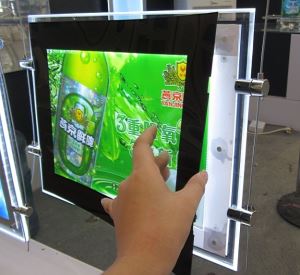
LED light bar has been widely used in furniture, automobile, advertising, lighting, ships, and other industries. Countertop glass and façade glass at the corner, straight line, or circular arc. Applicable occasions: jewelry cabinets, cosmetic cabinets, boutique cabinets, wine cabinets, glassware cabinets, heritage display cabinets, medicine cabinets, bar counters, supermarket refrigerated display cabinets, etc.
At the same time, LED strips are also widely used in the decoration and lighting of buildings, bridges, roads, gardens, courtyards, floors, ceilings, furniture, cars, ponds, etc., adding endless joy and a festive atmosphere to various festive events such as Christmas, Halloween, Valentine's Day, Easter, Fourth of July, etc.
It has stepped into the five advantageous markets of advertising, decoration, construction, commercial, and gift with tenacious vitality, and has been exported to Japan, Australia, EU, and other countries and regions, and is widely used in building wheelhouse, bridge, guardrail, hotel, forest garden, ballroom, places for advertising decoration, etc.
4. Light bar does not light up the reason
1. The packaging of the LED strip is not well protected, resulting in damage to the lamp beads due to impact during transportation.
2. LED strip soldering joints have a false soldering phenomenon, the vibration during the transportation is caused by the soldering joints off and leads to the strip does not light.
3. LED strip solder amount is small, and the solder joints are easy to fall off.
4. LED strip solder quality is not good, LED flexible light bar in the bending process, the solder joints are easy to produce brittle cracking, falling off phenomenon.
5, LED strip installation bending angle is too large, resulting in LED flexible strip solder joints and copper foil separation and leading to not bright.
6. LED strip installation squeezes the product, resulting in LED flexible strip chip damage or deformation of the solder joint and not bright.
7. LED strip circuit board solder resist layer is too thick, and the solder and circuit board can not be completely integrated together when welding, which is also a false welding phenomenon.
8. LED strip in the installation can not be twisted, if twisted, it will cause the LED flexible strip of solder joints off and lead to not being bright.
5. Custom LED Light Bar
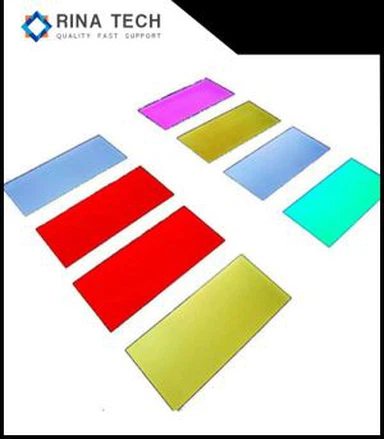
In addition to regular light bars, RINA TECH accepts custom-shaped light bars, such as Z-shaped and other kinds of light bars.