


What Makes A Custom Laptop Polarizer Film Right For Your Display Design?
Sep 18, 2026
How Do Off-the-Shelf Polarizer Films Limit Innovative Laptop Display Engineering?
Why do standard polarizers constrain display customization?
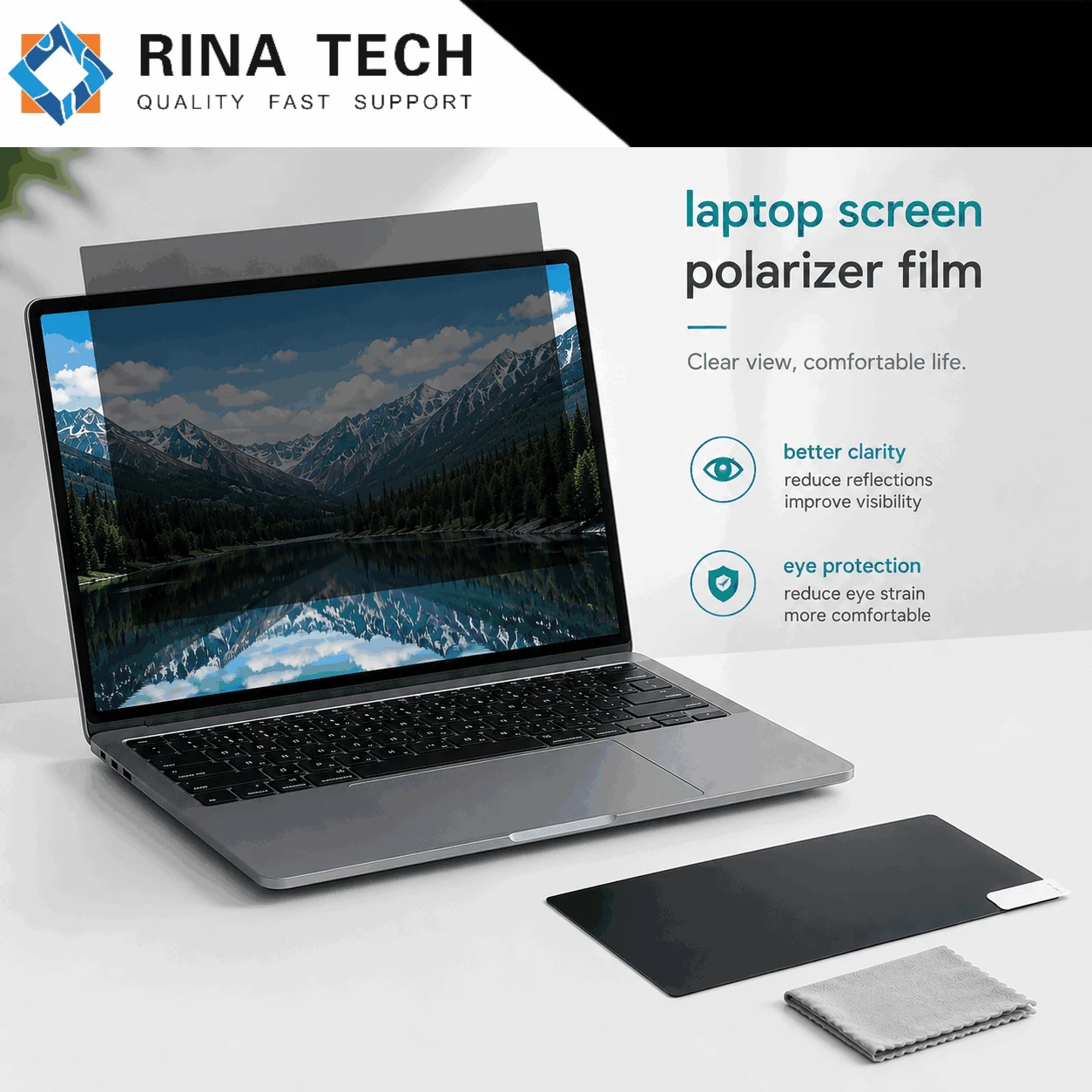
Generic off-the-shelf polarizer films are mass-produced with fixed optical transmission rates, standardized polarization axis angles, and rigid layer structures. When laptop engineers attempt to build ultra-thin display assemblies, high-brightness outdoor workstations, or dual-mode privacy displays, standard polarizers introduce optical compromises. These mass-market films fail to match the specific transmission profiles and mechanical tolerances required for modern, non-standard liquid crystal display (LCD) architecture.
What causes severe color shifting in high-aspect-ratio displays?
Modern laptops feature non-traditional display form factors, such as 16:10 or 3:2 aspect ratios, and curved or foldable screens. Standard polarizer sheets lack specialized phase-retardation compensation layers tailored to wide viewing angles across elongated glass geometries. Without custom compensation layers, light rays exiting the screen at steep diagonal angles suffer from optical phase shifts, resulting in noticeable color distortion and contrast drops along the outer display edges.
How do generic polarizers reduce battery efficiency in high-nit panels?
Engineers building outdoor or high-dynamic-range (HDR) laptop displays often increase backlight wattage to reach 600 to 1,000 nits of brightness. However, standard polarizers have limited single-sheet optical transmittance, absorbing over 55% of the backlight's generated energy. Forcing high backlight current through an inefficient polarizer generates excess heat and drains laptop battery reserves rapidly.
Why do standard polarizers struggle with multi-touch and stylus layers?
Adding capacitive touch sensors, active digitizer layers, or anti-shatter glass onto a standard display stack introduces internal stress birefringence. Generic polarizers are not engineered to compensate for the light polarization shifts caused by pressure-sensitive touch layers or optical adhesives. As a result, users frequently observe subtle rainbow patterns, stress rings, or muted contrast when using a touch pen or finger navigation.
What Custom Optical Parameters Can Engineers Tailor to Match Specific Laptop Specifications?
How does customized polarization axis alignment prevent visual artifacts?
During custom polarizer manufacturing, the polarization transmission axis can be stretched and cut at precise custom angles (such as 0°, 45°, or 90°) relative to the panel glass. Tailoring the polarization axis eliminates moiré interference patterns when integrated with specialized touch digitizers, optical privacy filters, or anti-reflective cover glass, guaranteeing a clean image free of visual wave patterns.
01
How do wide-viewing-angle (VA) phase retardation films improve visual accuracy?
Custom polarizer stacks can be laminated with tailored retardation compensation films, such as Cyclo-Olefin Polymer (COP) or Tri-Acetyl Cellulose (TAC) layers. Optical engineers calculate the precise birefringence profile of the liquid crystal cell and customize the compensation film's optical retardation values. This custom matching eliminates off-axis light bleed, extending color consistency across a wide viewing angle.
02
What role do specialized surface treatments play in glare reduction?
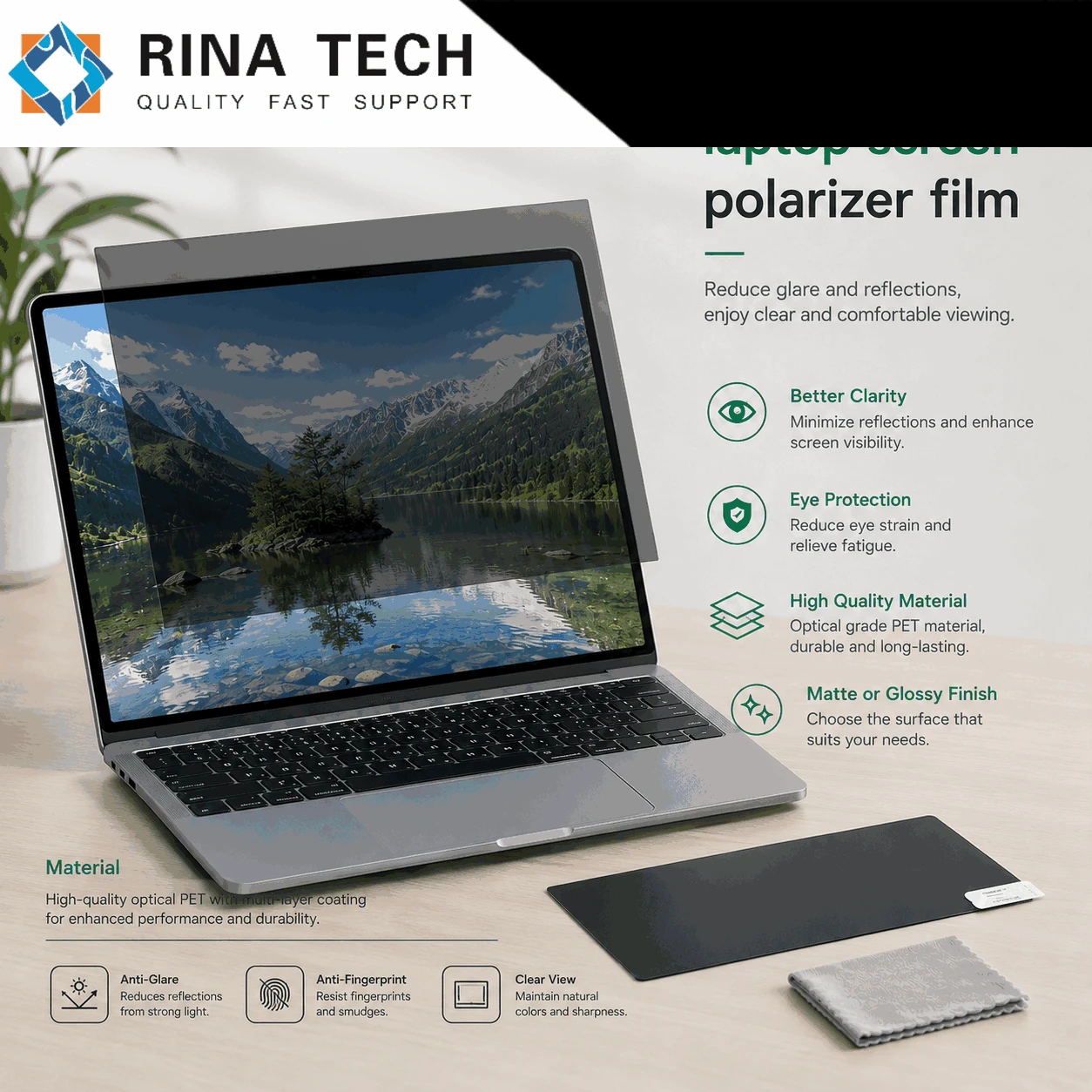
Custom polarizers allow engineers to choose specific outer surface coatings based on the laptop's intended environment. Options include high-clarity Anti-Reflective (AR) coatings that lower surface reflection to under 0.5%, Low-Haze Anti-Glare (AG) micro-textures that disperse overhead lighting without blurring fine text, or specialized Anti-Fingerprint (AF) oleophobic topcoats designed for touchscreens.
03
Can custom polarizers integrate built-in optical privacy control?
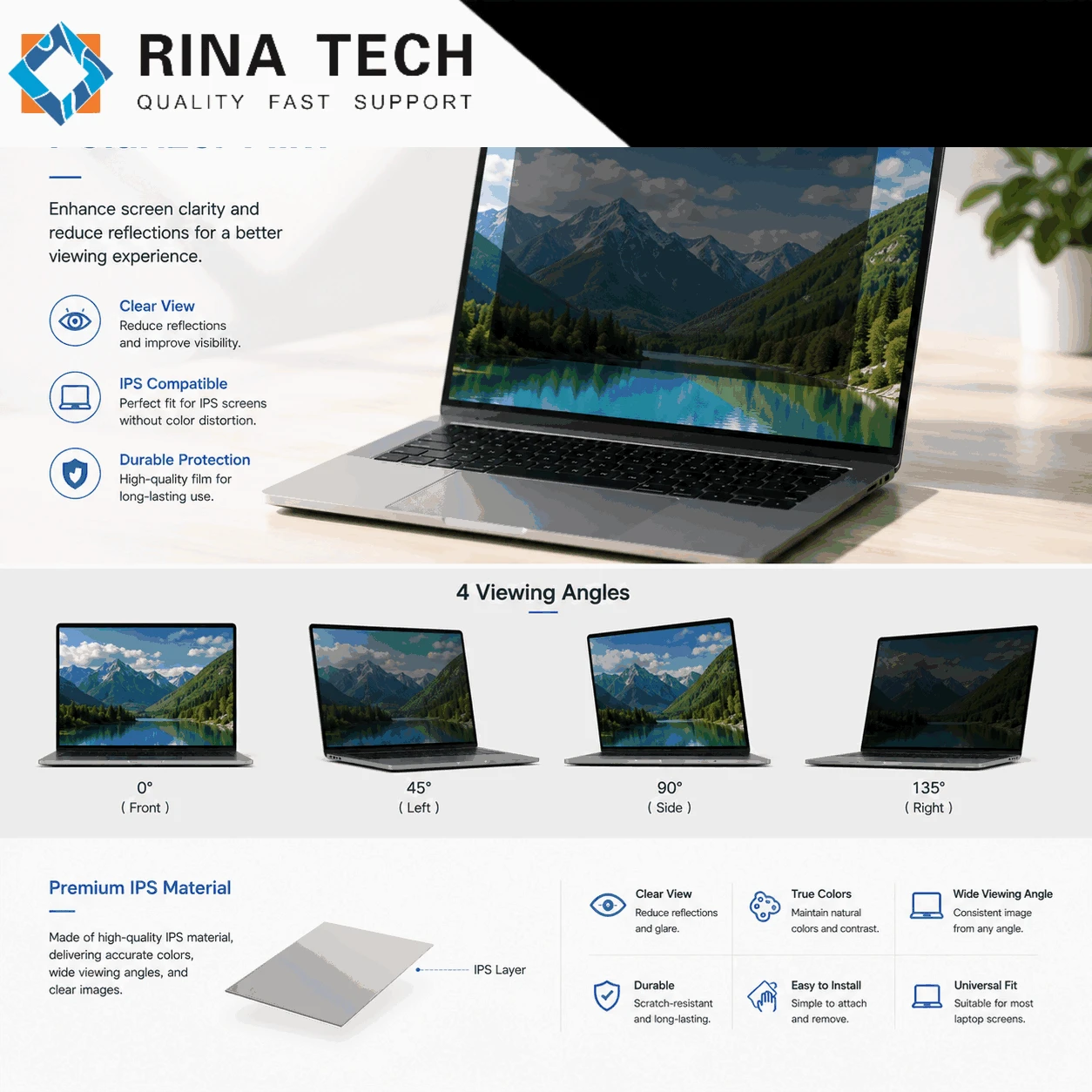
Yes. Custom polarizer manufacturing allows the lamination of micro-louver privacy films directly into the core polarizer stack. Instead of adding an external, removable plastic screen shield, a custom privacy polarizer uses micro-scale optical blind structures to narrow the light viewing cone electronically or optically. This allows users to switch between wide-angle sharing and tight private viewing modes with a function key.
04
How Does a Custom Polarizer Film Enhance Display Durability and Mechanical Thinness?
How do ultra-thin polarizer stacks support slim ultrabook profiles?
Leading laptop designs prioritize thin display lids, leaving minimal room for optical components. Custom polarizer production allows manufacturers to replace thick protective TAC layers with ultra-thin acrylic or cyclic olefin films. By reducing the total polarizer stack thickness from a standard 180 microns down to 80 or 90 microns, display engineers save vertical space, reduce overall screen weight, and facilitate flexible or bendable laptop hinge designs.
How do heat-resistant adhesive formulations prevent screen yellowing?
Laptops contain high-density CPU and GPU processors that dump heat directly behind the display panel during intense workloads. Standard pressure-sensitive adhesives (PSA) bonding the polarizer to the LCD glass degrade under thermal stress, leading to edge clouding, adhesive bubbling, or yellowing. Custom polarizers utilize heat-stabilized, stress-relieved PSAs that remain optically clear and stable under continuous operating temperatures up to 85℃.
What moisture barriers protect polarizers in tropical or mobile settings?
The core functional layer of a polarizer-Polyvinyl Alcohol (PVA) infused with iodine molecules-is sensitive to environmental moisture. In high-humidity environments, moisture penetration can cause iodine molecules to migrate, destroying the film's polarizing capability. Custom outdoor polarizers incorporate hydrophobic barrier layers and sealed edge coatings that block moisture ingress, passing rigorous damp-heat reliability testing (60℃/ 90% RH).
What Supply Chain and Cost Factors Should Laptop OEMs Evaluate When Customizing Polarizers?
How does custom optical tuning improve display panel manufacturing yields?
When laptop original equipment manufacturers (OEMs) specify custom polarizers tailored precisely to their LCD cell specifications, they minimize optical defects during display module assembly. Custom-cut sheet dimensions with pre-registered alignment notches fit automated robotic lamination equipment perfectly, reducing border light leakage, bubble formation, and scrap rates during high-volume production runs.
What minimum order quantities and lead times apply to custom polarizers?
Customizing polarizer films involves dedicated master-roll stretching, specialized chemical coating runs, and precision laser cutting setups. While prototyping custom polarizers requires short optical modeling cycles, mass production demands planning around master roll coating schedules. OEMs must balance custom optical performance benefits against initial tooling investments and minimum order volume thresholds.
How does an efficient custom polarizer lower total system bill-of-materials?
Although a custom-engineered polarizer carries a higher per-unit material cost than a commodity off-the-shelf sheet, it reduces expenses elsewhere in the laptop architecture. By increasing optical light throughput, a custom polarizer allows display designers to use fewer LED backlight diodes and smaller power supplies, lowering overall energy draw and reducing cooling hardware requirements.


