

Can A Durable Notebook Polarizer Film Withstand Heat And Daily Wear?
Sep 18, 2026
How Does Thermal Exposure Impact Modern Laptop Display Assemblies?
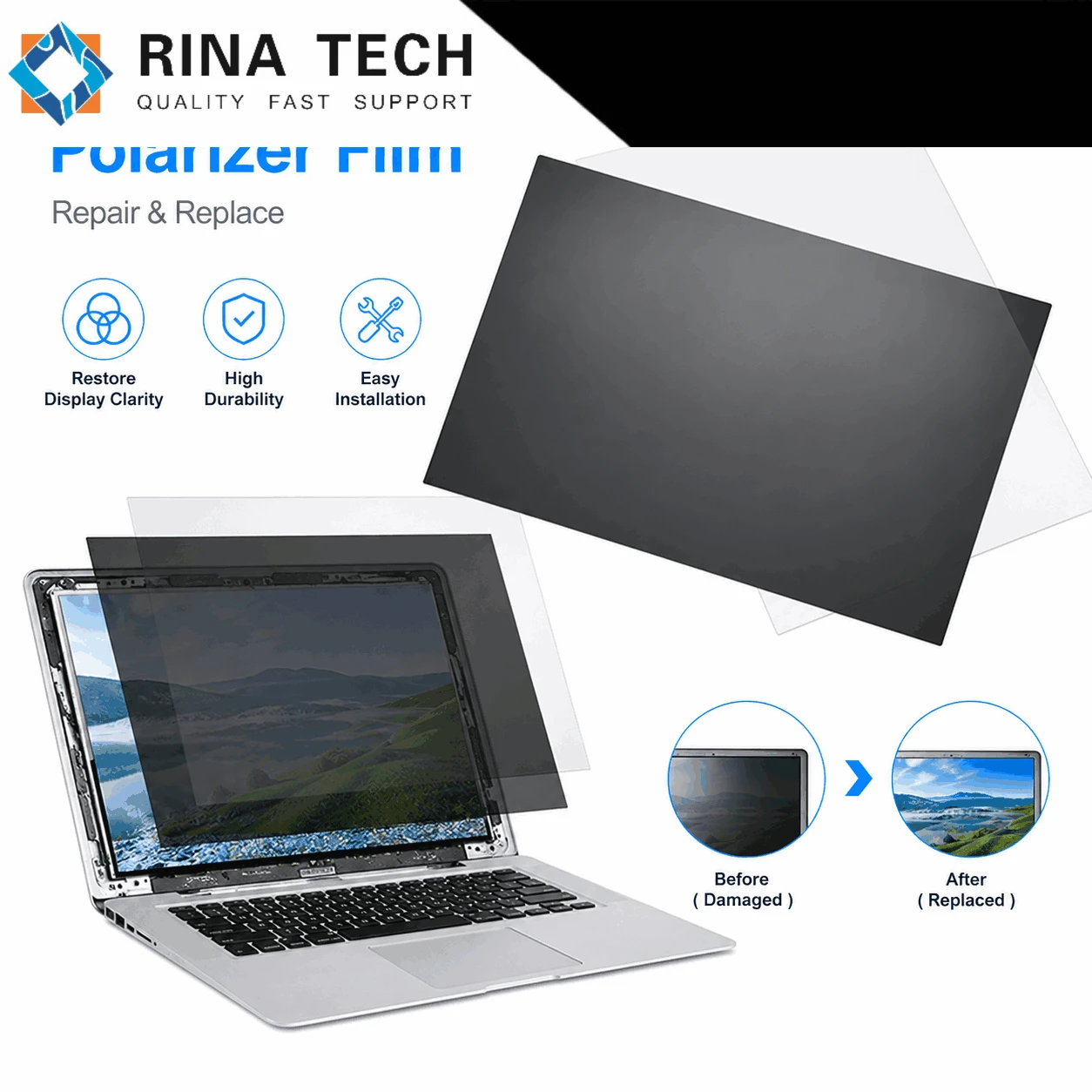
Why do standard laptop screens struggle with internal heat build-up?
Modern laptops place high-density processors, fast-charging batteries, and powerful graphics units directly under the display hinge and backlight assembly. As CPU and GPU temperatures surge during heavy workloads, heat radiates upward into the bottom border of the screen. Standard LCD polarizer films subjected to sustained internal temperatures above 60℃ often experience accelerated polymer degradation. This internal thermal stress causes non-uniform light leakage, screen yellowing, and optical edge-bleeding across the display.
How do thermal cycles cause mechanical screen warping?
Laptops continuously cycle between room temperature and hot operational states, triggering thermal expansion and contraction across screen layers. When the thermal expansion coefficient of a standard polarizer film does not match the underlying LCD glass, micro-stresses develop along the optical interface. Over time, these repeated temperature swings create mechanical warping, wavy distortion patterns, or visible air gaps near the display edges.
Can high ambient heat compromise optical polarization efficiency?
Yes. Traditional linear polarizers rely on oriented iodine-doped Polyvinyl Alcohol (PVA) core layers to align and filter light waves. When exposed to extreme ambient heat-such as a laptop left inside a hot vehicle-the stretched PVA polymer matrix can relax and iodine molecules can migrate. This structural shift lowers the screen's extinction ratio, causing deep blacks to fade into washed-out grays and severely degrading image contrast.
What Technologies Shield Polarizer Films From Physical Friction and Surface Wear?
How do modern hard-coatings prevent keyboard imprint marks?
When a laptop lid is closed, the display surface presses tightly against the keyboard deck, often rubbing against keycaps during transport. High-durability polarizer films feature micro-engineered anti-scratch hard coatings (typically rated at 3H to 5H pencil hardness) applied directly to the outermost protective surface. This protective hard-coat absorbs localized friction, preventing permanent keyboard imprints and micro-scratches from dulling the screen.
Can oleophobic surface treatments endure continuous touch and stylus interaction?
Touchscreen and stylus-enabled laptops subject display surfaces to constant friction, finger oils, and cleaning swipes. Durable notebook polarizers utilize fluorinated optical topcoats that repel water and natural skin lipids. These oleophobic layers feature low surface energy profiles that withstand thousands of continuous stylus strokes, ensuring finger swipes remain smooth while allowing smudges to wipe away effortlessly.
How do optical adhesives resist peeling under mechanical torsion?
Laptop screens endure constant physical bending and torsional twisting whenever users open the lid by a single corner. Conventional pressure-sensitive adhesives (PSAs) can shear or pull away from the glass under repeated mechanical strain. Durable polarizers utilize high-tack, stress-relieved optical PSAs that absorb mechanical shear forces, preventing corner delamination or edge bubbling throughout the device's lifespan.
How Do Environmental Moisture and Chemical Cleaners Affect Display Longevity?
Why is humidity exposure dangerous for unprotected LCD polarizers?
High-humidity environments allow airborne moisture molecules to migrate through porous plastic substrates into the sensitive core polarizing layer. Water ingress breaks down the chemical bonds of iodine complexes within the PVA core, creating cloudy white spots, optical fading, and edge corrosion. In tropical or coastal climates, humidity damage is one of the leading causes of permanent display discoloration.
How do moisture-barrier layers prevent humidity degradation?
Durable notebook polarizers incorporate hydrophobic outer barrier films and edge-seal chemistries that block moisture ingress. By sandwiching the polarizing PVA layer between low-permeability Cyclo-Olefin Polymer (COP) sheets, optical engineers create an airtight moisture seal. These engineered films successfully pass rigorous damp-heat reliability testing (60℃ at 90% relative humidity for over 1,000 hours) without optical degradation.
Can daily cleaning chemicals damage standard display polarizers?
Frequent screen cleaning with alcohol wipes, ammonia-based sprays, or disinfectant solutions can dissolve standard optical coatings. Over time, harsh chemical exposure strips away anti-reflective treatments, leaves cloudy streaks, and degrades the optical clarity of basic plastic films.
How do chemically resistant polarizers withstand harsh cleaning routines?
Durable notebook polarizers employ cross-linked polymer topcoats designed to resist chemical breakdown from isopropyl alcohol, mild detergents, and sanitizing wipes. This chemical resistance prevents optical haze, surface clouding, and coating erosion, making these polarizers ideal for enterprise, medical, and field-use laptops that undergo frequent sterilization.
What Testing Standards Ensure Notebook Polarizers Surpass Commercial Durability Requirements?
How is thermal shock resistance measured in optical laboratory testing?
Thermal shock testing evaluates a polarizer film's ability to endure rapid, extreme temperature fluctuations. Test samples undergo hundreds of rapid thermal cycles, dropping to -40℃ before instantly ramping up to +85℃. Polarizers pass the evaluation only if they exhibit zero layer delamination, zero micro-cracking, and a total optical transmission shift of less than 1%.
01
What scratch resistance protocols verify daily wear protection?
Surface abrasion resistance is quantified using steel wool abrasion testers and diamond-tip stylus hardness gauges. A durable polarizer topcoat must withstand hundreds of weighted rubbing cycles under specified forces without showing visible micro-scratches. This guarantees the notebook display retains optical clarity even when exposed to dust, grit, and rough wipes in mobile working environments.
02
How do environmental aging chambers simulate years of intense sunlight?
Accelerated lightfastness testing exposes polarizer films to high-intensity ultraviolet (UV) radiation and full-spectrum solar illumination inside environmental test chambers. By subjecting the film to continuous UV radiation equivalent to years of outdoor sunlight, engineers ensure the polarizer material will not yellow, crack, or lose polarization efficiency when used outdoors or near windows.
03
Why does selecting a durable polarizer lower long-term display repair costs?
Deploying high-durability polarizers significantly reduces warranty claim rates, screen replacement costs, and field service calls for laptop manufacturers and enterprise fleets. By resisting heat, physical abrasion, chemical exposure, and humidity, these advanced optical films extend the functional operational life of notebook screens, preserving crisp contrast and bright visuals throughout years of demanding daily use.
04