





Polarizer Film For TV
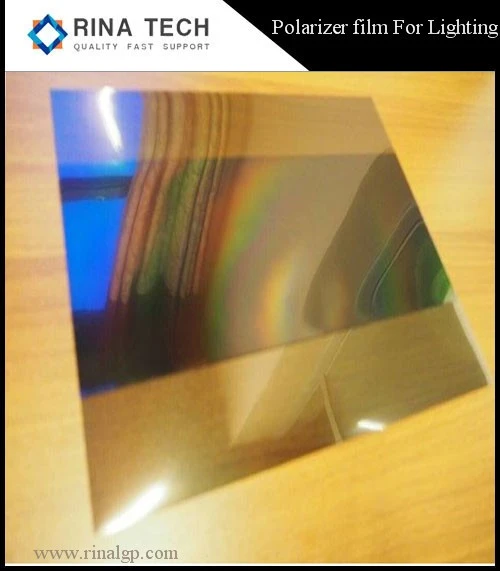
Polarizer film is a special optical film material, mainly used to improve the contrast and viewing angle of liquid crystal display. It can filter out unpolarized natural light and only allow light with a specific polarization direction to pass through, thereby enhancing the brightness contrast of the display screen.
- Fast Delievery
- Quality Assurance
- 24/7 Customer Service
Product Introduction
Rina Technology Co., Ltd. is one of the leading manufacturers and suppliers of polarizer film for tv in China. Welcome to wholesale durable products in stock here and get quotation from our factory. All customized products are with high quality and low price.
what is polarizer film?

Polarizer film, also known as a polarizing film or polarizer, is a specialized optical component that is used to manipulate the polarization of light. Polarization is a property of light that describes the orientation of the electric field in the electromagnetic wave.
Here are the key points about polarizer film:
1. Polarization Manipulation: Polarizer films are designed to transmit light waves with a specific polarization orientation while blocking or attenuating light waves with other polarization orientations. This allows the film to selectively filter light based on its polarization.
2. Linear Polarization: The most common type of polarizer film produces linear polarization, where the electric field oscillates in a single, fixed orientation.
3. Construction: Polarizer films are typically made of specialized polymers or materials that have a molecular structure that interacts with the electric field of light in a way that selectively transmits or absorbs certain polarization orientations.
4. Applications: Polarizer films have a wide range of applications, including:
- Liquid Crystal Displays (LCDs): Polarizer films are a critical component in LCD displays, controlling the polarization of light to enable the display of images.
- Sunglasses: Polarizer films in sunglasses selectively block glare from reflective surfaces, improving visual clarity and comfort.
- Photography: Polarizer filters on camera lenses can enhance contrast, reduce glare, and improve color saturation in certain photography situations.
- Optical Instrumentation: Polarizer films are used in various optical instruments, such as microscopes and spectroscopy equipment, to control and analyze the polarization of light.
5. Efficiency and Quality: The performance and efficiency of polarizer films can vary based on factors such as the materials used, the manufacturing process, and the specific application requirements.
In summary, polarizer film is a critical optical component that manipulates the polarization of light, enabling a wide range of applications in display technology, vision enhancement, and optical instrumentation.
advantages of polarizer film
Polarizer films offer several advantages in various applications. Here are some of the key advantages of using polarizer films:
1. Glare Reduction: One of the primary advantages of polarizer films is their ability to reduce glare and reflections. This makes them highly useful in applications such as sunglasses, camera filters, and display screens, where reducing glare can improve visibility and contrast.
2. Improved Contrast and Clarity: Polarizer films can enhance the contrast and clarity of images by selectively transmitting or blocking certain polarization orientations of light. This can be particularly beneficial in photography, where polarizer filters can improve the quality and depth of images.
3. Enhanced Color Saturation: Polarizer films can sometimes increase the saturation of colors by selectively transmitting certain wavelengths of light. This can result in more vibrant and vivid images, which is useful in various visual applications.
4. Selective Light Transmission: Polarizer films can be designed to selectively transmit or block specific polarization orientations of light. This allows for precise control over the light passing through the film, which can be useful in various optical and display applications.
5. Compact and Lightweight: Polarizer films are generally thin, lightweight, and easy to integrate into various products and devices, making them an attractive option for applications where size and weight are important considerations.
6. Cost-Effectiveness**: Polarizer films can be manufactured using relatively inexpensive materials and processes, making them a cost-effective solution for many applications.
7. Customizable:Polarizer films can be customized to meet specific requirements, such as different transmission wavelengths, polarization orientations, or physical dimensions, allowing for a wide range of applications.
8. Durability: Modern polarizer films are often designed to be durable and resistant to environmental factors, such as temperature, humidity, and UV exposure, ensuring reliable performance over extended periods.
These advantages make polarizer films a versatile and valuable component in a wide range of industries, including displays, optics, photography, and automotive applications, among others.

pruduce process of polarizer film
1. Material Preparation:
- Raw materials, such as specialized polymers or dyes, are carefully selected and prepared for the manufacturing process.
- The materials are purified and blended to achieve the desired optical and physical properties.
2. Extrusion:
- The prepared materials are fed into an extrusion machine, where they are heated and extruded into a thin, continuous sheet or film.
- The extrusion process aligns the molecular structures of the materials, creating the polarization properties.
3. Stretching:
- The extruded film is then stretched, either uniaxially (in one direction) or biaxially (in two directions), to further enhance the polarization properties.
- Stretching the film induces a preferred orientation in the molecular structure, which is crucial for the polarization effect.
4. Drying and Cutting:
- The stretched film is then dried to remove any residual solvents or moisture.
- The dried film is cut into the desired shapes and sizes, typically in the form of sheets or rolls, depending on the intended application.
5. Protective Layers:
- In some cases, the polarizer film may be laminated or coated with additional protective layers, such as anti-reflective coatings or protective films, to enhance its durability and performance.
6. Quality Control:
- Throughout the production process, various quality control measures are implemented to ensure the consistency and performance of the polarizer film.
- This may include optical testing, dimensional measurements, and other characterization techniques.
7. Packaging and Logistics:
- The finished polarizer films are carefully packaged, often in clean-room environments, to protect them during storage and transportation.
- The packaged films are then distributed to customers or integrated into other products, such as display panels or optical devices.
The specific production process may vary depending on the manufacturer, the type of polarizer film being produced, and the intended application. Advancements in materials science, manufacturing techniques, and automation have helped improve the quality, efficiency, and cost-effectiveness of polarizer film production over time.


appliance senniors of polarizer film
Polarizer films have a wide range of applications across various industries. Here are some of the key application areas for polarizer films:
Display Technologies:
Liquid Crystal Displays (LCDs): Polarizer films are a crucial component in LCD panels, controlling the polarization of light to enable the display of images.
Organic Light-Emitting Diode (OLED) Displays: Polarizer films are used in OLED displays to enhance contrast and viewing angles.
Touchscreen Displays: Polarizer films can be integrated into touchscreen displays to reduce glare and improve visibility.
Optics and Imaging:
Sunglasses and Eyewear: Polarizer films in sunglasses and eyewear reduce glare and improve visual clarity, especially for activities like driving or boating.
Camera Filters: Polarizer filters on camera lenses can enhance contrast, reduce reflections, and improve color saturation in photography.
Optical Instruments: Polarizer films are used in various optical instruments, such as microscopes, telescopes, and spectroscopy equipment, to control and analyze the polarization of light.
Automotive Applications:
Windshield Polarizers: Polarizer films applied to vehicle windshields can reduce glare and improve driving visibility, especially in bright or reflective conditions.
Rearview Mirrors: Polarizer films in rearview mirrors can help reduce the glare from headlights and improve the clarity of the reflected image.
Industrial and Scientific Applications:
Laser Optics: Polarizer films are used in laser systems to control the polarization of the laser beam, enabling specific applications and enhancing performance.
Optical Communication: Polarizer films are employed in fiber optic communication systems to manage the polarization of light signals.
Spectroscopy and Analytical Instruments: Polarizer films are used in various spectroscopic and analytical instruments to study the polarization properties of materials and samples.
Architecture and Building Design:
Architectural Windows: Polarizer films can be applied to building windows to reduce glare, improve energy efficiency, and enhance visual comfort.
Skylights and Atrium Covers: Polarizer films can be used in skylights and atrium covers to control the transmission and polarization of natural light.
These are just a few examples of the diverse applications of polarizer films. As technology continues to evolve, new and innovative uses for polarizer films are likely to emerge across various industries and fields.

about us

We are RINA TECH.
Our vision is to be the world's first-rate provider of optical solutions, supply chain and manufacturing solutions. We are a global high-tech company specializing in the research, development, production and sales of optical materials, providing customers with one-step optical lighting solutions. Was established in Hong Kong in 2011, and after years of rapid development, RINA Technology has set up an office and factory in Shenzhen. Currently, we are working with companies such as Toyota, BOE, FLEX, Xiaomi, Siemens, and Coca-Cola , etc. We have made many breakthroughs in research and manufacturing, and have gained a good reputation from many oversea customers. Through sustainable business operations in more than 30 countries and territories around the world, we provide technology innovation, supply chain and manufacturing solutions to various industries and end markets. Our mission is to provide our customers with superior products that create value and improve people's lives. " Our Union's power ,makes the world going better!

certificats

shipping and payment

custom feedback


FAQ
Q1: Are you an Engraving polarizer film manufacturer?
Yes, we are. You can check more on our website:www.rinalgp.com
Q2:Can you give me an Engraving polarizer film sample order?
Sure, we accept sample orders.
Q3: How long can I get my order?
The lead time is 3-7 working days for samples and 7-15 working days for bulk orders. Sometimes it is shorter or longer according
to stock and quantity. And shipping time is around 5-30 working days depending on the shipping methods you choose.
Q4: What is the warranty time for your products? If any is broken, what I will do?
2-3 years warranty for most of our products. During warranty time, we will arrange the new replacement to you for free of charge.
Q5: Can I get OEM/ODM customized products for special applications?
Of course, we provide OEM and ODM service, design, and produce per customers' requirements. Such as different lengths, different
voltages,s and higher lumen efficiency of led strips, different sizes of led panels, tubes; special/unusual materials for some
lights, etc.
Q6: What kinds of payment methods do you accept?
T/T bank transfer, West Union and Paypal.
Q7: What kinds of shipping methods do you use?
Sea: seaport to seaport, cheap, long time, suitable for big volume orders
Air: airport to airport
Global express DHL, UPS, FedEx, EMS, TNT: door to door, mostly used, 3-7 working days delivered.
Kinds of Post air mail etc: for small packages below 2kgs, 25-30 working days.
Hot Tags: polarizer film for tv suppliers, factory, customized, price, in stock, LED guide plate


