

Is Your Laptop Polarizer Film Built For High-Contrast Notebook LCD Displays?
Sep 18, 2026
Why Do Standard Polarizer Films Fail Modern High-Contrast Laptop Screens?
What role does the polarizer play in notebook LCD panels?
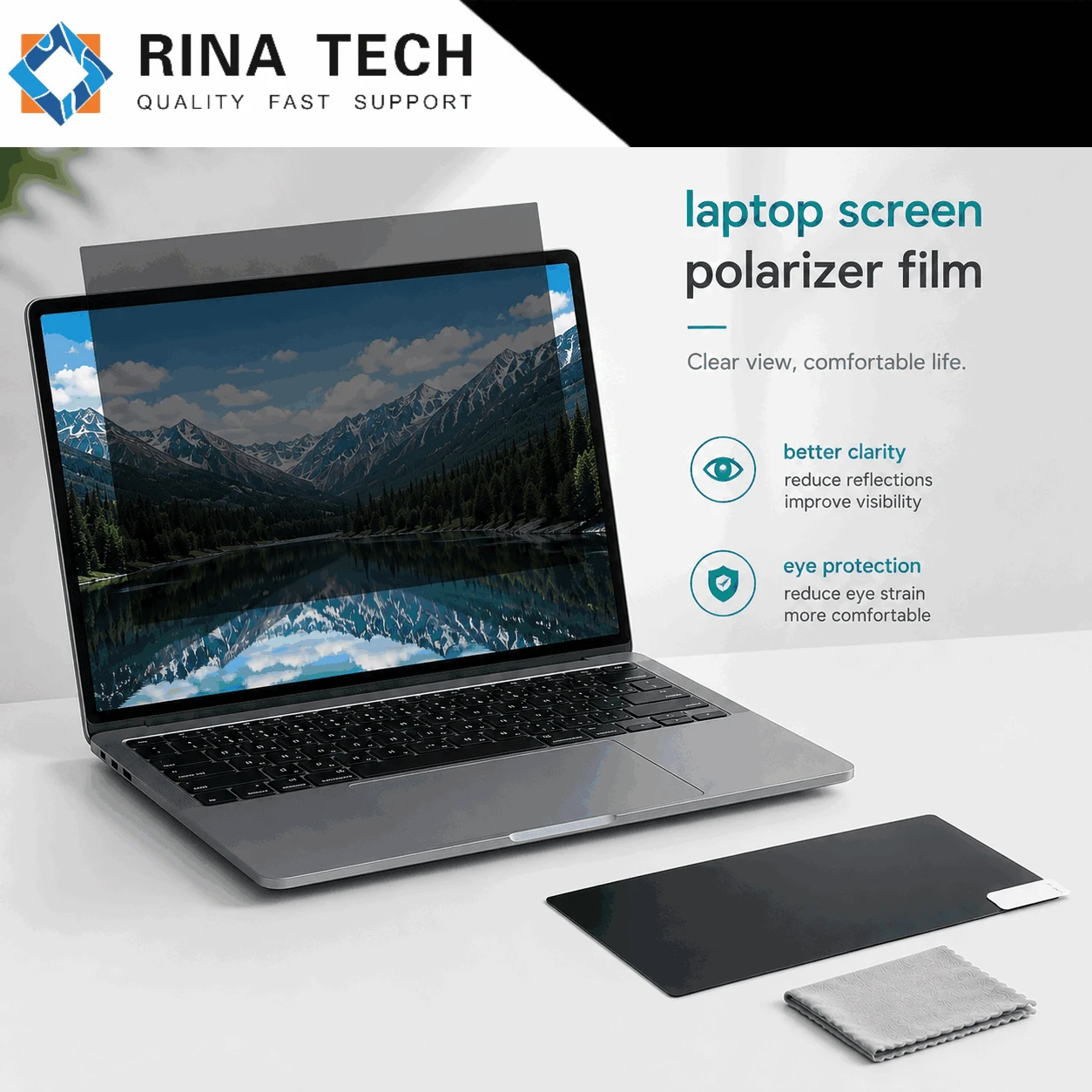
In a liquid crystal display (LCD), the polarizer film acts as an optical gatekeeper. It converts unpolarized light from the mini-LED or standard LED backlight array into linearly polarized light. Liquid crystals then rotate this light to pass through a second, perpendicular front polarizer, forming crisp text, high-definition graphics, and accurate colors. Without high-grade polarizers, an LCD panel cannot manage light direction or render deep blacks.
Why do standard polarizers produce milky blacks and low contrast?
Standard, legacy-grade polarizer films suffer from optical light leakage-particularly at the extinction axis. When liquid crystals attempt to block light for dark scenes, residual stray light bypasses lower-grade iodine-dyed Polyvinyl Alcohol (PVA) layers. This light bleed turns deep blacks into a washed-out, dark-gray tone, reducing the static contrast ratio from a target 1500:1 or 2000:1 down to an unacceptable 700:1.
How does off-axis light leakage cause viewing angle distortion?
As users tilt their laptop screens or view them from the side, standard polarizers experience phase retardation shifts. This optical limitation allows off-axis light components to bleed through, causing severe color shifting, contrast inversion, and brightness drop-offs. For creative professionals working on color-critical video editing or CAD designs, off-axis light leakage distorts image accuracy across the panel.
What Key Optical Innovations Define High-Contrast Laptop Polarizer Films?
How does high-polarization-efficiency PVA technology work?
Next-generation polarizer films utilize ultra-stretched PVA membranes infused with precision-aligned iodine polyiodide complexes. This advanced stretching process aligns polymer chains with extreme microscopic parallelism, achieving a single-sheet polarization efficiency exceeding 99.99%. High polarization efficiency effectively locks out stray light in the dark state, yielding ink-like black levels.
How do Wide-Viewing-Angle (VA) compensation films eliminate tint shifts?
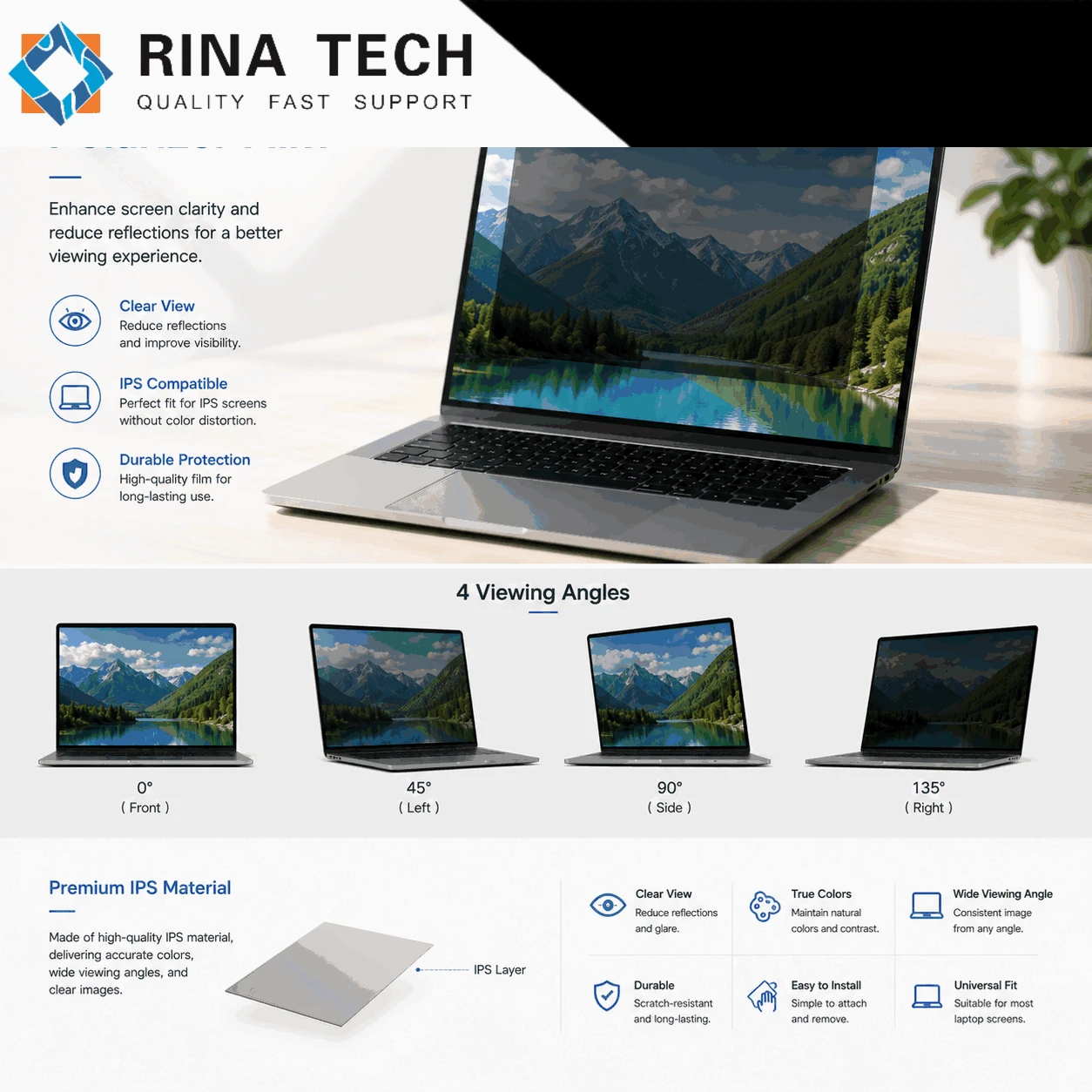
High-contrast laptop polarizers combine the core polarizing PVA layer with specialized optical compensation films, such as Cyclo-Olefin Polymer (COP) or Tri-Acetyl Cellulose (TAC) phase-retardation layers. These compensation films balance light phase differences as light passes through liquid crystals at wide angles, ensuring consistent color accuracy and high contrast across a full 178°viewing cone.
What optical coatings reduce ambient surface reflections?
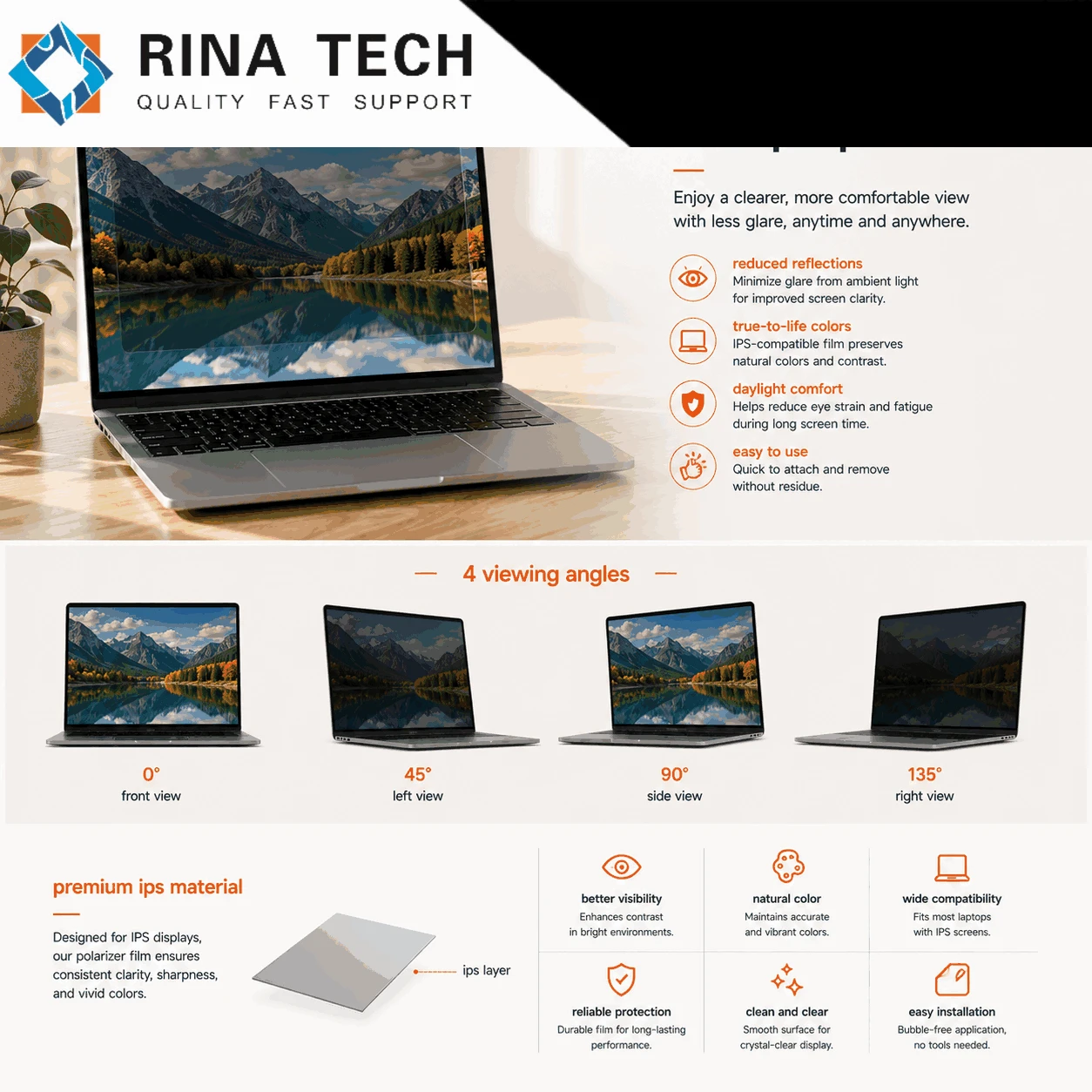
Modern notebook polarizer stacks integrate multi-layer anti-reflective (AR) magnetron sputtering or anti-glare (AG) hard coatings directly onto the outer protective film. By reducing ambient light reflectance down to under 0.5%, these advanced surface treatments eliminate distracting reflections. Users enjoy deep visual contrast and vibrant color reproduction even under direct overhead lighting.
How Does Advanced Polarizer Performance Impact Real-World Laptop Usability?

How do high-contrast polarizers improve text sharpness for productivity?
High contrast ratios directly enhance edge definition between dark text characters and bright backgrounds. By rendering deep, dark blacks without backlight blooming, advanced polarizers make fine typography sharper and cleaner. This prevents visual fatigue during extended coding sessions, document editing, and spreadsheet analysis.
Can high-efficiency polarizers extend laptop battery life?
Yes. When a polarizer film features high light transmittance in its open state alongside high polarization efficiency, more light passes through from the backlight array. Display panels achieve higher nit brightness while consuming less power, allowing laptop manufacturers to lower backlight drive currents and extend battery life.
Why are high-contrast polarizers critical for IPS and Mini-LED displays?
High-end IPS (In-Plane Switching) and Mini-LED display panels rely on local dimming zones to compete with OLED contrast levels. However, local dimming can produce "halo effects" around bright objects on dark backgrounds. High-contrast polarizers absorb stray light at zone boundaries, suppressing haloing and enabling Mini-LED displays to achieve true HDR performance.
How do temperature-resistant polarizers prevent screen yellowing?
Laptops generate significant internal heat, and displays placed in direct sunlight face high thermal stress. Inferior polarizer films warp or suffer from iodine dye degradation under heat, resulting in permanent yellow spots or edge clouding. High-durability polarizers utilize moisture-resistant pressure-sensitive adhesives (PSA) and thermal-stabilized substrates that resist yellowing over thousands of operating hours.
What Manufacturing Standards Ensure Reliable Polarizer Film Selection?
How does optical defect inspection maintain display yield rates?
Display panel manufacturing demands cleanroom environments with zero particulate contamination. High-performance polarizer films are produced under Class 100 cleanroom conditions and inspected using high-speed automated optical inspection (AOI) systems. AOI identifies microscopic pinholes, streaks, or dust specks down to the micron level, ensuring zero surface flaws during mass production.
Why is precise pressure-sensitive adhesive (PSA) formulation critical?
The pressure-sensitive adhesive layer bonds the polarizer film directly to the LCD glass cell. A poorly formulated PSA can cause bubble formation, edge-light leakage (corner glowing), or chemical outgassing under thermal stress. Specifying stress-relaxed, optically clear PSAs prevents stress-induced birefringence and maintains uniform dark-state performance across the panel.
Why does sourcing high-grade polarizers protect laptop brand reputation?
The display panel is the primary interface between a user and their laptop. Sourcing premium, high-contrast polarizer films eliminates backlight bleed, expands viewing angles, and guarantees vibrant color accuracy. By choosing field-proven, optically engineered polarizer films, laptop OEMs and display repair specialists deliver premium visual experiences that strengthen brand trust.