

What Is The Difference Between Glass Light Guide Plate And Acrylic Light Guide Plate
Apr 08, 2022
Glass is often used in occasions that have certain requirements for light and color, such as optical instruments and various art decorations, because of its light transmittance and reflectivity, and easy to color. Modern technology has brought new vitality and energy to the glass industry, and at the same time, the performance of glass has been greatly improved. We will briefly introduce the characteristics of the glass light guide plate and explain its cleaning method
Traditionally, LCD TVs use acrylic light guide plates with a thickness of 3-5mm, which makes it difficult for designers to reduce the thickness of the TV. The new structure uses a glass light guide plate. The thickness of the glass light guide plate is about 1-2mm, which can reduce the thickness of the TV by 70% and the weight by 30%. The LCD TV becomes thinner, and the thickness can be less than 5mm. The glass light guide plate and the reflective sheet are bonded together with UV-curable pressure-sensitive adhesive to form a Light guide plate assembly. The optical performance and mechanical properties of this assembly are better than the traditional acrylic light guide plate assembly.
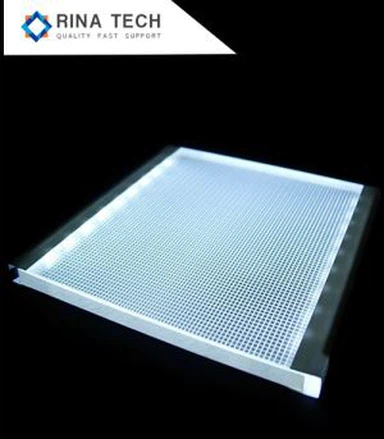
The design principle of the light guide plate is derived from the LCD screen of the notebook computer, and it is a high-tech product that converts a linear light source into a surface light source. Optical grade acrylic (PMMA)/PC as the base material, using LCD display and notebook computer backlight module technology, through the high light conductivity of the light guide point, the computer calculates the light guide point, so that the light of the light guide plate is refracted into a The surface light source is manufactured in a uniform light state. The product adopts the principle of spectral analysis combined with digital UV printing technology and is made under constant temperature, constant humidity and dust-free environmental conditions. It has the distinctive characteristics of ultra-thin, ultra-bright, uniform light guide, energy saving, environmental protection, no dark area, durable, not easy to yellow, simple and quick installation and maintenance
Method 1: Dip a certain amount of vinegar on the rag, and then scrub it directly.
Method 2: Apply the cleaner evenly to the whole
Spray the surface on the glass with thicker oil stains, and then stick the plastic wrap. The main reason for sticking the plastic wrap is to fully soften the oil stains on the glass window. After ten minutes, tear off the plastic wrap and wipe it with a rag. Immediately clean, simple and convenient.
Method 3: Use two rags, one dry and one wet, first wipe both sides of the glass with a wet rag, then use a dry rag dipped in a small amount of white wine, and wipe the glass vigorously to make the glass clean and bright.
Method 4: Wipe the glass with a cloth dipped in concentrated salt water or white wine, you can easily wipe the glass clean without leaving water stains.