

What Is A Light Guide Plate?
Dec 25, 2024
Definition of Light Guide Plate

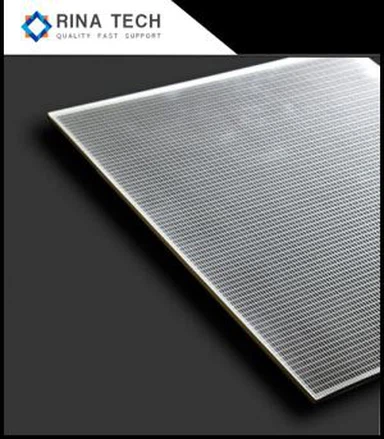
A light guide plate (LGP), also known as a light guide panel or light guide sheet, is a key optical component used in various display and lighting applications. Here's a more detailed definition:
A light guide plate is a transparent, flat optical component typically made of glass or plastic materials. It is designed to guide and distribute light from a light source, such as LED or CCFL, in a controlled and uniform manner.
The manufacturing process of a light guide plate
Material selection:
The choice of material for the LGP is crucial, with common options being acrylic (PMMA), polycarbonate (PC), or glass.
The material selection is based on factors such as optical properties, mechanical strength, and cost.
Molding or casting:
LGPs can be manufactured using various techniques, such as injection molding, compression molding, or casting.
In injection molding, the molten plastic material is injected into a mold cavity and then cooled to solidify the LGP.
Casting involves pouring the liquid material into a mold and allowing it to solidify.
Surface treatment:
The surface of the LGP is often treated to enhance its optical performance and light distribution.
Common surface treatments include:
Micro-patterning: Applying microscopic patterns or structures on the surface to control light refraction and reflection.
Coating: Applying thin optical coatings to improve light transmission, reflection, or absorption.
Polishing: Smoothing the surface to minimize light scattering and improve clarity.
Edge treatment:
The edges of the LGP are often polished or coated to minimize light leakage and improve the overall light efficiency.
Edge treatment techniques may include edge grinding, polishing, or applying reflective coatings.
Quality control:
Rigorous quality control measures are implemented throughout the manufacturing process to ensure the LGP meets the required optical, mechanical, and dimensional specifications.
This may involve testing for optical properties, light uniformity, mechanical durability, and dimensional accuracy.
Packaging and transportation:
The finished LGP is carefully packaged to protect it from scratches, dust, and other environmental factors during transportation and storage.
Specialized packaging materials and methods are used to ensure the LGP arrives at the customer's facility in pristine condition.
The specific manufacturing process and techniques may vary among different manufacturers, depending on factors such as production volume, quality requirements, and cost considerations. However, the general steps outlined above are common in the production of high-quality light guide plates.


The function of a light guide plate
Light guidance:
The LGP is designed to guide the light from a light source, such as LEDs or fluorescent lamps, through the plate using the principle of total internal reflection.
The transparent material of the LGP, usually made of acrylic (PMMA) or polycarbonate (PC), allows the light to propagate through the plate with minimal losses.
Light distribution:
The LGP is responsible for distributing the light evenly across its entire surface, creating a uniform illumination.
This is achieved through the use of specific surface structures, patterns, or coatings that refract, reflect, and scatter the light in a controlled manner.
The goal is to ensure that the light is distributed uniformly, without any bright or dark spots.
Light extraction:
The LGP is designed to extract the guided light from the plate's surface in a controlled and efficient manner.
This is typically done by incorporating various surface features, such as microstructures, diffusive coatings, or printed patterns, which disrupt the total internal reflection and allow the light to escape the plate.
Optical efficiency:
The LGP is optimized to maximize the optical efficiency, ensuring that the maximum amount of light from the source is effectively transmitted and distributed through the plate.
This involves minimizing light losses due to absorption, scattering, or leakage at the edges or surfaces of the LGP.
Thin and compact design:
LGPs are designed to be thin and lightweight, making them suitable for use in compact and slim display or lighting applications, such as LCD backlights or LED-based illumination systems.

Application scenarios of light guide plates
LCD backlight units (BLUs):
LGPs are a critical component in the backlight systems of liquid crystal displays (LCDs), including TVs, monitors, laptops, and mobile devices.
The LGP is responsible for distributing the light from the LED or CCFL light sources evenly across the entire LCD panel, providing uniform illumination.
LED lighting systems:
LGPs are used in a variety of LED-based lighting products, such as LED lamps, panels, downlights, and luminaires.
The LGP helps to create a diffused and uniform light distribution, reducing the visibility of individual LED light sources.
Signage and display applications:
LGPs are employed in illuminated signage, advertising boards, information kiosks, and other types of illuminated displays.
The LGP ensures a consistent and even illumination across the entire surface of the display, enhancing the visibility and legibility of the content.
Automotive lighting:
LGPs are used in automotive lighting applications, including headlights, taillights, and interior lighting.
The LGP helps to shape the light output and create the desired beam pattern or illumination effect for the specific automotive lighting requirements.
General lighting applications:
LGPs can be used in various general lighting applications, such as ceiling panels, wall-mounted luminaires, and task lighting.
The LGP helps to create a diffused and comfortable lighting environment by efficiently distributing the light from the light sources.
Decorative and architectural lighting:
LGPs are used in decorative lighting fixtures, architectural lighting installations, and indoor/outdoor lighting applications.
The LGP allows for the creation of unique and visually appealing lighting effects, while maintaining a uniform and efficient light distribution.
Medical and healthcare applications:
LGPs are used in specialized lighting applications in the medical and healthcare sectors, such as surgical lighting, examination room lighting, and therapy lighting.
The LGP ensures the required illumination levels and quality, while meeting the stringent hygiene and safety standards in these environments.