


What Are The Basic Processes Of LED Backlight Production?
Apr 19, 2021
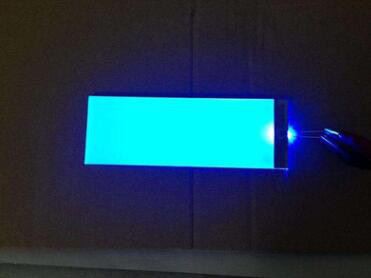
Backlight source: as the name implies, it is an object that provides a light source. It is a light source behind a liquid crystal display (LCD). It is composed of a light guide plate, a diffuser film (light-emitting surface), a reflective film, and a light source. It has uniform light emission and high brightness , Long life and other characteristics. According to the light-emitting position, it can be divided into LED patch side backlight, LED plug-in side backlight, LED bottom bonding backlight, and color screen backlight.

1. Cleaning: Use ultrasonic to clean PCB or LED lead frame and dry.
2. Mounting: After preparing the electrode at the bottom of the LED chip (large wafer) with silver glue, expand it, and place the expanded chip (large wafer) on the crystal piercing table, and use the crystal pen to move the die one by one under the microscope. Mounted on the corresponding pads of the PCB or LED bracket, and then sintered to cure the silver glue.
3. Pressure welding: Use an aluminum wire or gold wire welding machine to connect the electrode to the LED die as a lead for current injection. The aluminum wire welding machine is generally used for direct mounting of the LED on the PCB, and the white light TOP-LED production requires Gold wire welding machine.
4. Encapsulation: The LED dies and bonding wires are protected by epoxy by dispensing glue, and when dispensing on the PCB, there are strict requirements on the shape of the cured gel, which is directly related to the brightness of the finished backlight. The process will also take on the task of phosphor (white light LED).
5. Soldering: If the backlight is SMD-LED or other packaged LEDs, the LEDs need to be soldered to the PCB board before the assembly process.
6. Film cutting: use a punch to die-cut various diffusion films and reflective films required by the backlight.
7. Assembly: According to the requirements of the drawings, manually install the various materials of the backlight in the correct position.
8. Test: Check whether the photoelectric parameters of the backlight source and the uniformity of the light are good.
9. Packaging: The finished products are packaged and stored as required.


