

The Turning Point Of The LED Panel Cycle Brings The Optical Film Cycle
Jul 22, 2021
The LCD panel boom will drive the demand for optical films
1. Optical film has high value
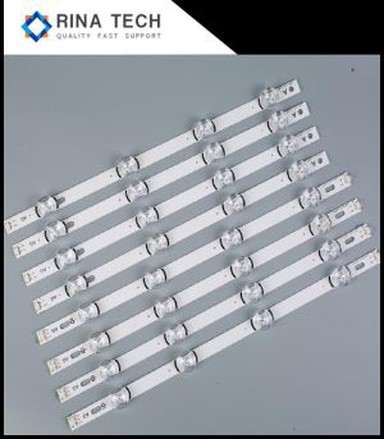
The backlight module includes a brightness enhancement film, a diffusion film, a reflective film, a light guide plate, a light source, etc., which are used to provide a light source for the LCD panel and are the core component of the panel display. The backlight module accounts for about 30% of the total cost of the LCD panel. In the cost structure of the backlight module, the brightness enhancement film accounts for 29%, the diffuser film accounts for 6%, the reflective film accounts for 2%, and the optical film accounts for the total LCD panel 11.1% of the cost, gross profit margin is around 40%, with high value volume.
2. China's expansion of production + large-size drive optical film demand growth
With the closure of Samsung and LGD production lines, the panel industry is gradually shifting to the mainland, and is expected to usher in an inflection point in the third quarter. It is expected that the LCD panel market share of mainland manufacturers is expected to increase from 41.1% in 2019 to 57.8% in 2021. The demand for optical films is directly proportional to the output of panels. The continued expansion of BOE and TCL will drive the purchase of optical films.
In recent years, the global trend of large-size LCD panels is obvious. From 2009 to 2019, the average size of TV panels has increased by about 1 inch every year. In 2017, the average size of global LCD TV panels was 44.3 inches, and it is expected to rise to 48.5 inches in 2020. Larger panel size means more optical film usage.
2. Brightness enhancement film has high technical barriers and large domestic substitutes
Brightness enhancement film is a transparent optical film consisting of a three-layer structure. The light-incident surface of the lowermost layer needs to be back-coated to provide a certain haze, the middle layer is a transparent PET substrate layer, and the light-emitting surface of the uppermost layer is a micro-prism structure. , To increase the brightness and control the viewing angle of the LCD panel display.
Brightness enhancement film technology barriers are relatively high. The world's major brightness enhancement film manufacturers include 3M from the United States, LGE from South Korea, and China-Taiwan Youhui Optoelectronics. There is a large room for domestic substitution. Brightness-enhancing film manufacturers in mainland China, such as Jizhi Technology, Dongxucheng, and Warwick New Materials, are increasing R&D investment to narrow the gap with global leaders. With the gradual transfer of LCD production capacity to mainland China, the CAGR of the domestic brightness enhancement film market space in 18-20 is 15.3%, and the national brightness enhancement film market is expected to reach 1.72 billion yuan in 2020.
3. the domestic diffusion membrane has a high degree of maturity
The diffusion film is mainly composed of a three-layer structure, including the bottom anti-scratch layer, the middle transparent PET substrate layer and the uppermost diffusion layer. In the backlight module, 1-2 diffuser films are generally required to achieve the function of enhancing the brightness of the emitted light.
As a small-scale niche market, large companies are not willing to enter, and small companies have difficulty in entering due to technical and financial barriers, and the overall industry competition pattern is relatively stable. At present, in the global diffusion membrane field, South Korea’s SKC accounts for 19%, and Japan’s Huihe accounts for 14%. In the domestic market, Jizhi Technology and Lucky Group have a market share of over 50%, and they have a higher right to speak in the industry.
The demand for diffusion film is highly positively correlated with the shipment area of LCD panels. In 2017, the global demand for diffusion film was 381 million square meters, and the CAGR is expected to be 4.0% in 18-20. With the transfer of the panel industry to the mainland, the domestic market has grown faster, and the CAGR of the diffusion film demand area exceeds 20%. It is expected that the domestic brightness enhancement film market will reach 1.08 billion yuan in 2020.
4. domestic manufacturers of reflective film are the world's leading manufacturers
The reflective film is generally placed at the bottom of the backlight module, and its main purpose is to reflect the light that leaks through the light guide plate and then return it to the panel side, thereby reducing light loss and increasing brightness. According to the different coating materials, the reflective film can generally be divided into silver-plated reflective film and white reflective film. The manufacturers mainly include DuPont Teijin, Japan Toray, South Korea SKC, etc., domestic manufacturers Changyang Technology, Lanpucheng, Jizhi Technology and other production technologies and The technology is already in a leading position in the world, and Changyang Technology has the largest market share in the world in 2017.
The global reflective film market will maintain a compound growth rate of 4.7% from 2018 to 2022. In 2019, the global reflective film market will have a capacity of approximately 233 million square meters and is expected to reach 255 million square meters by 2022.
With the shift of the LCD panel industry to the mainland, mainland panel manufacturers' expansion and panel large-size trends drive the growth of demand for optical films (brightness enhancement film, diffusion film, reflective film), and domestic substitution frees up more space for performance, and an industry with R&D capabilities The leader will benefit.