

The Basic Function And Production Process Of The Light Guide Plate
Jul 05, 2021
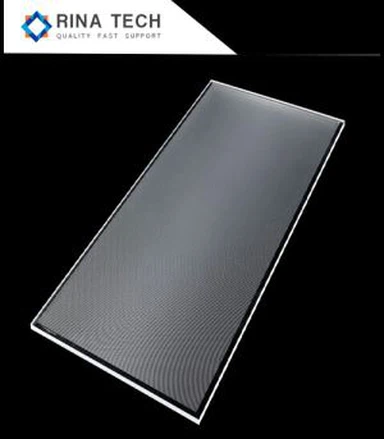
The term light guide plate comes from the English transliteration (Light Guide), which is produced when applied to LCD. LCD is a non-self-luminous product.
In order to display the brightness of the LCD, the product must have a backlight module to display it. The light guide plate is an important component in the development of the backlight module.
It also began to change differently with the demand for downstream products.
Functions and requirements of light guide plate
As the name suggests, the main function of the light guide plate is to guide the light in the direction required by the designer, and all the design of the light guide plate is to
To meet the needs of downstream products LCD and backlight modules, the most important thing is to achieve brightness and uniformity.
Classification of light guide plates
Generally speaking, light guide plates have different classifications due to their shapes, production methods and functions, and there is currently no unified classification. After sorting:
1. According to the shape, it is divided into: flat plate and wedge plate (inclined plate)
Flat plate: The light guide plate is rectangular when viewed from the light incident.
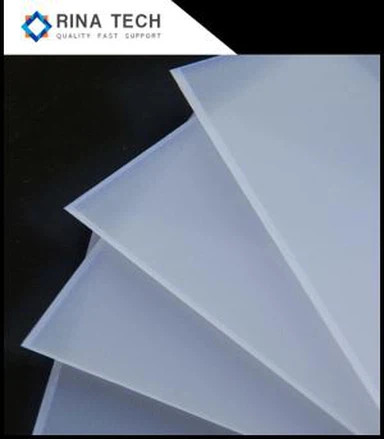
Wedge plate: From the point of light incident, one side is thick and the other side is thin and wedge-shaped (triangular).
2. According to the dot production method: printing and non-printing
Printing: After the light guide plate finishes the shape processing, the dots are printed on the reflective surface by printing, and it is divided into two types: IR and UV.
Non-printing type: the dots are directly formed on the reflective surface when the light guide plate is formed. It is divided into chemical etching (Etching), precision mechanical characterization (V-cut),
Stamper, internal diffusion.
3. According to the light input method: side light input (tube and LED) and direct light type.
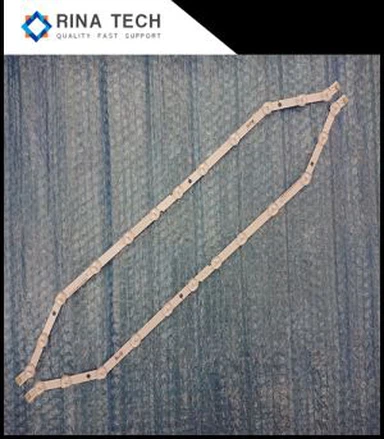
Side-light type: Place the luminous body (tube or LED) on the side of the light guide plate.
Direct type: Place the luminous body (tube or LED) under the light guide plate.
4. According to the forming method: injection forming and cutting forming.
Injection molding: Use an injection molding machine to inject optical grade PMMA particles into a mold at high temperature and high pressure to cool and shape.
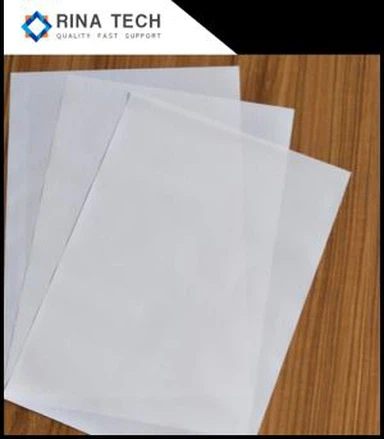
Cutting and forming: The optical grade PMMA original board is cut to complete the finished product.
Light guide plate manufacturing process
Before understanding the processing process, you should first understand the parts and materials required for the light guide plate
1. Materials and tools needed
a. Injection molding: optical grade PMMA particles, ink
b. Cutting: optical grade PMMA plate, ink
2. Optical grade PMMA particles and plates:
No matter what production method is used, the most important and original material of the light guide plate is optical grade PMMA.
(POLYMETHYL METHACRYLATE) (Polymethacrylate is also commonly known as acrylic or plexiglass, and its classification has
PMMA particles and PMMA plates PMMA is refined from petroleum monomers (MMA) and then the monomers (MMA) are chemically processed to make a bright
School-grade PMMA particles (for injection molding are already available), and then optical-grade PMMA particles are cast or extruded
(Injection) to produce optical-grade PMMA flat panels. The PMMA manufacturers recognized by the industry are as follows: (Japan) Mitsubishi Rei
Yang Mitsubishi Rayon, (Japanese) Sumitomo Chemical Sumitomo, (Japanese) Asahicasei, (Japanese) Kuraray, (Taiwan)
Chi Mei Chemical, (Han) Shi and Sehwa,
3. Ink: divided into UV and IR
4. The production method of flat cutting light guide plate is divided into three parts:
The first is the shape processing of acrylic sheet;
The second is screen production;
The third is printing, and the process flow is
a. Acrylic shape processing=original board cutting>mirror planing>forming processing.
b. Screen production = dot design> film output> Zhang net
c. Printing = Acrylic cleaning> printing> baking (IR) or ultraviolet light (UV)
5. The injection molding light guide plate is divided into printing type and non-printing type, and the process is basically the same, because the printing type is not in the injection when the mold is cast.
The dots are cast on the screen, so the finished product is only an acrylic shape. After the shape is formed, the light guide plate is completed by printing. The non-printing type is the
The designed dots are cast on the mold so that the dots and the light guide plate are completed at the same time during injection molding.
Analysis of the production technology of light guide plate
1. Material:
At present, the common material used in the industry is PMMA, but the inherent shortcomings of PMMA and the current shortage of MMA monomer production capacity
There is often a shortage in supply, so some manufacturers have begun to look for alternative materials, because the light guide plate is an important part of the light source in LCD.
Therefore, the light transmittance of the material is a very important basic condition. Nippon Zeon of Japan has promoted a new material Zeonor cycloolefin in recent years.
The biggest advantage of polymer (Cycio Olefins Polymer, COP) lies in its low specific gravity and poor water absorption compared to PMMA, but because Zeonor makes
The production capacity of the manufacturer is only 5,000 metric tons for many years. Therefore, the unit price is almost four times that of PMMA when the economic scale is not reached. In the current era of meager profits,
Considering Zeonor's competitive advantage for cost can only be said to be a joke. Acrylic requirements and key points: size, mirror finish, surface integrity, miscellaneous
Quality, bending, rigidity.
2. Printing method: printing method is divided into IR and UV because of its ink drying method
Comparison of IR and UV printing characteristics
3. Forming method:
Divided into three types: cutting printing, injection molding printing and injection molding non-printing