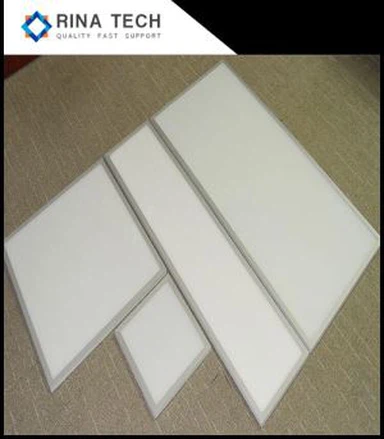


Light Guide Plate Design And Classification
Sep 28, 2018
First, the design of the light guide plate:
The laser dot scheme has the following characteristics:
1. Combine different acrylic materials and different ways of using, it can adopt uniform and uniform laser dot layout, and can also make dot layouts with different sizes according to different specifications and ways of use. The perfect unity of commonality and specificity.
2, the light guide is more uniform, the formation can reach 90% or even more.
3, effectively use the dense reflection around the small dots, the "strand" function in the middle of the big point, there is no dark lines and "black holes". And you can make special effects.
Second, the classification of light guides:
By shape
Flat plate: The light guide plate is rectangular when viewed from the light entrance.
Wedge plate: Also known as a sloping plate, it is a thin wedge-shaped (triangle) shape from the side where the light enters.
2. Press the network
Printed type: After the shape of the light guide plate is finished, the dots are printed on the reflective surface by printing, and are divided into IR and UV.
Non-printing type: The dot is directly formed on the reflecting surface when the light guide plate is formed. It is divided into chemical etching (Etching), precision mechanical characterization (V-cut), photolithography (Stamper), and internal diffusion.
3. Follow the light
Side entry light: Place the illuminator (lamp or LED) on the side of the light guide.
Direct type: Place the illuminator (lamp or LED) under the light guide.
4. Press forming
Injection molding: The optical grade PMMA particles are injected into the mold by high-temperature and high-pressure injection molding using an injection molding machine.
Cutting and forming: The optical grade PMMA original board is subjected to a cutting process to complete the finished product.