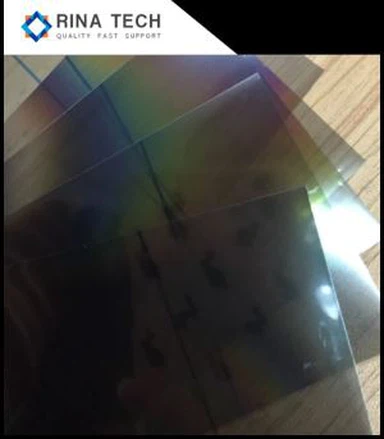


Custom Optical Products: Diffusion Films
Jul 24, 2024
In today's rapidly evolving technological landscape, the demand for customized optical products is on the rise. Among these products, diffusion films have gained significant attention due to their versatility and essential role in various applications. This article explores the importance of custom diffusion films in the optical industry, their properties, and the considerations for their design and production.
- Understanding Diffusion Films
Diffusion films are optical materials designed to scatter light uniformly across a surface. They are commonly used in displays, lighting fixtures, and other optical devices to improve light distribution, reduce glare, and enhance image quality. By manipulating the way light interacts with surfaces, these films play a critical role in strengthening visual performance and user experience.

- Importance of Customization
One of the most significant trends in the optical industry is the push towards customization. Standard diffusion films may not meet the specific needs of every application, resulting in suboptimal performance. Custom diffusion films, tailored to precise specifications, offer numerous advantages:
1. Enhanced Performance: Custom films can be engineered to achieve desired optical properties such as haze level, light transmission, and scattering efficiency. This ensures that the end product performs optimally in its intended application.
2. Compatibility: Different devices require different types of diffusion. Custom films can be designed to work seamlessly with various display technologies, such as LCD, LED, and OLED, addressing the unique challenges posed by each technology.
3. Aesthetic Appeal: In applications where appearance matters, such as interior design and architectural lighting, custom diffusion films can provide specific visual effects and finishes that enhance overall aesthetics.
4. Specific Applications: Different industries, including automotive, healthcare, and consumer electronics, have unique requirements for diffusion films. Custom solutions can meet industry-specific regulations and performance criteria.
5. Design and Production Considerations
When developing custom diffusion films, several factors must be taken into account:
1. Material Selection: The choice of base materials is crucial. Options may include polycarbonate, acrylic, or polyester, each with varying optical and mechanical properties.
2. Surface Texture: The microstructure of the film's surface directly influences its light-scattering capabilities. Techniques such as embossing or coating can create the desired texture.
3. Testing and Prototyping: Before full-scale production, prototypes should be tested to evaluate the diffusion films' optical performance and mechanical stability. This iterative process helps fine-tune designs to meet specifications.
4. Manufacturing Processes: Advanced manufacturing techniques, such as nano-imprinting or injection molding, may be employed to produce high-quality custom diffusion films with consistent properties.
- Applications of Custom Diffusion Films
Custom diffusion films find applications in numerous fields:
- Lighting Solutions: In LED lighting, diffusion films are critical for creating soft, uniform light without hotspots. They help to enhance the overall quality of light in residential and commercial spaces.
- Display Technology: In screens and monitors, diffusion films improve visibility and reduce reflections, yielding a better viewing experience for consumers.
- Automotive Displays: Custom films are used in dashboard displays to ensure optimal visibility under varying lighting conditions, improving safety and user experience.
- Medical Devices: In healthcare, diffusion films can be employed in imaging equipment, providing critical image clarity and consistency.
- Conclusion
In conclusion, custom diffusion films are an essential component of modern optical products, offering enhanced performance, aesthetic appeal, and compatibility across various applications. As technology continues to advance, the demand for tailored optical solutions will only increase, making the need for innovation in the design and production of diffusion films more critical than ever. Businesses looking to stay competitive must recognize the value of customization in meeting the diverse needs of their customers and industries.