

How does the TFT display work?
Oct 22, 2018
The TFT display is the abbreviation of "Thin Film Transistor", which refers to a thin film liquid crystal display, but actually refers to a thin film transistor (matrix) - which can "actively" control individual pixels on the screen. This is also the origin of the so-called active matrix TFT.
So how exactly does the image come about? The basic principle is simple: the display consists of a number of pixels that emit light of any color, as long as the individual pixels are controlled to display the corresponding color. In the TFT LCD, backlight technology is generally used. In order to accurately control the color and brightness of each pixel, it is necessary to install a shutter-like switch after each pixel. When the "louver" is opened, the light can pass through, and " When the blinds are closed, the light cannot pass through. Of course, the technical implementation is not as simple as it was just said. LCD (Liquid Crystal Display) utilizes the characteristics of liquid crystals (liquid when heated, and solid when cooled).
Generally, liquid crystals have three forms:
Clay-like smectic liquid crystal (Smectic)
a silky (Nematic) liquid crystal like a fine matchstick
Cholestic liquid crystal
The liquid crystal display uses a filament shape. When the external environment changes, its molecular structure also changes, and thus has different physical properties - the purpose of letting light pass or block light - that is, the blinds just like.
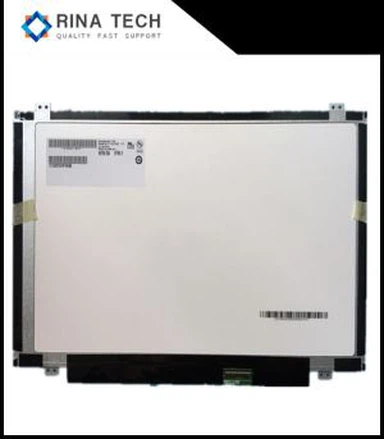
TFT display.jpg
Everyone knows the three primary colors, so each pixel on the display screen is composed of three similar basic components as described above, and controls the three colors of red, green and blue respectively.
The most common one currently used is the Twisted Nematic TFT LCD. The following figure explains how this type of TFT display works. The existing technologies vary widely and we will cover them in detail in the second part of this article.
There are grooves on the upper and lower layers, wherein the upper grooves are arranged longitudinally and the lower layers are arranged laterally. When the liquid crystal is in a natural state without applying voltage, the light diverging from the schematic layer of the twisted nematic TFT display works through the interlayer, and a 90 degree distortion occurs, so that the lower layer can be smoothly transmitted.
When a voltage is applied between the two layers, an electric field is generated, and the liquid crystals are arranged vertically, so that the light does not twist - the result is that the light cannot pass through the lower layer.
TFT pixel structure: The color filter is divided into red, green and blue according to the color, and is arranged on the glass substrate in turn to form a group (dot pitch) corresponding to one pixel. Each monochromatic filter is called a sub-image. Sub-pixel. That is, if a TFT display supports a maximum resolution of 1280 × 1024, then at least 1280 × 3 × 1024 sub-pixels and transistors are required. For a 15-inch TFT display (1024 × 768), one pixel is approximately 0.0188 inches (equivalent to 0.30mm), and for a 18.1-inch TFT display (1280 × 1024), it is 0.011 inches (equivalent to 0.28mm) .
As you know, pixels are decisive for the display, and the smaller each pixel, the larger the maximum resolution that the display can achieve. However, due to the limitation of the physical characteristics of the transistor, the size of each pixel of the TFT at this stage is basically 0.0117 inches (0.297 mm), so for a 15-inch display, the resolution is only 1280 × 1024 at the maximum.