


What is PMMA and why is it used in light guide panels?
Nov 28, 2023
1,What is PMMA and why is it used in light guide panels?
Understanding PMMA and Its Crucial Role in Light Guide Panels
What is PMMA?
Poly(methyl methacrylate), or simply PMMA, is a synthetic polymer widely recognized under names such as acrylic, acrylic glass, or plexiglass. Noted for its impressive resistance to UV light, weathering, and high temperatures, PMMA is a go-to material in several applications, especially those demanding clarity and resilience.
As a transparent and high-purity material, PMMA's attributes make it an optimal choice for a variety of uses, notably in the creation of light guide panels (LGPs). These panels function to efficiently distribute light across a surface, proving integral in LED panel lights.
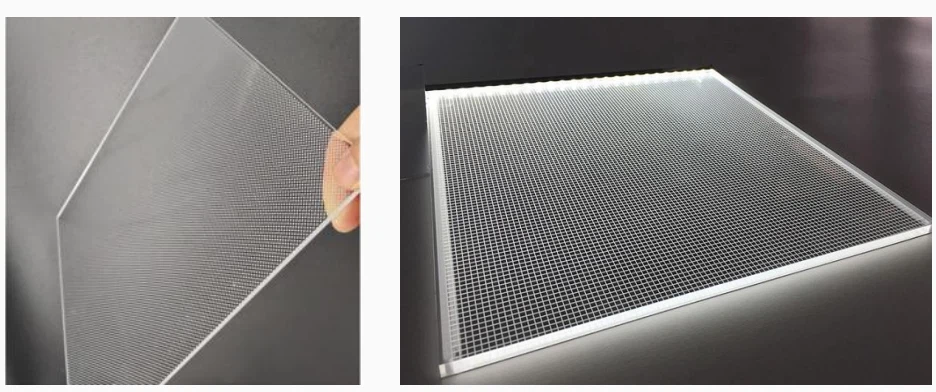
So, why is PMMA the preferred choice for LGPs? Well, here are a few reasons:
Role of PMMA in Light Guide Panels
Firstly, PMMA doesn't discolor or yellow over time. Thanks to its high heat tolerance and resistance to UV light, PMMA-made light guide plates maintain their crystal-clear appearance for years. This is a significant advantage over other materials like polystyrene that can yellow quickly and unattractively.
Secondly, PMMA maximizes efficiency. With a light transmittance of 92%, PMMA allows much more light to pass through while still requiring less power. This translates to better lumens per watt ratio and improved light efficiency.
Lastly, PMMA is characterized by its longevity. The material's high efficiency doesn't come at the cost of lifespan. In fact, the lower power requirement of PMMA reduces the chances of LED chips working overtime, avoiding chip burnout and ensuring the longevity of your lighting solution.
The Advantages of Using PMMA in Light Guide Panels
While PMMA ticks many boxes in the wish-list for ideal LGP material, it's not without its challenges. The primary concern in numerous applications is cost. PMMA notably costs more than other common materials like PS. For a 600*600mm light panel, the usage of PMMA might add USD 3-5 to the manufacturing expenses.
Additionally, due to PMMA's property of being flexible in tensile at varying temperatures, the material may exert pressure on the LEDs in the sides of a panel as the product heats up. This can sometimes lead to discoloration of LEDs where they might appear blue or purple due to pressure.
However, the cost factor often gets outweighed when considering the long-term performance and benefits of PMMA. And the 'heating' issue can be resolved with appropriate heat management systems that control the pressure exerted on LEDs.
Conclusion
In conclusion, Polymethyl Methacrylate (PMMA) proves to be a superb material for Light Guide Panels (LGP) in terms of longevity, light transmittance, and resistance to discoloration. Its properties naturally inculcate efficient light distribution, significant value over time, and a pleasing aesthetic that remains consistent.
Despite its higher initial costs and minor technical implications, PMMA has unmatched benefits in the long run that outweigh these minor challenges. Therefore, when seeking high-quality and efficient light solutions, PMMA's superiority makes it a worthwhile choice despite the higher expense.
The understanding and correct application of PMMA in light guide panels play a crucial part in ensuring the panels' performance, longevity, and final product quality.
2,Can you explain the manufacturing process of PMMA light guide panels in more detail?
Decoding the Manufacturing Process of PMMA Light Guide Panels
Introduction
Light Guide Panels (LGPs) are a critical component in an array of lighting applications, especially when aiming at achieving uniform brightness distribution. PMMA, also known as Acrylic or Plexiglass, stands as the favored choice for the fabrication of LGPs due to its high optical clarity and excellent light guiding properties. But how is a PMMA Light Guide Panel manufactured? Let's take a deep dive into the process.
Understanding PMMA Light Guide Panels
Before delving into the manufacturing process, it's crucial to understand what PMMA Light Guide Panels are. Essentially, they are panels created primarily from acrylic or polymethyl methacrylate (PMMA). PMMA is known for its impressive properties such as high optical clarity, high light transmittance, and resistance to UV light and weathering. This makes it an optimal choice for light guide plates. These PMMA light guide panels play a vital role in guiding and distributing light uniformly across a surface, a trait that makes them indispensable in LED lighting solutions.
The Manufacturing Process of PMMA Light Guide Panels
The manufacturing process of PMMA Light Guide Panels can be broadly divided into four main stages: material preparation, molding process, forming the light guide panel, and creation of the dot matrix.
1. Material Preparation: The process begins with optical grade PMMA particles. These particles will serve as the fundamental building material of the light guide plate.
2. Molding Process: Next comes the molding process where the previously mentioned PMMA particles are subjected to a high-temperature, high-pressure environment in an injection molding machine. Here, the PMMA particles are melted and injected into a mold specially designed to form the intended shape of the light guide panel.
3. Forming the Light Guide Panel: The shaping process involves cutting the now solidified PMMA into the desired shape of the final product. Furthermore, during this stage, the light entry features, such as side entry light or direct type light, are incorporated into the design.
4. Creation of the Dot Matrix: Lastly, the reflective surface of the panel is treated to create an etched or printed dot matrix. This matrix plays a crucial role in scattering the light evenly throughout the panel, contributing to the overall efficiency and effectiveness of the light guide plate.

LED Addition and Quality Control
One integral part of manufacturing PMMA light guide panels that needs a special mention is the addition of LED strips. These strips, when paired with a light diffusion film and reflector, make the magic of even light dissemination possible. They are thoughtfully added to the panel formation, ensuring they line up perfectly with the precision-engineered pattern on the panel.
Throughout the manufacturing process, quality control is stringently upheld. Tests are performed to ensure every panel maintains high standards for light transmittance and durability. The process requires detailed craftsmanship and precision, reflecting not just in the efficiency of the PMMA light guide panels but also their long-lasting functionality.
Conclusion
In summary, the manufacturing process of PMMA Light Guide Panels is a deliberate and meticulous procedure that leverages both the stunning properties of PMMA and the skills of experienced assembly teams. This blend of high-grade material and precision engineering results in superior light guide panels offering exceptional light transmission qualities. It's this quality that makes PMMA the go-to material for industries seeking energy-efficient, long-lasting, and consistent lighting solutions.
3,What are some other applications of PMMA light guide panels besides those mentioned in the article?
Other Applications of PMMA Light Guide Panels
PMMA light guide panels boast of an array of applications far beyond the ones mentioned in the earlier article. Here are some more notable applications of these versatile panels:
1. Automotive lighting: The exceptional light guiding properties of PMMA find applications in automotive lighting. PMMA is widely utilized for manufacturing interior and exterior panels, trim, bumpers, fenders, and other moulded parts in vehicles.
2. Construction: PMMA's durability combined with its aesthetic appeal make it an ideal material for creating elegant yet functional balustrades and door canopies.
3. Electronics & Energy: PMMA is commonly used in electronics industry. From small to ultra large screens, the durability and light transmittance of PMMA make it the optimal choice.
4. Furniture & Design: The versatility and aesthetically pleasing nature of PMMA has also found favour with designers and fabricators worldwide.
5. Health industry: The easy-to-maintain attributes of PMMA enable its use for storage in hospitals, doctors' surgeries, dental practices, and research laboratories.
6. Lighting: PMMA's transparency and brilliance make it indispensable for optical and technical applications.
7. Visual Communications: PMMA can be color-matched to any shade, enabling brands to project their identity consistently and with high quality across the globe.
It's important to note that these applications owe to the unique properties of PMMA, including its high optical clarity, excellent light guiding properties, and resistance to UV light and weathering.
4,What are the applications of PMMA light guide plates?
Applications of PMMA Light Guide Plates
Introduction to PMMA Light Guide Plates
PMMA, also known as Polymethyl Methacrylate, is a common type of acrylic distinguished for its robustness, transparency and versatility. PMMA Light Guide Plates are exceptional for their ability to transmit light efficiently and evenly across a broad area, making them widely used in various industries.
Known for their longevity, these light guide plates prove to be an economical choice. They can withstand extensive usage and still maintain their performance. This is most beneficial in settings such as medical institutions and environmental decorations where devices are subject to prolonged use.
Specific Applications of PMMA Light Guide Plates
PMMA Light Guide Plates have found their utility across several domains. In medical and research institutions, they're used to create catheter plates that highlight the uniformity of light and no presence of dark spots. These can be cut and shaped arbitrarily, given their individual carving for every product, thus making them extremely flexible for a wide variety of applications.
Apart from this, these light guide plates also see their use in environmental decorations and lighting in subway station light boxes. Their ability to provide uniform light and the stunning visual effects they can create with their engraved designs make them highly favorable for these functions.
Moreover, in commercial sectors, like offices, schools, and healthcare facilities, PMMA Light Guide Plates are often used in LED flat panel lights. These lights provide evenly distributed and efficient lighting that enhances the overall ambivalence of the place.
Advantages of Using PMMA Light Guide Plates
The use of PMMA in designing light guide plates offers a myriad of advantages. Their longevity serves as a significant benefit. Once installed, these plates can function effectively for a long duration without needing replacement. This factor is particularly useful in environments like medical institutions where devices are intended for prolonged use.
Their most compelling aspect is their outstanding light guiding effect. PMMA light guide plates ensure the uniform spread of light and the complete absence of dark spots. This makes them highly efficient for various applications. Furthermore, the light intensity doesn't require high power, thus making PMMA light guide plates energy efficient.
Lastly, PMMA light guide plates exhibit extraordinary resistance to heat and ultraviolet light. This prevents them from yellowing or discoloring, which is a common issue with less resilient materials. This quality assures the longevity of the light guide plates, making them an optimal choice in the long run.
Emerging Trends and Innovations in PMMA Light Guide Plates Use
Cutting-edge advancements are being made in the field of light guide plate technology. Polymers are being increasingly used for creating light guide plates that are far more efficient than their predecessors. These innovatively made materials optimize light transmission, reduce energy consumption, and enhance the overall performance of the light guide plate technology.
In the manufacturing process, additive methods like 3D printing have seen favorable adoption. With 3D printing, complex shapes and structures can be easily formed, opening new dimensions for lighting design. Additionally, inclusions like microstructures and surface textures on the light guide plates have been found to improve light extraction efficiency.
The integration of sensors and other electronics in light guide plates has paved the way for the creation of smart lighting systems. These systems can adjust their output based on various factors such as ambient light levels and occupancy. With the inclusion of such advancements, the future of PMMA light guide plates looks promising in every aspect.
Conclusion
The applications of PMMA Light Guide Plates are extensive and ever-increasing. Their remarkable characteristics and proven efficiency have made them an integral component in various sectors, particularly in lighting solutions.
Their ability to provide uniform light, resist environmental factors like heat and UV-rays, and last for a significantly long duration make them a first choice in many applications. Further, rapid advancements, such as the incorporation of new materials and 3D printing in manufacturing, hint towards the brighter future of these light guide plates that will unquestionably continue to revolutionize the lighting industry.


