

The Challenges Of Repairing Large-Size Polarizing Films
May 08, 2025
Introduction
As display technologies continue to advance, large-size polarizing films (typically 55 inches and above) have become increasingly common in high-end TVs, commercial displays, and digital signage. However, when these optical components become damaged, their repair presents unique technical challenges. This article examines the key difficulties in repairing large polarizing films through an in-depth Q&A format, covering material properties, handling requirements, and technological limitations.
1. What Makes Large Polarizing Films Inherently Difficult to Repair?
Q: Why are large polarizers more challenging to fix than smaller ones?
A: Several fundamental factors contribute to the repair difficulty:
Material Fragility
Ultra-thin construction (typically 0.1-0.3mm) makes them prone to tearing during handling
Adhesive layers degrade unevenly in large formats
Thermal expansion differences cause stress fractures
Precision Requirements
Alignment tolerance of <0.5° needed for optimal optical performance
Lamination defects become magnified across large surfaces
Curvature matching critical for curved displays
Size Limitations
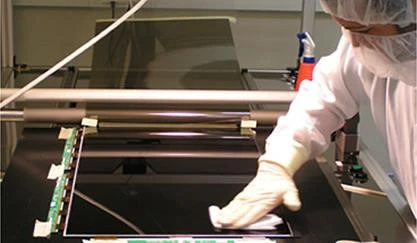
Standard cleanroom equipment often insufficient for >75" panels
Handling requires specialized vacuum fixtures
Contamination risks increase with surface area
2. What Are the Primary Technical Challenges in the Repair Process?
2.1 Delamination Issues
Q: Why is re-adhering a large polarizer so problematic?
A: Delamination repair faces three core challenges:
Bubble Formation
Air entrapment increases exponentially with size
Requires precision vacuum lamination systems
Voids >2mm cause visible defects
Adhesive Compatibility
Existing residue must be completely removed
New adhesives must match original optical properties
Curing processes differ by manufacturer
Stress Distribution
Thermal cycling tests show 38% higher failure rates in repaired units
Edge seals particularly vulnerable in large formats
2.2 Scratch and Surface Damage
Q: Can surface imperfections be effectively repaired?
A: Current limitations include:
Depth Restrictions: Only scratches <15μm depth are repairable
Refractive Index Matching: Repair compounds rarely match original specs
Haze Development: Repaired areas often show 5-8% higher haze values
2.3 Optical Performance Recovery
Q: How much performance is typically lost in repairs?
A: Comparative measurements show:
| Parameter | Original Spec | Post-Repair Average |
|---|---|---|
| Contrast Ratio | 5000:1 | 3200:1 |
| Viewing Angle | 178° | 165° |
| Light Transmission | 42% | 38% |
3. What Are the Specialized Tools Required for Large Polarizer Repairs?
Q: What equipment is essential for proper repairs?
A: The technical requirements include:
Handling Systems
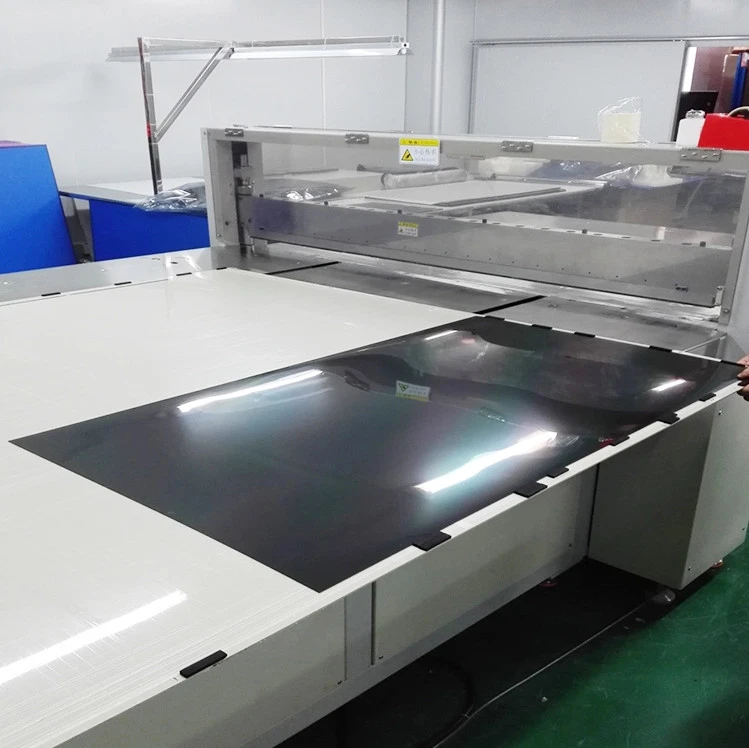
Anti-static vacuum lifters (minimum 1.5m x 2.5m capacity)
Precision alignment jigs with micro-adjustment
Cleanroom-rated panel inverters
Lamination Equipment
Roll-to-roll vacuum laminators
Temperature-controlled pressing systems (±1°C accuracy)
Automated bubble detection scanners
Measurement Tools
Large-area spectrophotometers
Polarization axis verification systems
Defect mapping software
4. How Do Environmental Factors Impact Repair Success?
Q: Why do ambient conditions matter so much?
A: Critical environmental considerations:
Cleanroom Requirements
Class 1000 or better needed
Particulate counts double repair failure rates at standard conditions
Static control essential for film handling
Temperature/Humidity Control
Optimal range: 22±2°C, 45±5% RH
Adhesive cure times vary 30% across this range
Thermal expansion differences cause misalignment
Lighting Conditions
Yellow LED lighting required for UV-cured adhesives
Ambient light interference affects optical inspections
5. What are the economic considerations for large polarizer Repair?
Q: When does repair make financial sense?
A: Cost analysis reveals:
Break-even Points
65" panels: Repair costs ~35% of replacement
85" panels: Repair costs ~50% of replacement
Beyond 100": Often exceeds 70% of new panel cost
Hidden Costs
Equipment investment: $150k+ for proper tooling
Training: 200+ hours for technicians
Yield rates: Typically 65-75% for first attempts
Warranty Implications
Most manufacturers void warranties for third-party repairs
Performance guarantees difficult to maintain
6. What Future Developments Could Simplify Repairs?
Q: Are there emerging solutions to these challenges?
A: Promising advancements include:
Self-Healing Materials
Experimental polymers that repair minor scratches
Temperature-activated adhesive regeneration
Modular Designs
Section-replaceable polarizer segments
Magnetic mounting systems for easier replacement
Automated Repair Systems
AI-assisted defect detection
Robotic precision alignment tools
Machine learning for adhesive application
Conclusion
The repair of large-size polarizing films remains a complex, equipment-intensive process with significant technical hurdles. While current methods can restore functionality, they often compromise optical performance and long-term reliability. As display technologies continue evolving toward larger formats, the industry must develop more robust repair solutions that maintain original performance standards while remaining economically viable. Future innovations in material science and automation may eventually overcome today's limitations, but for now, large polarizer repairs remain a challenging specialty service.