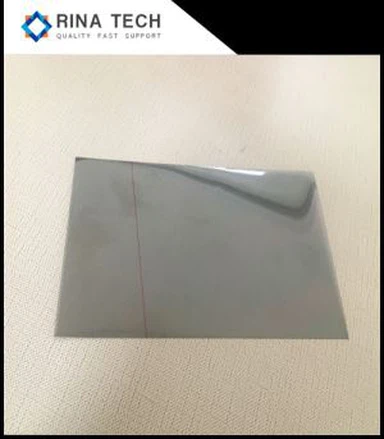


What are the materials of each layer of polarizer
Jan 24, 2022
Polarizer sheet is an optical film made of high-tech polymer composite materials. Generally speaking, when polarizer manufacturers produce polarizers, they also pay attention to the material. Polarizers produced by polarizer manufacturers usually consist of polarizer layers, TAC layers, adhesives, protective films and reflective films. What materials do polarizer manufacturers with good quality and service usually use when producing such multi-layered polarizers?
1. The polarizing layer usually uses PVA (polyvinyl alcohol)
Polarizer manufacturers usually use PVA (polyvinyl alcohol) to make the polarizing layer when producing polarizers. This polarizer used to be made of PVA film after dyeing and stretching, which determines the light transmittance and polarizing properties of the polarizer. , Polarizer manufacturers generally use dye-based and iodine-based dyeing methods for dyeing.
2. The TAC layer usually uses TAC (triacetate cellulose)
It is reported that the TAC layer refers to the use of TAC (triacetate cellulose) as the main material. This is because the PVA film of the polarizer layer is prone to fading and water absorption, which affects the polarization performance. It is necessary to use a transparent and optically uniform TAC film on both sides to isolate the influence of air and moisture on the polarizing layer, as well as to isolate ultraviolet rays and prevent dizziness.
3. PET is usually used for adhesives, release films, protective films and reflective films
It is reported that polarizer manufacturers use adhesives, release films, protective films and reflective films in the composition of polarizers. The main function of the reflective film is to obtain the effect of specular reflection, and the protective film needs to play a certain protective role on the TAC film. The release film is to protect the pressure-sensitive adhesive layer, and the adhesive is to ensure the adhesion of the polarizer. These important parts are mainly made of PET (ethylene terephthalate) coated with silicon coating on one side. .
In general, polarizers have relatively sophisticated requirements, so the structure and composition of polarizers are relatively complex, so the materials used have higher requirements.