

OLED TV VS Quantum Dot TV, who is better?
Aug 05, 2021
Nanocrystalline Technology on the New Third Board was established in August 2009. It is a high-tech enterprise with new quantum dot semiconductor materials (also known as nanocrystalline) as its core technology. Its main business is the research, manufacturing and application of new quantum dot materials. Technology and product development.
Quantum dot materials are a new type of material that began to be developed in the 1980s and have the potential to be applied in many fields. In the past 30 years, they have attracted widespread attention from academia and industry.
Quantum dots (or semiconductor nanocrystals) are nano-particles composed of IIB-VI or III-V elements. The particle size of quantum dots is generally between 1 and 10 nm. Because electrons and holes are quantum confined, the continuous band structure becomes a discrete energy level structure with molecular characteristics, which can emit fluorescence after being excited. Based on quantum effects, quantum dots can be widely used in fields such as display, lighting, and biomarkers. Scientists have invented many different methods to make quantum dots and expect this nanomaterial to have great application potential in nanoelectronics in the 21st century.
Modern quantum dot technology originated in the 1980s, when Louis E. Bell of Bell Labs. Dr. Brus (Chief Scientific Advisor of Nanocrystalline Technology, Academician of the American Academy of Sciences, Chair Professor of Chemistry at Columbia University) and colleagues found that cadmium sulfide particles of different sizes can produce different colors, that is, the light-emitting color of semiconductor nanocrystals can be controlled by the crystal particle size To regulate. Such excellent and unique size-related properties are impossible to achieve with other luminescent materials. At the same time, this unique property requires that the synthesized quantum dots have close to perfect size, morphology, and surface control. Since dimethyl cadmium, dimethyl zinc and other highly toxic and difficult to handle metal organic raw materials are used in the preparation method, how to synthesize quantum dots under conventional experimental conditions has always been a major challenge in material synthesis chemistry at the end of the 20th century. This has also affected the industrialization process of quantum dots.
After entering this century, Professor Xiaogang Peng (Chairman of Nanojing Technology) has gradually solved the problems in the synthesis and processing of quantum dots through a series of inventions at the University of Arkansas, so that high-quality quantum dots have the conditions to enter the practical stage. Among them, the technology of preparing high-performance quantum dots using simple metal oxides and metal inorganic salts as raw materials, invented in 2001, created a new era of quantum dot synthesis.
Ensuring the high performance (quantum efficiency, half-peak width, stability) and large-scale production of quantum dot materials is a major problem in the quantum dot material industry. In recent years, the industrial-grade preparation technology of quantum dots has been continuously developed. At present, several companies around the world have already possessed the industrial production capacity of quantum dot materials and can guarantee the high performance of quantum dot materials (Nanojing Technology is one of them). The high performance of quantum dots is the basis for the application of quantum dots to other application products. With the advancement of quantum dot preparation technology, breakthroughs have been made in the application of application products. Quantum dot materials are used in the fields of lighting, display and biology. The application products of the company have been successfully developed and are gradually being put into practical use.
In the 2019 annual report, quantum dot display products accounted for 88%, lighting products, biological products, and semiconductor luminescent materials accounted for a large proportion, and the total revenue was only several million.
It can be seen that quantum dot display products have now begun to enter a mature commercialization stage, while applications such as lighting products, biological products, and semiconductor luminescent materials are still in their infancy.
Liquid Crystal Display (LCD) is a type of flat panel display technology (Flat Panel Display, FPD). Based on the special physical, chemical and optoelectronic properties of liquid crystal materials, it is currently the most mature and widely used display device in flat panel display technology. , Mainly used in TVs, monitors, notebook computers, tablet computers, smart phones and other fields.
At present, the so-called LCD on the market mainly refers to the active matrix thin film transistor liquid crystal display (Thin Film Transistor LCD, TFT-LCD), which includes two technologies of thin film transistor (TFT) and liquid crystal display (LCD), which are controlled by thin film transistors. LCD display.
The passive matrix Twisted Nematic LCD (TN-LCD) and STN-LCD (Super Twisted Nematic LCD, STN-LCD) technologies in the early development of LCD have been gradually eliminated.
The TFT-LCD display module is mainly composed of a liquid crystal panel (Panel), a driving circuit and a backlight source (Back Light). In the liquid crystal panel, a liquid crystal cell is placed between two parallel glass substrates, the upper glass substrate is above the polarizer (Polarizer), and the bottom is the color filter (CF); the lower glass substrate is pasted with thin film transistors , Below is the polarizer. The function of the backlight source is to provide a background light source with uniform in-plane brightness for the liquid crystal display screen, and the drive circuit provides various display screen information to the display screen after power-on.
The display principle of TFT-LCD is: the driving circuit provides the information of the display screen, the backlight source emits a light source with uniform brightness distribution to the display; the polarizer converts natural light without polarized polarity into polarized light, and the TFT thin film transistor changes the signal and voltage To control the rotation direction of the liquid crystal molecules, so as to control whether the polarized light of each pixel point is emitted or not to achieve the display purpose; the color filter makes each pixel contain the three primary colors of red, blue and green, so that it shows a specific color. These pixels of different colors present the image on the front of the panel.
The backlight source of liquid crystal display technology has mainly experienced two stages: cold cathode fluorescent lamp (CCFL) and WLED.
The LED TV is actually still an LCD screen, but the backlight is changed from the original CCFL fluorescent lamp to white LED lighting, so it is also called WLED (white light diode). More than 10 listed companies of A-share BDO Runda have LED display products.
Quantum dot backlight technology has revolutionary breakthroughs in both performance and power consumption. Quantum dot backlight is very likely to be another revolution in the history of liquid crystal development after CCFL backlight and WLED backlight.
Quantum dots are composed of zinc, cadmium, selenium and sulfur atoms, including IIB-VIB group and IIIB-VB group elements, such as CdTe, CdS, CdSe, PbS, InP and InAs, etc. Quantum dots are used as nano-level semiconductor materials , The band gap width is large, there are two forms of electroluminescence and photoluminescence.
The photoluminescence and electroluminescence of quantum dot materials are applied to QD-LCD and QLED respectively.
QLED uses the self-luminescence of quantum dots driven by electricity as the basis of display. Due to the difficulty of solution process development, low reliability, low blue light emission efficiency, and toxicity of cadmium-based quantum dot devices, the industry believes that electroluminescent QLEDs The commercialization of the technology will still take more than 10 years.
In 2020, the Central Research Institute of BOE Group has made a major breakthrough in the research of high-resolution, full-color quantum dot light-emitting diodes (QLEDs), achieving a high-resolution, full-color QLED device with a resolution of 500ppi and a color gamut of 114% NTSC. Technology The indicators are leading in the world.
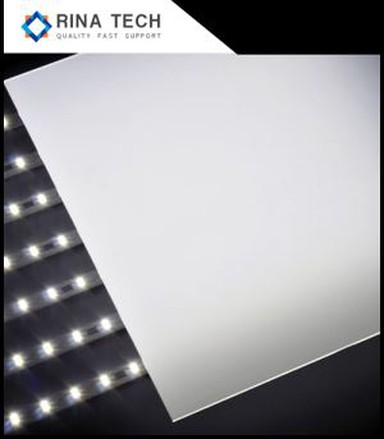
QD-LCD still adopts the main structure of LCD, only adding quantum dot film on the backlight, and the light emitted by the blue LED backlight is transformed by the quantum dot film to realize full-color display.
According to South Korean media reports, Samsung expects to complete the construction of the QD-OLED panel production line in 2020 and start enterprise production in 2021. This will not only reduce the production cost of the panel, but also improve the display performance of the panel. OLED panels have become the standard for next-generation high-definition TVs. Before quantum dot electroluminescence technology matures, QD-OLED is a very valuable display technology.
According to the report, Samsung Display will start trial production of QD-OLED panels (combining backlight and self-luminous technologies, plus Samsung’s quantum dot technology) in the first quarter of 2021, and plans to start formal production in the second quarter. The first QD-OLED panel production line (Q1 production line) can produce 30,000 glass plates per month, which can accommodate 65-inch 8K TV panels (3 units) and 32-inch 4K display panels (18 units). It is reported that it is 65 inches The annual output of QD-OLED panels is expected to reach 800,000.
At present, there are two main ways of designing and applying quantum dot technology on TFT-LCD, namely On Edge way and On Surface way.
On Edge's technology is mainly derived from QD Vision. Companies that apply this technology include Sony and TCL; On Surface's technology is mainly derived from 3M and Nanosys. Companies that choose this technology include Samsung, Hisense, and Changhong.
In the QD-LCD's On Surface upgrade program, only the white LED of the LCD needs to be changed to the blue LED, and the color filter program is fine-tuned. The quantum dot film is placed under the light source and the brightness enhancement film, and a diffusion film is removed. The upgrade cost is low, and it is easy to promote industrialization and is expected to become a standard configuration.
In quantum dots, zinc oxide and cadmium selenide are the main materials, which are directly irradiated on the two kinds of quantum dots through blue LED light, emitting red light and green light, and then mixing with blue light to form a white light backlight source.
At present, there are two main principles for realizing quantum dot liquid crystal panels: first, use quantum dot materials to replace yellow phosphors, and then package them with blue LEDs and enter the light guide plate; second, when the vacuum container is processed, the The quantum dot material is put into it and placed on the edge of the light guide plate. Under the illumination of the blue LED lamp, it shows red and green light, and then mixes with the blue light to form white light and enters the light guide plate. Finally, the light emitted by the blue LED is formed by the light guide plate. White light.
The principle of quantum dot backlight is shown in Figure 1:
Quantum dot LCD TV is a kind of LCD TV that uses quantum dot light-emitting technology in the backlight. By controlling the size and distribution of quantum dots, the color and purity of the light emitted by the quantum dots are adjusted to achieve the purpose of controlling the color gamut of the quantum dot TV. By precisely controlling the size of the quantum dot particles, the RGB three primary color coordinates can be controlled, so that the enclosed area is further expanded to meet the 110% color gamut.
Therefore, quantum dot TVs are TVs that use quantum dot technology as a backlight source, and are essentially LCD TVs (using LED backlights). It uses blue LEDs as the light source, and puts optical materials using quantum dots between the backlight and the LCD panel. Bright colors can be obtained through three kinds of light with sharp peaks, red, green, and blue, so that the color gamut can reach or exceed OLED level.
The main difference between quantum dot TVs and traditional LCD TVs is that the former uses upgraded LED technology (adding nanomaterials and blue backlights to the LCD backlight, illuminating red and green quantum dots with different diameters to form the three primary colors of RGB). Traditional LED-backlit LCD TVs have a better performance in terms of picture quality, energy saving and environmental protection. Therefore, quantum dot display technology is also regarded as an innovative step to break through the ceiling of LED technology, and it has become a new direction for the development of LCD TVs.
Quantum dot TV has perfect color expression. Visual effects are the first criterion for TV evaluation. Quantum dot TVs have many features such as pure color, high color gamut, stable and long-lasting performance, and can restore the color space by 100%. Bright and dim scenes can be well reflected. A visual experience close to the real world.
Quantum dot materials have low cost, extremely high color purity, adjustable luminescence color, and high fluorescence quantum yield. Therefore, quantum dot TVs have great potential in enhancing the color gamut of display devices.
Memorabilia of Quantum Dot TV Development:
In 2010, the Samsung research team applied quantum dots to a 46-inch LCD research prototype for the first time, with a color gamut of 104.3% NTSC.
In 2013, the Color IQ technology developed by QD Vision in the United States was used in high-end TVs launched by Sony and was called "TRILUMINOS" technology.
At the end of 2014, Hisense and TCL announced the launch of the first generation of quantum dot TVs.
In January 2015, Samsung announced the launch of its new quantum dot curved TV SUHD TV at the CES conference.
In mid-2015, Philips (Taiwan TPV) launched quantum dot TVs and quantum dot displays.
In early 2016, TCL released the world's first QUHD TV Quantum Dot TV X1
In 2016, Samsung acquired QD Vision, known as the "Father of Quantum Dot Display".
In 2017, Samsung’s first QLED flagship TV, Q8C, was born. It is the first TV that can restore 100% color volume. Samsung has also become the only current manufacturer of quantum dot TVs that do not contain cadmium.
At present, quantum dot TVs are still in the photoluminescence stage, and they still need the help of backlight sources for inactive luminescence displays. With the breakthrough of the technical bottleneck, the real active light-emitting display technology may be realized in the future and its display performance will be enhanced.
Therefore, on a purely technical level, quantum dot TV is essentially LCD technology, but it has been enhanced and improved, so it is considered a transitional technology.
OLED is the third-generation display technology that represents the future. OLED stands for Organic Light Emitting Diode. Its basic structure is similar to a sandwich, consisting of a thin, transparent, semiconductor-like indium tin oxide (ITO) connected to the anode, plus another metal cathode. Compared with the traditional liquid crystal display (LCD), the biggest advantage of OLED is that it can be flexible, thin and transparent. At the same time, OLED also has the advantage of fast response speed, which can effectively reduce the dizziness caused by the response time difference of the display screen, making it the most suitable display technology for VR devices.
In addition, compared with LCD screens, OLED displays also have higher electrical-to-optical conversion efficiency, lower heat generation, higher contrast,
The screen brightness is more uniform, more energy-saving and other advantages. OLED is considered to be the third largest flat panel display technology in the future after CRT and LCD.
Quantum dot TVs and OLED TVs are very different in principle. Quantum dot TVs have improved the backlight display, but the essence is still LCD TVs. Compared with traditional LED backlight technology, quantum dot technology can effectively reduce excessive blue light, thereby improving the color gamut and color accuracy, making the color gamut comparable to or even surpassing the level of OLED.
OLED is an organic light-emitting diode with self-luminous characteristics. It does not need a backlight like a liquid crystal screen, as long as it is constructed to produce different colors of light through a phosphorescent color layer. It is precisely because of its self-luminous characteristics that OLEDs can have better
Black level
, Better color accuracy and wider color gamut. In addition, it has the advantages of ultra-thin, rollable and low energy consumption. However, OLED materials are inherently unstable and have obvious defects in terms of lifetime and light efficiency, and the yield rate is also difficult to meet commercial requirements.
On small screens, OLED TVs have excellent expressiveness, but if they are applied to large screens, the yield rate is extremely low due to the complexity of the process, so you will see that the prices of OLED large screen TVs on the market are relatively high. For example, Sony has The 98-inch OLED TV launched is priced at 529,999 yuan.
Brightness, HDR and color gamut: Quantum dot TVs perform better. The LED backlight used by quantum dots can increase the brightness and maintain a non-decayed state for a long time. In addition, under the same color depth and gray scale, quantum dots also have better HDR dynamic range performance. The self-luminous characteristic of OLED will inevitably cause the attenuation of organic light-emitting body while high brightness, causing irreversible physical damage, so it is slightly inferior in brightness, HDR and color gamut;
Black level, refresh rate and response time and uniformity: OLED TV performs better, because OLED can completely turn off the backlight, and can control each pixel. After receiving the electrical signal, the OLED TV can instantly complete the switch closing action;
Viewing angle and flexibility: OLED TV has a greater advantage. It can achieve a 180 ° viewing angle, and has flexible characteristics of its own. It can realize concave, convex, double-sided wall hanging and front and back hyperboloid scenes.
In terms of grayscale, cost and lifespan: Quantum dot TVs are more advantageous because OLEDs use PWM or DC dimming methods. When the color number of the panel reaches 10 bit, which is 1 024 level, it is more difficult to control the steering as finely as the liquid crystal molecules. At the same time, the blue sub-pixels used in OLED have a limited lifespan, and the panel process is more complicated than quantum dots, so the yield rate is low.
It is not difficult to integrate quantum dot technology into existing LED LCD TVs, as long as an additional layer of quantum dot film is added to the LED backlight of the TV to adjust the light passing through. The biggest advantage of this is that only a small-scale transformation of the existing production line is required, and the cost increase is not large.
Through the comparison of the above aspects, it can be seen that quantum dot TV and OLED TV are actually not the same, each has its own advantages.
The industry also has different views, which are now divided into two groups:
The quantum dot camp is dominated by Samsung, TCL and Xiaomi, as well as Hisense and Sony. Samsung's QDOLED refers to a display technology that combines quantum dots and OLED. According to Samsung Electronics, by 2025, it will invest US$11 billion in QDOLED production lines. TCL has 1,199 published patents on quantum dot electroluminescence, ranking second in the world.
The OLED camp is dominated by LG, Skyworth, Changhong, Konka, Panasonic, Philips, Hisense, and Sony. TV OLED panels are almost monopolized by LG Display.
Therefore, from the perspective of the market, it cannot be concluded that quantum dot TV is a transitional technology and there is no future, because under the same display effect, quantum dot TV has other advantages such as price, longevity, and high yield. At the moment when the cost of OLED TVs cannot be effectively controlled, quantum dot technology is a lower cost and better solution. Quantum dot TVs may have a long life cycle and may be a strong competitor to OLED for a long time.
From upstream to downstream, the quantum dot display industry chain includes upstream quantum dot materials and barrier films, midstream quantum dot films, and downstream quantum dot TVs.
The cost of quantum dot film mainly comes from two aspects: barrier film and quantum dot concentrate. Representative companies of quantum dot materials and barrier film suppliers include 3M, Nanosys and QDVision in the United States (acquired by Samsung in 2016), Nanoco in the United Kingdom, and Nanojing Technology.
High barrier film is an optical film with very low permeability to low-molecular chemicals such as gases and organic compounds. It is one of the core materials for AMOLED displays and quantum dot displays. Its barrier properties directly affect the life of the display. .
Foreign high-barrier film companies are mainly concentrated in South Korea, the United States, and Japan, with earlier development and relatively mature technology, and occupy a major position in the high-barrier film market. Among the domestic high-barrier film companies, there are many companies that make food and pharmaceutical packaging films, but very few companies really do encapsulate water vapor barrier films. Currently, the company with large-scale production capacity is Wanshun New Materials, quantum dot high-barrier films It has been supplied to customers of downstream quantum dot display materials, and the terminal is used in domestic quantum dot TV brands. There are also Lucky, Kangdexin and so on.
Nanosys has an annual production capacity of approximately 25 tons of quantum dot concentrates. It has been cooperating with 3M to produce quantum dot films for a long time. Since 2017, it has been cooperating with Jizhi Technology to produce quantum dot films. The products have been successfully verified by manufacturers such as TCL, Hisense, and BOE.
Quantum Dot Film Co., Ltd. is responsible for completing the coating and compounding process of quantum dot optical film. Representative companies 3M, Jizhi Technology, TD Optics, Nanocrystalline Technology, Xinhe Optics, etc.; currently the global production of quantum dot film companies are mainly concentrated in the mainland Compared with Taiwan, Samsung’s quantum dot film is only for its own products, and it does not constitute competition if it is not sold. 3M in the United States has announced its withdrawal from this field. However, it takes time for China Taiwan to develop mainland customers. At present, mainland companies are in a very good position in the early stage of increasing the penetration rate of quantum dot membranes, and they have obvious advantages in technology, customers, and markets.
Warwick Advanced Materials, a subsidiary of TD Optics, has been developing quantum dot film technology since 2016 and reached a cooperation with Nanosys in 2017. It is one of the earliest companies in China to conduct quantum dot film research and development. At present, the company has initially possessed the ability to produce quantum dot films on a large scale, with the production capacity of quantum dot films reaching 3 million square meters per year. Its downstream customers are mainly TCL, which achieved sales revenue of 10.39 million yuan in 2019. At the beginning of 2020, it has achieved small-volume supply from two well-known manufacturers.
Shinwa Optics provides quantum dot film for Samsung Electronics’ QLED TVs. Nearly half of Samsung's quantum dot film supply comes from South Korea.
Nanojing Technology achieved sales revenue of 54.67 million quantum dot display products in 2019, and its customers include TV manufacturers such as TCL and Hisense.
Jizhi Technology was established in March 2007. It is a high-tech enterprise integrating optical film and functional film formulation research and development, optical design simulation, precision coating processing technology and other services. The company’s optical film products include diffusion film, brightness enhancement film, quantum dot film, composite film (DOP, POP, etc.), silver reflective film, 3D film, protective film, mobile phone hardening film, etc., which are widely used in TVs, monitors, notebook computers, Various display application fields such as tablet computers, smart phones, navigators, car displays, etc. The company has reached a strategic cooperation with Nanosys, a global leader in quantum dot production, in the development of optical quantum dot enhancement film (QDEF). At present, a manufacturing plant for advanced QDEF coating production line has been built. The company’s quantum dot film products have been widely used in various types and models of Xiaomi Group’s LCD TVs, smart phones and other terminal products, and have successfully passed TPV, BOE, TCL, Hisense, Wechat, PPTV, AUO, VIZIO, Sony, As verified by companies such as Lenovo and Philips, some customers have begun stable mass production and shipment.
In addition, there are companies such as Kangdexin, PJF, and Changyang Technology. Kangdexin joins hands with Dow to enter the field of cadmium-free quantum dots, cooperating in technology research and development, product production and comprehensive solutions, and the company's water vapor barrier film has been put into production at the beginning of the year. The company has become the first domestic supplier of cadmium-free quantum dot films, which can meet the advanced standards of the cadmium-free industry established by China and the European Union, and has been able to cover the stable supply capacity of quantum dot films of 75 inches and below. The company's quantum dot film has entered the stage of sample delivery and testing by customers.
Doublestar new material optical film series include QD quantum dot film, etc. The products have entered the domestic and foreign markets. The main customers include Samsung, Xiaomi, Skyworth, TCL, Changhong, Konka, TPV and other domestic and foreign brands, die-cutting factories, etc.
According to the official website of Zhuoyi Technology, the company can provide quantum dot display technology solutions. The company independently researches and develops quantum dot materials and semiconductor processes. The quantum dot display project is progressing smoothly. Related products are already in the testing stage. Samsung Electronics and Huawei are all company customers.
Dongcai Technology increased its capital and invested in Suzhou Xingshuo Nanotechnology, which focuses on the development and application of quantum dot materials.
The terminal TV factory is responsible for the design, production and sales of quantum dot TVs. The representative companies are Samsung, TCL and Hisense.
With the expansion of the quantum dot product market, the price of quantum dot films is also declining. The price of imported quantum dot films has dropped from US$150 per square meter in 2014 to US$80 per square meter in 2017. The increase in the conversion rate and the further decrease in the price will be conducive to the large-scale promotion of the application of quantum dot films.
The penetration trend of quantum dot TVs starts from the high-end (high-end TVs are generally larger in size), and the screen size of the entire TV industry has not stopped the trend of large screens, so the average size of quantum dot TVs is about 55 inches.
In 2018, the domestic shipment of quantum dot TVs was about 3.5 million units, and it is expected to reach 8 million units in 2020. The display area of 55-inch TVs is approximately equal to 0.83 square meters. From this, the quantum dot film market in 2020 is estimated. The demand is 6.64 million square meters. According to the current domestic quantum dot film price of 20 US dollars per square meter, the domestic market scale is nearly 1 billion yuan.