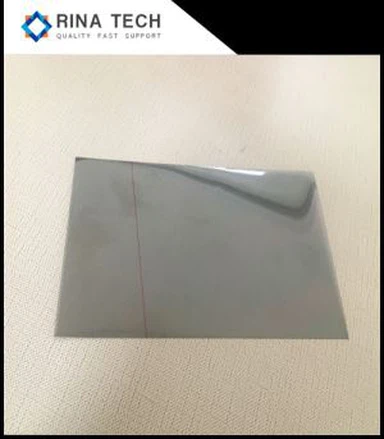


LCD+OLED intensive production and accelerated localization of polarizers, supply shortage will continue until 2022
May 24, 2019
1. The growth of domestic LCD panel manufacturers, driving the localization of upstream polarizers
Driven by the trend of TV size, the total shipment area of LCD panels is expected to reach 232 million square meters in 2020, and the CARG will be 6.84% from 2017 to 2020. Demand for LCD panels is still rising steadily. OLED panels are also entering an accelerated penetration period. In 2020, the total global LCD production capacity will reach 363 million square meters, and the newly added capacity will mainly come from the expansion of manufacturers in mainland China. In the next two years, panel makers in mainland China still have six LCD production lines with 8.5 generations or more in operation, and five OLED panel production lines are planned to be put into production. Polarizers are the key raw materials for display panels. In order to better stabilize costs and ensure supply, domestic panel makers are in urgent need of growth of domestic polarizer manufacturers.

2. Polarizer: display panel core material, capital and technical barriers are high
The main role of the polarizer in the LCD module is to control the image display. The main function of the polarizer in the OLED module is to eliminate the reflected light from the external environment. The quality of the polarizer has a great influence on the display effect of the panel. There are many links in the manufacturing process and the process is complex, which requires long-term practice accumulation. The high investment in the early stage, the construction period and the recovery period are long, and the Chinese mainland manufacturers are late, which is not high.
3. The upstream price is stable, the supply end expansion schedule is less than the demand side, the product price is steadily rising, and the domestic polarizer enters the Japan-Korea replacement acceleration period.
The global polarizer industry is dominated by Japanese and Korean manufacturers. The domestic polarizer companies only have Sanlipu and Shengbo Optoelectronics have full-process production capacity. Among several key upstream raw materials, TAC membrane production capacity is basically monopolized by Japan, Xinlun and Lekai have layouts, and PVA membranes are the only ones. The upstream price of polarizers is affected by exchange rates and petrochemical prices and is expected to remain stable in recent years. The shortage of polarizers will continue until 2022. At the beginning of this year, the polarizer entered the price increase cycle.