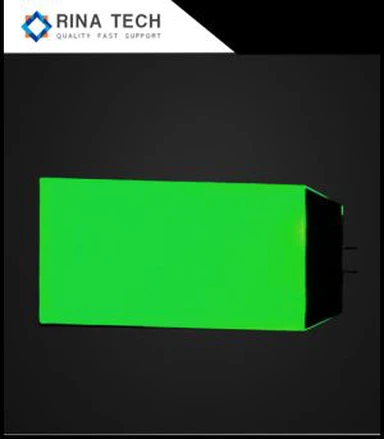


Why Use Acrylic For Light Guide Plate Manufacturing?
Jun 09, 2023
Light guide plates (LGP) are an essential component in modern lighting technology. They are used to distribute light evenly across a surface, creating a uniform and bright illumination. LGPs are made from a variety of materials, including glass, polycarbonate, and acrylic. In this article, we will focus on the use of acrylic for LGP manufacturing and explore the reasons why it is a popular choice.
1. Principles and Materials of Light Guide Plates.
LGP works on the principle of total internal reflection, which is achieved by creating a series of microstructures or dots on one side of the plate. When light enters the plate, it is reflected multiple times within the plate until it reaches the other side and exits as uniform light. The dots are typically made from a material with a higher refractive index than the plate itself, such as silicone or epoxy.
Acrylic is a popular material for LGP manufacturing due to its high transparency and excellent light transmission properties. It has a refractive index of 1.49, which is close to that of glass. Acrylic is also lightweight, easy to shape, and has good chemical resistance.
2. Methods of Light Guide Plate Manufacturing.
There are several methods for manufacturing LGPs, including injection molding, hot embossing, and laser etching. Injection molding is a cost-effective method for producing large quantities of LGPs with consistent quality. Hot embossing involves pressing the dots onto the surface of the plate using heat and pressure. Laser etching uses a laser to create the dots directly on the surface of the plate.
3. Advantages of Acrylic for LGP Manufacturing.
Acrylic offers several advantages over other materials for LGP manufacturing. Firstly, it is easy to shape and can be cut or drilled into any shape or size. This makes it ideal for custom LGP designs. Secondly, acrylic has excellent optical properties, including high transparency and low light absorption, which means that it can transmit light over long distances without significant loss of intensity. Thirdly, acrylic is resistant to UV radiation, which makes it ideal for outdoor applications. Finally, acrylic has good chemical resistance and can withstand exposure to harsh chemicals and cleaning agents.
4. Applications and Market for Light Guide Plates.
LGP has a wide range of applications in various industries, including lighting, automotive, and consumer electronics. They are used in LED lighting fixtures, LCD displays, and backlighting for keyboards and touchscreens. The global market for LGPs is expected to grow steadily in the coming years due to the increasing demand for energy-efficient lighting solutions.
5. Identifying High-Quality Light Guide Plates.
When selecting an LGP, it is essential to consider factors such as light transmission efficiency, dot size and spacing, and uniformity of light distribution. A high-quality LGP should have a high transmission efficiency of at least 90%, with evenly spaced dots that are small enough to achieve a uniform distribution of light. The plate should also be free from defects such as scratches or bubbles that can affect light transmission.
In conclusion, acrylic is an excellent material for LGP manufacturing due to its optical properties, ease of shaping, and resistance to UV radiation and chemicals. It is used in various applications across different industries and offers several advantages over other materials. When selecting an LGP, it is essential to consider factors such as transmission efficiency and dot size and spacing to ensure that you choose a high-quality product that meets your specific needs.