

How Much Do You Know About The Demand For TV Assembly Prism Film in The European Market?
Apr 10, 2026
TV Assembly Prism Film
High Initial Capital Investment
The equipment for producing TV Assembly Prism Film requires significant capital expenditure, limiting market entry.
Technical Complexity
Achieving consistent, defect-free microstructures across large-format TV panels demands exceptional process control and expertise.
Raw Material Dependence
High-quality optical resins and base films are still dominated by a few suppliers, leading to potential supply chain vulnerabilities.
TV Assembly Prism Film
Lack of True Customization Flexibility
Most suppliers offer only a limited catalog of standard prism designs. True customization (e.g., unique angles, asymmetric structures, special thicknesses, large formats) for TV Assembly Prism Film is often unavailable, prohibitively expensive, or extremely slow.
Long Lead Times & Inflexible MOQ
For project-based TV manufacturers with tight deadlines or mid-sized production runs, the standard 8–12 week lead times and high MOQs from traditional suppliers are major bottlenecks, risking project delays and lost market opportunities.
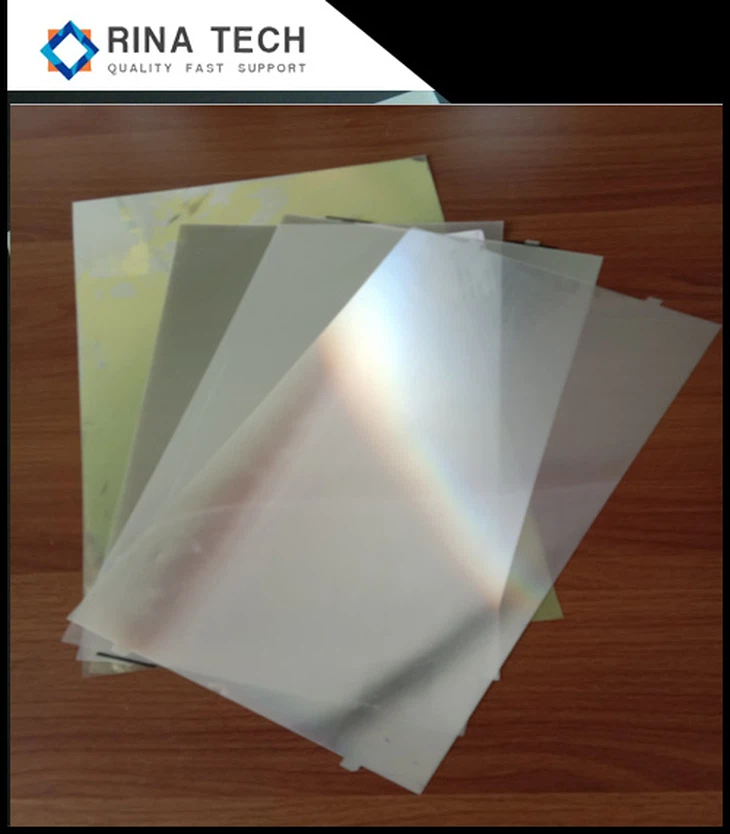
Quality & Consistency Issues
European markets demand zero defects. Inconsistent prism height, pitch, or surface defects (e.g., orange peel, scratches, pinholes) from some suppliers lead to costly yield losses in TV assembly lines.

Supply Chain Instability
Geopolitical tensions, raw material shortages, and logistics disruptions have created significant uncertainty in lead times and pricing for TV Assembly Prism Film, a critical concern for European manufacturers with just-in-time (JIT) production systems.
| Thickness | Size/Shape | Application | Strength | Angle option |
| Customize | Customize | LCD Module/TV Assembly | Customize | Customize |
Roll-to-Roll (R2R) UV Casting & Curing: The core manufacturing process. Optical-grade resin is uniformly coated onto the PET substrate, which is then precisely pressed against the structured mold in a continuous, high-speed R2R production line. The resin is instantly cured with high-intensity UV light, perfectly replicating the micro-prism pattern across the entire film width.
Functional Coating Application: Specialized coatings (hard coat, anti-block, anti-static) are applied inline in a cleanroom environment.
Quality Control (QC) & Testing: 100% automated optical inspection (AOI) for surface defects, followed by rigorous testing for optical performance (brightness gain, transmittance, haze), environmental stability (heat/humidity resistance), and mechanical properties (adhesion, hardness).
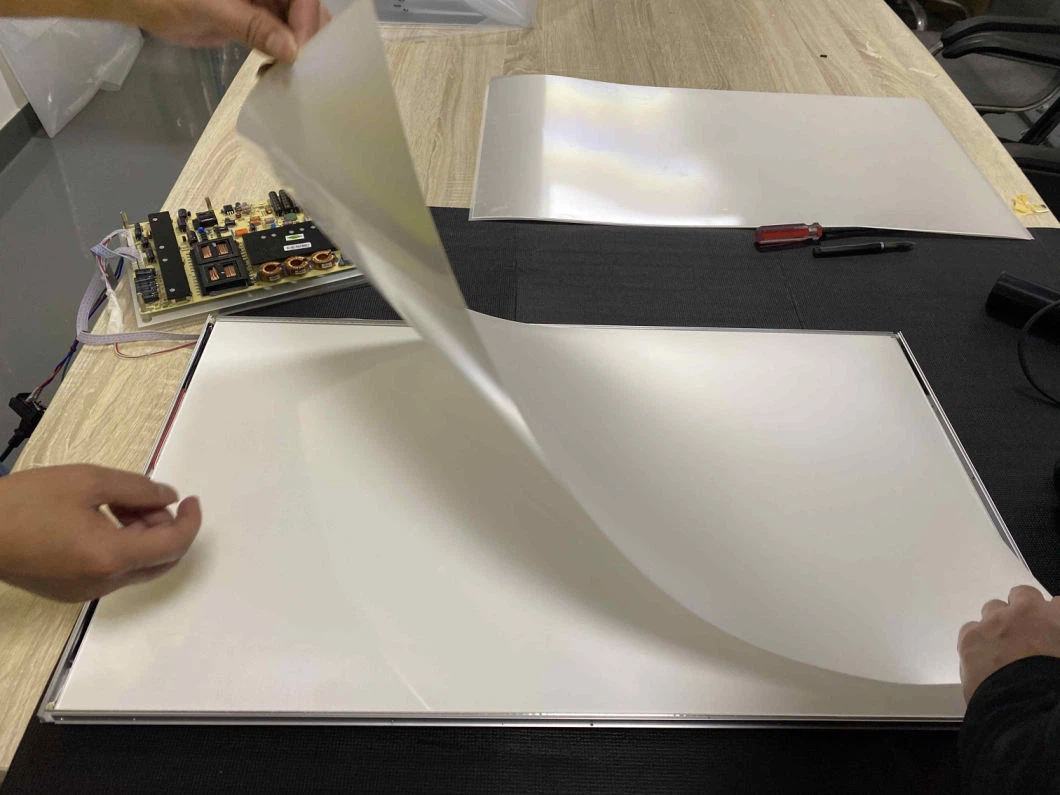
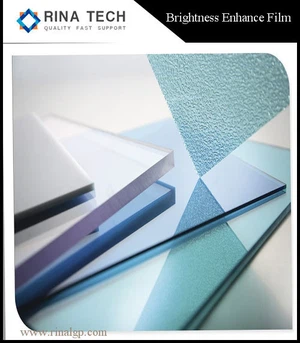
The production of TV Assembly Prism Film is a highly specialized, capital-intensive process that demands expertise in optical design, precision engineering, advanced polymer processing, and strict quality control.
The global supply chain is dominated by a few established players from Japan (e.g., Sumitomo, Mitsubishi), South Korea (e.g., SKC), and the USA (e.g., 3M). However, a new generation of advanced manufacturers, particularly in Asia, has emerged with significant investments in technology, offering a compelling alternative with superior customization flexibility, faster lead times, and greater cost-efficiency.
Optical Design & Simulation: The process begins with a detailed design phase, where the client's TV assembly specifications are translated into precise prism geometry using advanced optical simulation software. This is the most critical step for TV Assembly Prism Film, ensuring the final product meets the exact brightness, viewing angle, and uniformity targets.
Precision Master Mold Fabrication: A master mold is created using ultra-precision technologies like single-point diamond turning (SPDT) and laser direct writing. This mold defines the prism structure with nanometer-level surface roughness (Ra ≤ 0.01μm), ensuring perfect replication.