


LGP For Backlight
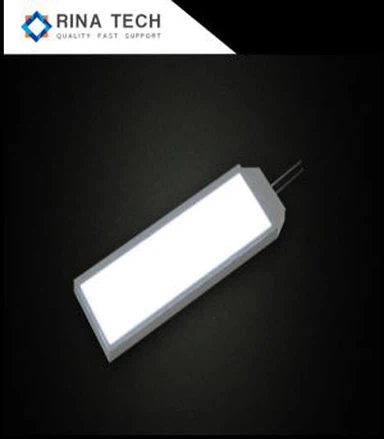
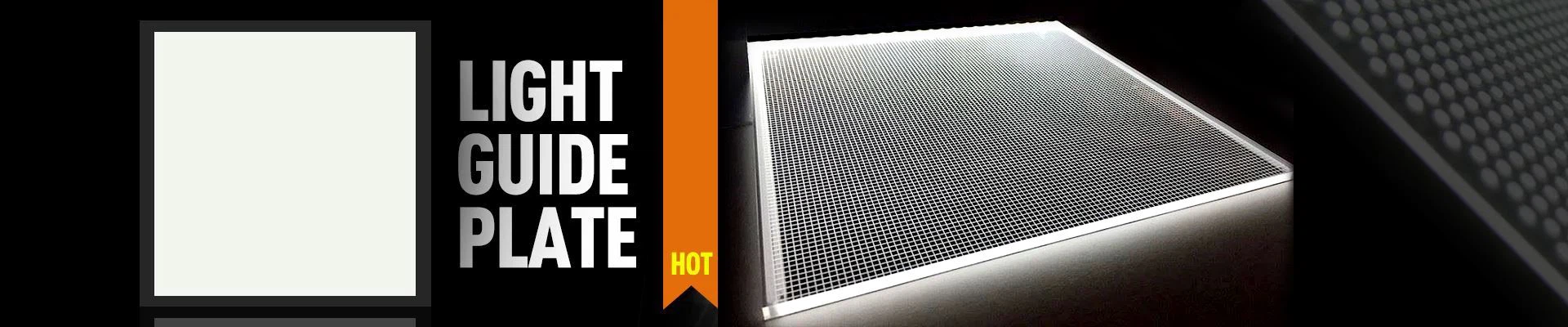
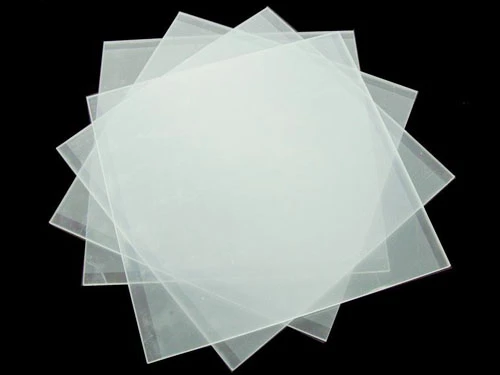
Product Name: LGP For Backlight
Thickness: 0.7mm and above (customizable)
Size: Customizable
Material: PMMA, PC, PS
Advantages: High uniformity
Customizable shapes
Durable
- Fast Delievery
- Quality Assurance
- 24/7 Customer Service
Product Introduction
Rina Technology Co., Ltd. is one of the leading manufacturers and suppliers of lgp for backlight in China. Welcome to wholesale durable products in stock here and get quotation from our factory. All customized products are with high quality and low price.
Product Introduction of LGP For Backlight

LGP For Backlight is a core optical component designed specifically for backlight modules. It primarily utilizes high-molecular materials with excellent light transmittance, such as PMMA and PC, and is manufactured through precise optical design and molding processes.

Its core structural feature lies in the specific microstructures on its surface or internal structure. These microstructures efficiently guide, refract, and diffuse light emitted from side-lit or direct-lit backlight sources, transforming point or line light sources into uniform and soft surface light sources.

Compared to traditional backlighting methods, LGP For Backlight offers significant advantages such as high light transmittance (high-quality products can achieve over 90% transmittance), good light uniformity, thinness, light weight, and strong aging resistance.

It is currently widely used in various display products requiring backlight support, such as LCD monitors, smartphones, tablets, laptops, automotive displays, and smart wearable devices, and is a key component ensuring display clarity and brightness uniformity.
The Crucial Role of LGP For Backlight
1. - Light Conversion and Uniformation:
This is the core function of the LGP For Backlight. In edge-lit backlight modules, the light source (such as LED strips) is typically positioned on the side of the light guide plate, emitting linearly distributed light. Direct illumination of the LCD panel would result in noticeable uneven brightness. The LGP For Backlight, through the optical effects of its surface microstructures, guides the side-incident linear light source across the entire surface of the light guide plate. Refraction and scattering through these microstructures ensure uniform light distribution, ultimately forming a surface light source that meets display requirements, avoiding issues such as "bright edges" and "dark areas" on the screen.
2.- Supporting the development of thinner and lighter display products:
Traditional backlight systems, without light guide plates, require diffusers and light sources to work together at a long distance to achieve uniform light distribution, resulting in a bulky backlight module. LGP For Backlight itself can be as thin as 0.3mm-5mm (adjusted according to the application scenario) and can achieve efficient uniform light distribution within a limited thickness, greatly reducing the space occupied by the backlight module. This provides core support for the development of display products towards "ultra-thin" and "ultra-light" designs. For example, current mainstream full-screen smartphones and ultra-thin laptops all rely on high-precision LGP For Backlight for structural optimization.
3. - Improved Light Utilization Efficiency:
A high-quality LGP For Backlight minimizes light loss during transmission (such as reflection and absorption losses), efficiently guiding the emitted light to the display area. This directly reduces the energy consumption of the backlight module-while achieving the same display brightness, products using high-performance LGP For Backlight can significantly reduce light source power, thus achieving energy savings, which is especially crucial for improving the battery life of mobile devices such as smartphones and laptops.
4. - Ensuring display stability and comfort:
The microstructure design of LGP For Backlight can effectively control the light emission angle, reducing stray light and glare. This not only improves the contrast and color reproduction of the displayed image, but also reduces the stimulation of light on the human eye, improving comfort during long-term viewing. At the same time, high-quality LGP for Backlight has excellent temperature resistance and anti-aging properties; its optical performance degrades slowly during long-term use, ensuring stable brightness and uniformity of the displayed image.
Material Comparison for LGP For Backlight
|
Material Type |
Core Advantages |
Disadvantages |
Application Scenarios |
|
PMMA (Acrylic) |
1. Extremely high light transmittance (92%-95%); 2. Stable optical performance; 3. Low difficulty in processing and forming; 4. Moderate cost; 5. Easy surface treatment (coating, microstructural engraving, etc.) |
Mechanical strength and weather resistance are slightly inferior to PC and COP |
Consumer electronics (mobile phones, laptops, ordinary monitors), scenarios sensitive to light transmittance and cost |
|
PC (Polycarbonate) |
1. High mechanical strength and strong impact resistance; 2. Slightly better temperature resistance range than ordinary PMMA; 3. Adaptable to environments with vibration and large temperature differences |
1. Slightly lower light transmittance (88%-90%); 2. Slightly higher cost than PMMA; 3. General yellowing resistance of some ordinary PC |
Automotive displays, outdoor displays and other scenarios requiring high structural stability and weather resistance |
|
PS (Polystyrene)
|
1. Low cost and high cost performance; 2. Good processability and formability, suitable for mass production; 3. Smooth surface, easy for basic microstructure processing |
1. Relatively low light transmittance (85%-90%); 2. Poor mechanical strength, brittle and easy to crack; 3. Poor temperature resistance (60℃-80℃), easy to age and yellow |
Mid-to-low-end display products (such as simple calculators, electronic scales, low-end digital photo frames), scenarios sensitive to cost and with low performance requirements |
Applications of LGP For Backlight


RINA TECHNOLOGY
is a high-tech enterprise specializing in research, development, production ,sales of Optical LED products and provide the one step optical lighting solution for customers.Established in 2011, Hong Kong, after years of rapid development, Rina Tech has settled office and factory in Shenzhen,and has professional senior technicians and qualified managers,has a talented team for product research and designing.
Nowadays, we have laser cutting machines, printers, film cutting machines, injection molding equipments,high-standard assembly workshops, BM-7 clean machines and other advanced equipments.
Our factory daily output is more than 80000pcs. to cater for the market at home and abroad.With years of unremitting effort,RINA TECH has passed get the Registration Certificate ofCustoms Declaration Unit of the People's Republic of China , National Credit Cultivation Certificate and Get our own Brand already.
We has made many breakthroughs in researching and manufacturing and has
obtained lots of good reputation from oversea customers.
Now we has cooperated with and become strategic partner of some famous enterprises such as LG, Samsung, Lenovo etc."Living on Sincerity, following with Market, Advancing by Specialty" is our eternal philosophy,and the company motto is "Good at Production, Good for Society".
We look forward to cooperating with you to make the world better and future brighter!
FAQ

Q1: Will scratches on the LGP For Backlight affect its use?
A1: Yes, they will. The surface microstructure of the LGP For Backlight is the core of achieving uniform light distribution. Significant scratches will disrupt the integrity of the microstructure, leading to abnormal local light reflection and refraction, resulting in bright spots and dark lines on the display. Minor hairline scratches have little impact, but if the scratch is deep (over 0.05mm) or located on the light source incident side, it is recommended to replace the LGP For Backlight to ensure display quality.
Q2: Can LGP For Backlights be used interchangeably with different display products?
A2: It is not recommended to use them interchangeably. The specifications of the LGP For Backlight (such as size, thickness, microstructure design, and material) must be completely matched to the backlight module of the specific display product-for example, mobile phone screens have thinner LGPs with higher microstructure density, while monitors have larger LGPs with more uniform microstructure distribution; their optical design logics are different. Using them interchangeably will lead to insufficient brightness, poor uniformity, and assembly problems. A custom-made LGP For Backlight is required for the specific product model.
Q3: Will LGP For Backlight yellow after long-term use? How can this be prevented?
A3: Ordinary LGP For Backlights may experience slight yellowing under prolonged exposure to high temperatures and strong light, mainly related to the material's anti-aging properties. PMMA material has better anti-yellowing properties than some ordinary PC materials, while automotive and industrial-grade products use modified materials with added antioxidants and UV absorbers, which can effectively delay yellowing. During use, avoid prolonged exposure of the display to high temperatures (such as inside a car in direct sunlight) to slow down the yellowing process; if yellowing causes a significant decrease in display quality, it should be replaced promptly.
Q4: How to determine if an LGP For Backlight is malfunctioning?
A4: Abnormal display behavior can be identified as follows: ① Obvious dark areas, bright edges, or stripes on the screen, and after ruling out light source malfunctions, it is highly likely that the LGP microstructure is damaged; ② A significant decrease in display brightness, which does not improve after adjusting the light source power, may be due to LGP transmittance attenuation; ③ Light leakage after assembly may be due to LGP dimensional tolerance exceeding limits or surface damage. In any of these cases, it is recommended to contact a professional for inspection or replacement.
Q5: What is the difference between an LGP for Backlight and a diffuser plate?
A5: Both are optical components of the backlight module, but their core functions differ: The main function of the LGP for Backlight is to "guide light," converting point/line light sources into surface light sources, serving as the "core power source" of the backlight system; the main function of the diffuser plate is to "optimize light," further diffusing and homogenizing the light emitted from the LGP, reducing subtle light and shadow caused by the microstructure, and improving the softness of the image. Simply put, the LGP is responsible for "creating light," and the diffuser plate is responsible for "correcting light"; only by working together can a high-quality display effect be achieved.
Hot Tags: lgp for backlight suppliers, factory, customized, price, in stock, LED guide plate