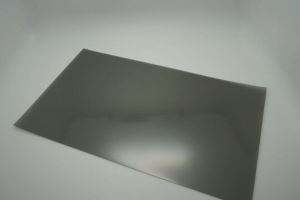




Thin Polarizer
Product Name: Thin Polarizer
Advantages:
Efficient Repair
Professional Technology
Attentive Service
Affordable Prices
Authentic Parts
After-Sales Guarantee
Size: Customizable
Angle: 0-45°, 90°, 135°
Thickness: Customizable
- Fast Delievery
- Quality Assurance
- 24/7 Customer Service
Product Introduction
Rina Technology Co., Ltd. is one of the leading manufacturers and suppliers of thin polarizer in China. Welcome to wholesale durable products in stock here and get quotation from our factory. All customized products are with high quality and low price.
Products Description
Thin Polarizer
1. The Main Function of a Thin Polarizer

The core function of a thin polarizer is to polarize light. Light has different vibration directions during propagation, and a thin polarizer selectively allows light with a specific vibration direction to pass through while blocking light with other vibrations.

In liquid crystal display (LCD) devices, a thin polarizer is an essential component. It controls the transmission and blocking of light, allowing the image information generated by the twisting of liquid crystal molecules to be correctly displayed on the screen, ensuring a clear, reflection-free image.

In addition, in photography, a thin polarizer can be installed in front of the lens to filter out polarized light reflected from smooth surfaces such as water and glass, reducing glare. This allows for clearer details of underwater scenes and items in display windows, enhancing photography quality.

In the solar cell industry, a thin polarizer helps optimize the incident angle and polarization state of light, increasing the solar cell's absorption efficiency and, consequently, boosting power generation efficiency.
Advantages of Thin Polarizers

offer numerous significant advantages. First, their thinness is a key advantage. Compared to traditional polarizers, thin polarizers are significantly thinner, making them easily adaptable to applications requiring tight space requirements, such as ultra-thin mobile phones, tablets, and other portable electronic devices, without adding excessive thickness. This meets the demand for thinner and lighter designs in modern electronic products.
Second, thin polarizers offer excellent optical performance. They efficiently select the polarization of light, with high light transmittance and strong polarization. This ensures clear images and vivid colors while minimizing light loss and enhancing display quality. Furthermore, thin polarizers offer excellent stability, maintaining excellent polarization performance under varying environmental conditions such as temperature and humidity. This longevity reduces maintenance and replacement costs.

Thin Polarizer Materials
Thin polarizers are typically made from a composite of multiple materials. The polarizing film is the core component of a thin polarizer, and polyvinyl alcohol (PVA) is commonly used. PVA molecular chains have a well-defined linear structure. Through stretching and dyeing, these chains can be oriented, resulting in polarization, allowing them to selectively absorb light vibrating in a specific direction. To protect the polarizing film and enhance its mechanical and optical properties, triacetyl cellulose (TAC) film is typically laminated on both sides. TAC film offers excellent optical transparency, flexibility, and scratch resistance, effectively protecting the polarizing film from moisture, oxidation, and wear. In some specialized applications, materials such as polycarbonate (PC) and polyethylene terephthalate (PET) are also used to meet specific performance requirements, such as high-temperature resistance and high-abrasion resistance.


RINA TECHNOLOGY
is a high-tech enterprise specializing in the research, development, production, and sales of Optical LED products, while providing one-step optical lighting solutions for customers. Established in 2011 in Hong Kong, the company has undergone rapid development over the years. Rina Tech has now set up its office and factory in Shenzhen, boasting professional senior technicians, qualified managers, and a talented team dedicated to product research and design.
The company is equipped with advanced facilities, including laser cutting machines, printers, film cutting machines, injection molding equipment, high-standard assembly workshops, BM-7 clean machines, and more. With a daily factory output of over 80,000 pieces, it effectively caters to both domestic and international markets. Through years of unremitting effort, RINA TECH has obtained the Registration Certificate of the Customs Declaration Unit of the People's Republic of China, the National Credit Cultivation Certificate, and established its own brand.
The company has made significant breakthroughs in research and manufacturing, earning widespread acclaim from overseas customers. It has successfully collaborated with and become a strategic partner of renowned enterprises such as LG, Samsung, Lenovo, and others. "Living on Sincerity, following with Market, Advancing by Specialty" serves as our eternal philosophy, while the company motto "Good at Production, Good for Society" guides our actions.
We take pride in offering a 24-hour responsive service, with a professional team overseeing projects throughout the entire process. Additionally, we provide free design services, including 3D renderings, until customers are fully satisfied. Our flexible customization options support small-batch trial production and rapid prototyping, ensuring we meet diverse market needs.

FAQ

Q1: How does a Thin Polarizer work in an LCD display?
A: In an LCD display, a Thin Polarizer works in conjunction with liquid crystal molecules. Unpolarized light from a backlight first passes through the first layer of Thin Polarizer, becoming polarized light vibrating in a specific direction. The liquid crystal molecules, under the influence of an electric field, change their alignment, thereby altering the vibration direction of the polarized light. When the polarized light reaches the second layer of Thin Polarizer, the changes in the light's vibration direction by the liquid crystal molecules determine whether the light can pass through. Ultimately, pixels of varying brightness appear on the screen, creating an image.
Q2: Does the thin design of a Thin Polarizer affect its polarization performance?
A: No. Despite its reduced thickness, the Thin Polarizer maintains excellent polarization performance through advanced materials and manufacturing processes. Its core polarizing film material undergoes special processing, effectively selecting the polarization of light even in its thin structure. Light transmittance and polarization degree are not affected. The thin design also offers many other advantages, such as space savings and weight reduction.
Q3: How do I choose the right Thin Polarizer?
Q4: What is the lifespan of a Thin Polarizer?
A: The lifespan of a Thin Polarizer is affected by various factors, such as the operating environment and frequency of use. Under normal operating conditions, a Thin Polarizer can generally last 5-10 years. However, if the device is exposed to harsh environments such as high temperature, high humidity, or strong light for a long period of time, the Thin Polarizer material may age faster, causing performance degradation and shortening its lifespan. Therefore, maintaining a good operating environment will help extend the lifespan of the Thin Polarizer.
Q5: Can the Thin Polarizer be replaced by yourself?
A: Replacing the Thin Polarizer by yourself is not recommended by non-professionals. Installing the Thin Polarizer requires precise handling and specialized tools. Improper handling during replacement can easily damage the Thin Polarizer itself or other related components, affecting normal use. If the Thin Polarizer malfunctions or requires replacement, it is recommended to contact a professional repair technician or the device manufacturer to ensure a safe replacement process and restore device performance.
Hot Tags: thin polarizer suppliers, factory, customized, price, in stock, Polarized film for loptop