



Led Backlit
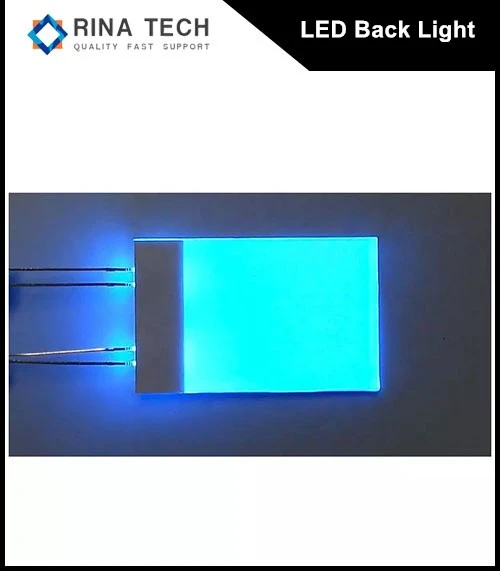
Product Name: LED Backlit
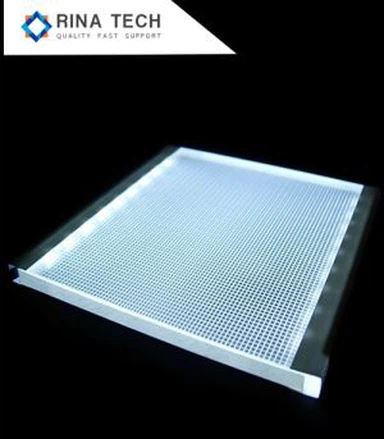
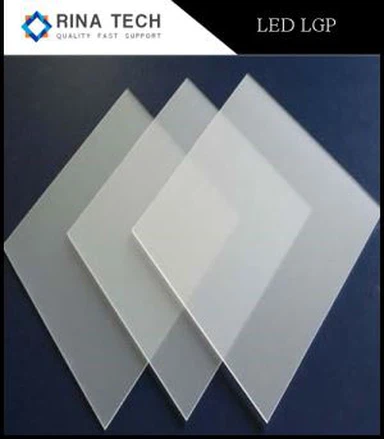
Materials: Light guide plate, diffuser plate, reflective film, brightness enhancement film, LED strip, outer frame
Thickness: Customizable
Size: Customizable
Brightness: Customizable
- Fast Delievery
- Quality Assurance
- 24/7 Customer Service
Product Introduction
Rina Technology Co., Ltd. is one of the leading manufacturers and suppliers of led backlit in China. Welcome to wholesale durable products in stock here and get quotation from our factory. All customized products are with high quality and low price.
Products Description
I. LED Backlit Module Product Introduction
The LED backlight module is a core optical component of modern LCD TVs. Its core function is to provide a uniform, stable, and controllable light source for the LCD panel. LCD panels themselves do not possess self-emissive properties and must rely on the light from the backlight module to display clear images and rich colors. Therefore, the performance of the LED backlight directly determines the TV's brightness, contrast ratio, color performance, and energy consumption.
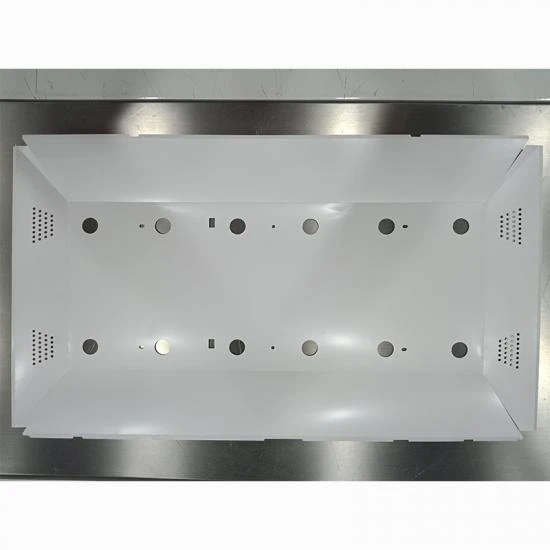
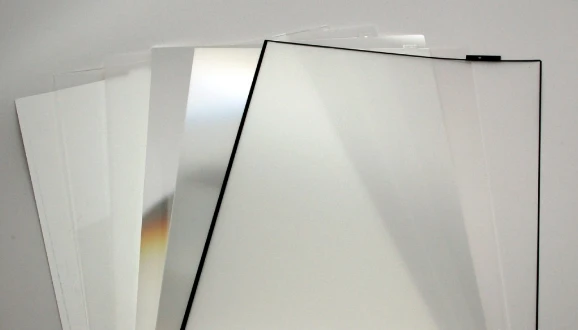
Structurally, a TV LED backlight mainly consists of LED chips, a LGP, diffuser plate, BEF, reflective sheet, and driving circuit. Depending on the chip layout, it can be divided into two main types: direct-lit and edge-lit. Direct-lit LEDs are evenly arranged behind the LCD panel, enabling more precise local dimming and resulting in higher contrast. Edge-lit LEDs are installed inside the bezel of the TV body, with the light guide plate evenly transmitting light to the entire panel.
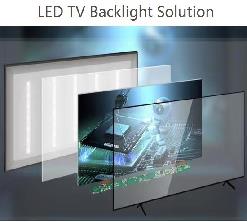
This design allows for a thinner and lighter TV body, suitable for products that prioritize a minimalist appearance. Today, with the development of Mini LED technology, LED backlighting has entered an era of refined light control. The number of LEDs has increased significantly while their size has decreased, resulting in a qualitative leap in the picture quality of televisions.
II. LED Backlit (TV Backlight Module) Production Process
First, core raw materials such as LED chips, light guide plates, and optical films are screened. LED chips need to be tested for parameters such as luminous efficiency, color temperature consistency, and lifespan; light guide plates need to be checked for light transmittance and surface flatness to avoid uneven light distribution; optical films need to be verified for their light enhancement effect and aging resistance. All raw materials must meet industry standards before entering the production stage.
01
2. LED Chip Mounting and Driver Circuit Soldering
LED chips are precisely mounted onto the PCB board using SMT (Surface Mount Technology), ensuring uniform chip spacing and secure soldering. Then, the driver circuit is soldered. The driver circuit, as the "brain" of the LED backlit module, is responsible for controlling the brightness adjustment and on/off status of the LED chips. After soldering, a preliminary power-on test is performed to check for short circuits, LED chip failures, and other problems.
02
3. Optical Component Assembly
In a clean assembly workshop, the reflector, light guide plate, diffuser, and brightness enhancement film are stacked and assembled sequentially. This step requires extremely high precision; the offset between components must be controlled within 0.1mm, otherwise abnormal light refraction will occur, resulting in dark areas or bright spots on the screen. After assembly, the optical components are integrated with the PCB board containing the LED chips to form a complete backlight module frame.
03
Using professional optical testing equipment, the backlight module undergoes comprehensive adjustment, including indicators such as brightness uniformity, color temperature deviation, and color gamut coverage. By adjusting the drive circuit parameters, the module's brightness reaches the design standard, while ensuring that the light difference between different areas is controlled within a minimal range. For backlight modules with local dimming, the dimming accuracy and response speed of each zone must also be tested individually.
04
5. Reliability Testing and Packaging
After optical calibration, reliability tests are conducted, including high-temperature, low-temperature, and humidity cycling tests, to simulate the working conditions of a television under different usage environments. This ensures that the LED backlit will not experience issues such as LED chip attenuation or film aging during long-term use. Products that pass all tests will be cleaned, laminated, packaged, and delivered to television set manufacturers.
05
Advantages of LED Backlit (TV Backlight Module)
1. Superior Picture Quality
LED backlit offers a wide brightness adjustment range, easily achieving high brightness output, ensuring clear visibility even in bright environments. Local dimming technology makes bright areas brighter and dark areas darker, significantly improving contrast and revealing richer picture details. Simultaneously, the precise color temperature control of LED chips, combined with wide color gamut technology, reproduces colors closer to reality, delivering an immersive viewing experience.
2. Low Energy Consumption and Long Lifespan
Compared to traditional CCFL (Cold Cathode Fluorescent Lamp) backlights, LED chips have higher electro-optical conversion efficiency. At the same brightness, LED backlit consumes more than 30% less power, meeting the energy-saving requirements of modern home appliances. Furthermore, LED chips have a lifespan of over 100,000 hours, which, based on 4 hours of daily use, translates to over 70 years, significantly reducing user maintenance and replacement costs.
3. High Design Flexibility
The compact size of LED chips allows for more flexible structural designs in LED backlit. The edge-lit design allows for a TV body thickness of less than 10mm, meeting users' demands for slim and lightweight TVs; the direct-lit design allows for adjustment of the number of LEDs and LED zones according to picture quality requirements, adapting to TVs of different sizes and market segments, perfectly matching everything from entry-level to high-end flagship models.
4. Environmentally Friendly and Safe
LED chips do not contain toxic or harmful substances such as mercury. Their production and recycling processes have minimal environmental pollution, complying with global environmental regulations. Furthermore, LED backlights operate at lower temperatures and distribute heat more evenly, avoiding the overheating issues caused by traditional backlights. This makes them safer to use and reduces the impact of high temperatures on the lifespan of other TV components.
RINA TECHNOLOGY
is a high-tech enterprise specializing in research, development, production ,sales of Optical LED products and provide the one step optical lighting solution for customers.Established in 2011, Hong Kong, after years of rapid development, Rina Tech has settled office and factory in Shenzhen,and has professional senior technicians and qualified managers,has a talented team for product research and designing.
Nowadays, we have laser cutting machines, printers, film cutting machines, injection molding equipments,high-standard assembly workshops, BM-7 clean machines and other advanced equipments.
Our factory daily output is more than 80000pcs. to cater for the market at home and abroad.With years of unremitting effort,RINA TECH has passed get the Registration Certificate ofCustoms Declaration Unit of the People's Republic of China , National Credit Cultivation Certificate and Get our own Brand already.
We has made many breakthroughs in researching and manufacturing and has
obtained lots of good reputation from oversea customers.
Now we has cooperated with and become strategic partner of some famous enterprises such as LG, Samsung, Lenovo etc."Living on Sincerity, following with Market, Advancing by Specialty" is our eternal philosophy,and the company motto is "Good at Production, Good for Society".
We look forward to cooperating with you to make the world better and future brighter!
FAQ
1. What causes localized dark areas in an LED backlight module?
There are two main reasons for localized dark areas in an LED backlight module: First, misalignment of the optical components, such as inaccurate alignment of the light guide plate and the LED chips, resulting in insufficient light coverage in some areas; second, individual LED chips may be deteriorating or damaged, failing to emit light properly. In this case, it is recommended to contact a professional repair technician for inspection. If the problem is with the LED chips, replacing the faulty chip will solve the issue; if it is an assembly problem, the position of the optical components needs to be readjusted.
2. Will the brightness of an LED backlight module decrease over time?
A slight decrease will occur, but the rate of decrease is very slow. The light-emitting characteristics of LED chips mean that there will be some light decay over long-term use. However, high-quality LED backlight modules use high-specification LED chips, and after 50,000 hours of use (approximately 6 years), the brightness decay is typically no more than 20%, far below the range perceptible to the human eye. In daily use, avoiding prolonged operation with the TV brightness at maximum can effectively slow down the rate of light decay.
3. How to choose between direct-lit and edge-lit LED backlight modules (TV backlight modules)?
The choice depends on your viewing needs and usage scenarios: If you prioritize ultimate picture quality, especially if you enjoy watching HDR movies and have high requirements for contrast and detail, a direct-lit LED backlight is recommended, as its local dimming technology delivers superior brightness and contrast. If you prioritize a slim TV design, have limited space, or primarily use it for everyday activities like watching dramas and variety shows, an edge-lit LED backlight is more suitable, offering both slimness and cost-effectiveness.
4. Does the energy consumption of an LED backlight module (TV backlight module) depend on the TV size?
Closely related. The energy consumption of an LED backlight module mainly depends on the number and power of the LED chips. Larger TVs require more LED chips to ensure uniform brightness, thus resulting in higher energy consumption. For example, the power consumption of an LED backlight module in a 55-inch TV is typically between 50-80W, while that of a 75-inch TV may reach 100-150W. However, for the same size, LED backlights still consume significantly less power than traditional CCFL backlights.
5. What to do if the LED backlight module (TV backlight module) makes unusual noises?
Unusual noises from the LED backlight are often caused by a faulty cooling fan or drive circuit. Some high-end LED backlights are equipped with cooling fans; if the fan is clogged with dust or the bearings are worn, it will produce noise. Additionally, aging capacitors or poor contact in the drive circuit can also cause current noise. Solution: First, disconnect the power and open the back cover of the TV to clean the fan. If the noise persists, the drive circuit needs to be checked and any aging components replaced. Note that disassembling a TV poses a risk of electric shock; it is recommended that this be done by a professional.
Hot Tags: led backlit suppliers, factory, customized, price, in stock