



Acrylic Diffuser For Construction
Acrylic diffuser, made of high-quality PMMA material, has high light transmittance, uniform and soft light, and effectively eliminates glare. Lightweight and durable, impact-resistant, safe and reliable; strong weather resistance, anti-aging, and long service life. Easy to process, can be customized in various shapes to meet different design needs. Widely used in architectural lighting, decorative lighting and other fields, it is an ideal choice for creating a comfortable light environment and enhancing the beauty of space.
- Fast Delievery
- Quality Assurance
- 24/7 Customer Service
Product Introduction
Rina Technology Co., Ltd. is one of the leading manufacturers and suppliers of acrylic diffuser for construction in China. Welcome to wholesale durable products in stock here and get quotation from our factory. All customized products are with high quality and low price.
Function of the diffuser

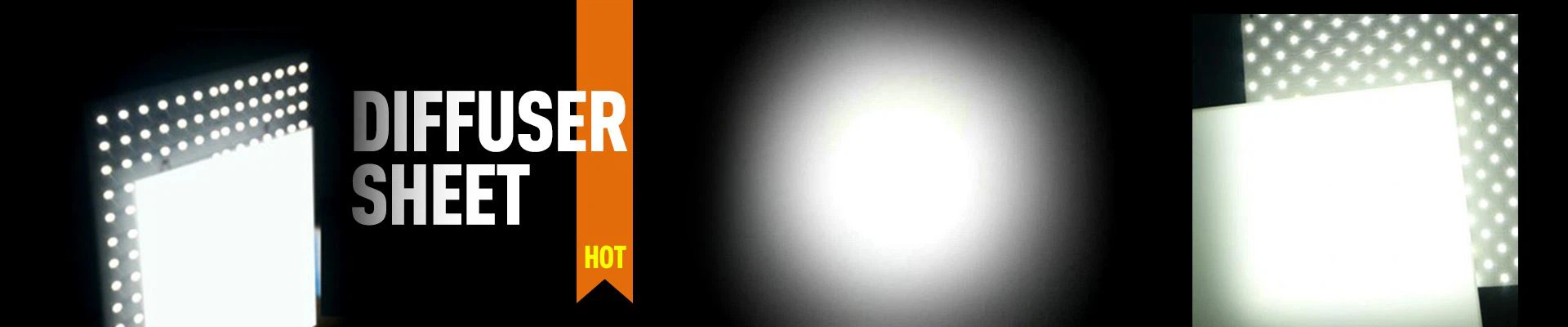
The main function of the diffuser is to diffuse the light, transforming it from a concentrated and intense state to a uniform and soft state. This characteristic makes it widely used in various fields. The following lists its functions in detail:
1. Light homogenization:
Eliminate glare and light spots: When a point light source or a line light source is directly irradiated, it will produce dazzling glare and obvious light and dark contrast, affecting visual comfort. The diffuser breaks up the light through its surface microstructure or internal particles to form a uniform surface light source, effectively eliminating glare and light spots, and creating a soft and comfortable lighting environment.
Improve the uniformity of light: In the fields of backlight display, lighting fixtures, etc., the diffuser can ensure that the light is evenly distributed on the entire luminous surface, avoiding the phenomenon of local overbrightness or overdarkness, and improving the display effect and lighting quality.
2. Protect the light source:
Physical protection: The diffuser can be used as a protective layer for the light source to prevent dust, water vapor, foreign matter, etc. from directly contacting the light source, thereby extending the service life of the light source.
Ultraviolet filtration: Some diffusers made of special materials can filter out ultraviolet rays and reduce the damage of ultraviolet rays to the light source and the surrounding environment.
3. Improve aesthetics:
Hide the light source: The diffuser can cover the light source and circuit structure behind it, making the product look more concise and beautiful.
Decorative effect: Through different materials, colors, textures and pattern designs, the diffuser can present rich visual effects and enhance the decorativeness and artistic sense of the product.
4. Other functions:
Improve the utilization rate of light energy: Some specially designed diffusers can direct light in a specific direction to improve the utilization rate of light energy, such as the focusing diffuser used in solar panels.
Anti-static and anti-fog: Some specially treated diffusers have anti-static and anti-fog functions, which are suitable for environments with high cleanliness requirements.
Composition of the diffuser
1. Constituent materials:
Base material:
PMMA (polymethyl methacrylate):Also known as acrylic or plexiglass, it is the most commonly used material for making diffusion plates, with the advantages of high light transmittance, good weather resistance, and easy processing.
PC (polycarbonate):** It has higher impact strength and heat resistance, but the light transmittance is slightly lower than PMMA, and the cost is also higher.
PS (polystyrene):** It has low cost, but poor light transmittance and weather resistance, and is generally used in occasions where performance requirements are not high.
Diffuser:
Inorganic particles: such as barium sulfate, titanium dioxide, etc., control the degree of light diffusion by adjusting the particle size and addition amount.
Organic particles: such as acrylic resin, silicone resin, etc., have good dispersibility and compatibility, but the cost is high.
Other additives:
UV resistant agent: improves weather resistance and prevents yellowing and aging of the board.
Flame retardant: improves fire resistance.
Antistatic agent: prevents static electricity from adsorbing dust.
2. Production process:
1. Raw material preparation: Mix PMMA particles, diffusants and other additives in a certain proportion.
2. Extrusion molding: Feed the mixed raw materials into the extruder, heat and melt them, and extrude them through the mold to obtain the required thickness and width of the plate.
3. Calendering molding: The molten raw materials are pressed and molded through a calender to obtain a thinner plate.
4. Surface treatment: The surface of the plate is frosted, embossed, etc. as needed to achieve different light diffusion effects.
5. Cutting and processing: Cut the plate into the required size, and perform drilling, engraving, hot bending and other processing.
6. Inspection and packaging: The finished product is tested for transmittance, haze, color difference and other performances, and packaged after passing.
3. Other types of diffusion plates:
PS diffusion plate: The production process is similar to that of acrylic diffusion plate, but the raw materials and processing temperature are different.
PC diffusion plate: Generally, injection molding is used to produce more complex shapes.
Glass diffuser: Use screen printing or sandblasting to create a diffusion pattern on the glass surface.
4. Factors affecting the performance of diffuser:
Choice of substrate: The transmittance, weather resistance, mechanical properties, etc. of different substrates vary greatly.
Type and amount of diffuser: directly affect the light diffusion effect and transmittance.
Thickness of the plate: The thicker the thickness, the better the light diffusion effect, but the transmittance will decrease.
Surface treatment process: Different surface treatment processes can obtain different light diffusion effects and appearance textures.

Application scenarios of the diffuser
1. Construction field:
Lighting ceilings and curtain walls:
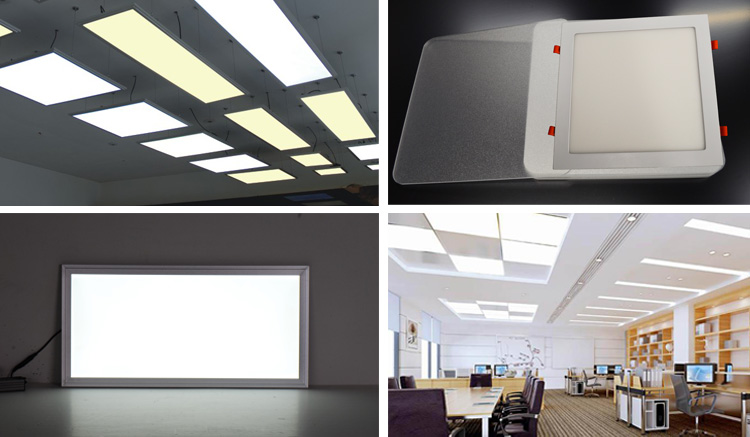
Large public buildings: The roofs and curtain walls of buildings such as stadiums, exhibition halls, airports, and stations use diffusion panels to achieve uniform and soft natural lighting, reduce indoor lighting energy consumption, and create a comfortable space environment.
Commercial buildings: The ceilings and partitions of office buildings, shopping malls, hotels, and other places use diffusion panels to increase the brightness of the space and create a stylish and modern atmosphere.
Awnings and awnings: The diffusion panels can block direct sunlight while maintaining a certain degree of light transmittance, and are suitable for outdoor awnings, awnings, etc.
Sound barriers: Some specially designed diffusion panels can have both sound insulation and lighting functions, and are suitable for areas with high noise levels such as highways and railways.
2. Lighting field:
LED panel lights: The diffusion panel is one of the core components of LED panel lights, which can convert LED point light sources into uniform surface light sources, eliminate glare, and improve lighting comfort.
Downlights and ceiling lights: The diffusion panel can soften the light, making the light emitted by the lamps more uniform and soft, and is suitable for lighting in homes, offices, and other places.
Light boxes and billboards: Diffusers can diffuse light evenly, making the patterns and texts of light boxes and billboards clearer and more eye-catching, and improving the advertising effect.
Stage lighting: Diffusers can be used to make stage lighting accessories such as soft light covers and scattering sheets to create different lighting effects.
3. Display field:
Liquid crystal display: Diffusers are used in the backlight module of liquid crystal displays, which can evenly diffuse the light from the backlight source to the entire screen to improve the display effect.
Touch screen** Some touch screens also use diffusers on their surfaces to reduce the impact of fingerprints and glare on the display effect.
Electronic whiteboard: Diffusers can be used for the writing surface of electronic whiteboards, making writing smoother and display clearer.
4. Other fields:
Agricultural greenhouses: Diffusers can be used for greenhouse covering materials to evenly illuminate the plants with sunlight and promote plant growth.
Instrument panels: Diffusers can be used for the display windows of instruments and meters to make the displayed content clearer and easier to read.
Protective cover: Diffusers can be used to make protective covers for machinery and equipment, which can not only observe the operation of the equipment, but also prevent dust and foreign matter from entering.


About us

We are RINA TECH.
Our vision is to be the world's first-rate provider of optical solutions, supply chain and manufacturing solutions. We are a global high-tech company specializing in the research, development, production and sales of optical materials, providing customers with one-step optical lighting solutions. Was established in Hong Kong in 2011, and after years of rapid development, RINA Technology has set up an office and factory in Shenzhen. Currently, we are working with companies such as Toyota, BOE, FLEX, Xiaomi, Siemens, and Coca-Cola , etc. We have made many breakthroughs in research and manufacturing, and have gained a good reputation from many oversea customers. Through sustainable business operations in more than 30 countries and territories around the world, we provide technology innovation, supply chain and manufacturing solutions to various industries and end markets. Our mission is to provide our customers with superior products that create value and improve people's lives. " Our Union's power ,makes the world going better!
Shipping and payment

certificates

User reviews



FAQ
1. What types of diffusers are there?
Classification by material: acrylic diffuser, PC diffuser, PS diffuser, glass diffuser, etc.
Classification by function: ordinary diffuser, prism diffuser, microlens diffuser, etc.
Classification by surface treatment: frosted diffuser, embossed diffuser, printed diffuser, etc.
2. How to choose a suitable diffuser?
The following factors need to be considered when choosing a diffuser:
Application scenario: Different scenarios have different requirements for light diffusion effect, light transmittance, weather resistance, etc.
Material: The performance of diffusers of different materials varies greatly, and needs to be selected according to specific needs.
Thickness: The greater the thickness, the better the light diffusion effect, but the light transmittance will decrease.
Surface treatment: Different surface treatment processes can obtain different light diffusion effects and appearance textures.
Price: The prices of diffusers of different materials, specifications, and brands vary greatly, and need to be selected according to the budget.
3. What are the installation methods of diffusers?
There are several main ways to install the diffuser:
Frame installation: fix the diffuser on an aluminum alloy or stainless steel frame, and then install it as a whole.
Paste installation: Use special glue to directly paste the diffuser on the substrate.
Screw fixation: Use screws to fix the diffuser on the substrate.
4. How to clean and maintain the diffuser?
Use a soft dry cloth or feather duster to clean the surface dust.
For stubborn stains, you can wipe it with a neutral detergent and warm water, and then rinse it with clean water.
Avoid using hard objects to scratch or corrosive detergents to clean the diffuser.
Check the fixation of the diffuser regularly and replace aging or damaged parts in time.
Hot Tags: acrylic diffuser for construction suppliers, factory, customized, price, in stock, Light Diffuser Plate


